What an eight-game soccer season at Hobart gives a young player
Compare recreational soccer, Future Starz and academy tryouts in Vero Beach, with a look at Hobart’s eight-game seasons and the player decisions worth watching.
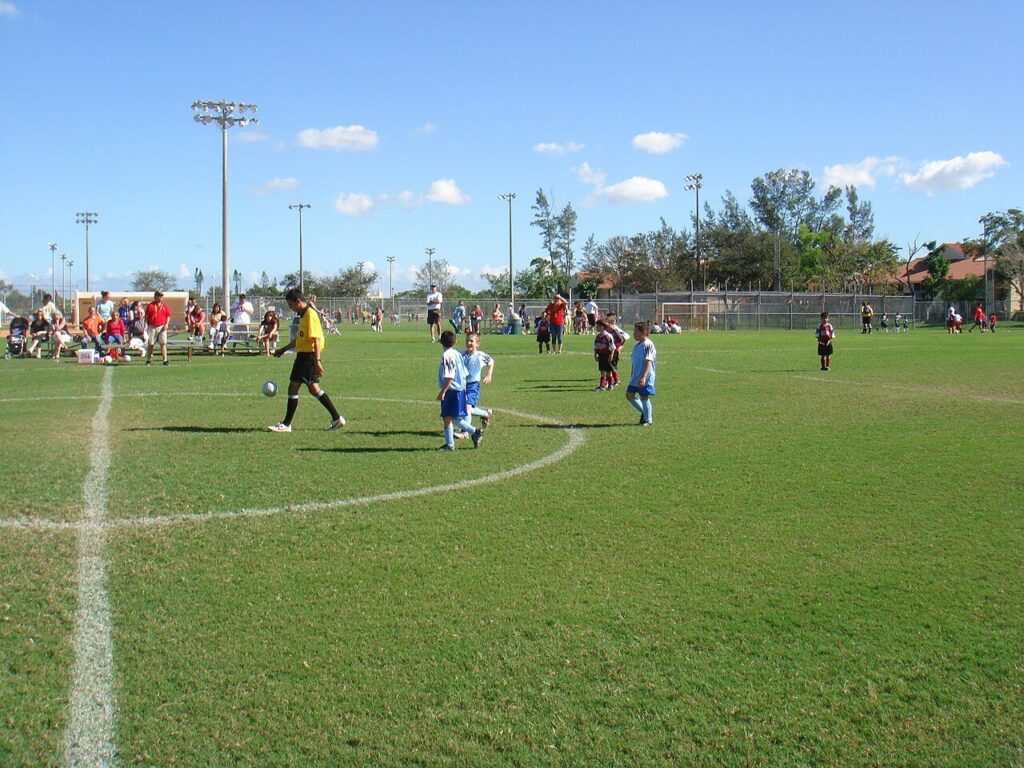
Watch a young soccer player for the five seconds before the ball arrives. Do they look over a shoulder? Do they find a space where a teammate can see them? Do they call for the ball or drift toward the same spot as the other players? A lot can happen in those seconds, none of it recorded as a goal. Indian River Soccer Academy uses the name Player Development Program for its recreational soccer at Hobart Soccer Complex. The name makes sense if a family knows what to look for during the eight games that make up a season.
The club describes two recreational seasons each year, one in fall and one in spring. Games take place at Hobart on Saturday mornings and on some Friday nights under the lights. The club overview describes the program as an in-house league for ages five to sixteen. It also lists a younger Future Starz program and a separate academy where players are selected through tryouts. A household searching for “Indian River Soccer Academy” may therefore find several legitimate routes into soccer. The route that fits depends on the player's age, experience, interest in competition and time available for a team. Club program overview
The value of playing the next game
A sequence of eight games gives a beginning player something a one-off clinic cannot. They can try a change one week, return to practice and recognize a similar situation the next time. Consider the moment after losing possession. In a first game a child may stop and watch the ball travel away. By a later game they may turn and stay involved, ready to support a teammate or find a new position. The scoreboard could show exactly the same result on both days. The player and an attentive coach can still recognize a substantial change.
It helps to watch a few minutes away from the ball. When every young player follows it toward a sideline, the center of the field opens. A teammate who pauses in that space offers the group an alternative even before receiving a pass. From a parent's angle the child might look less busy than the players in the crowd. A quiet question after the match, such as what they saw when they moved away, can reveal a decision adults missed. The point is to invite the player to describe the game they experienced, rather than give a second set of instructions from the sideline.
The club's recreational page shows how games fit around training and how the schedule changes with a season. Its fall 2026 notice, for instance, distinguished the registration deadline from the week training began. A family reading the page after that autumn should use it to understand the format and look for the next dated posting before making plans. A Saturday game schedule will not answer which weekday a team trains. A sibling in another group may play at the same complex and still need to be there on an entirely different night. Recreational program and notices
Three routes into the club
Future Starz serves the youngest groups, identified by the club as U3 and U4. The club describes games and activities intended as a first introduction. A family deciding whether that experience suits a young child can ask how the instructor organizes turns, what adults are expected to do and how long the session lasts. At that stage, following a simple instruction, finding a ball again after losing it or being willing to rejoin a group can be the achievement of the morning. There is plenty of time later to discuss playing positions or match results. Future Starz
The Player Development Program adds a familiar team schedule and repeated games at Hobart. A newcomer can learn what happens when play restarts, how to recognize a teammate in a crowd and how to stay involved when the action moves to the far side of the field. An experienced recreational player may come for the pleasure of playing locally with peers and the chance to improve a specific skill. The program's in-house structure is meaningful in both cases. A young person can have a serious interest in learning the game while preferring a local season to a more demanding travel commitment.
A player considering the academy should ask about the evaluation process, level of competition, training days and travel before attending tryouts. The club says players are selected and placed according to their development level. Its junior academy information also describes identifying and developing prospective travel players. Joining a recreational team and being evaluated for a selected team therefore involve different expectations. A conversation with a coach can help an interested player understand what they already do well and what they would need to work on. Trying out is a decision about an opportunity, and placement is a decision for the club. Junior academy information
The people who make a local season possible
The recreational program's fall materials distinguish an individual player's registration from a club fee assessed per family. The club ties the family fee to maintaining the Hobart facility, playing under the lights and screening volunteer coaches. That explanation is especially relevant to households registering siblings. Ask what is charged once, what applies to each player, and whether the uniform is included for the specific season. Fees and uniform arrangements described for one fall or spring need to be checked against the next registration. The academy also identifies scholarships among its outreach efforts, so families can ask staff about current assistance. Club mission and outreach
A match under lights can also change the way a family experiences its home ground. There may be a different arrival time after school, a different person giving a ride and a younger sibling waiting through the evening. Sending teammates the assigned field as well as the time helps everyone arrive ready to warm up together.
Volunteers and family members influence how a match feels even from outside the boundary. A coach may be working on a simple idea, such as looking up before passing. Several adults shouting different instructions can leave a child trying to decide whose voice to follow. A family can help by learning what the coach is working on and by noticing the moments a player tries it. Under the Friday lights or on a Saturday morning at Hobart, one well-chosen pass can mean more to a developing player than an adult sees at first glance. Eight games give everyone time to learn to recognize it.