What a secondhand kitchen can build at Vero Beach’s Habitat ReStore
Follow reusable cabinets from a Vero Beach remodel to the Indian River Habitat ReStore and see how donations, resale and volunteers support local housing.
A kitchen cabinet can stop fitting one household years before it stops working. A change in the kitchen layout, a different counter height or the decision to open a wall can make a perfectly useful cabinet surplus. In Vero Beach, Indian River Habitat for Humanity has built a local route between the kitchen that no longer needs it and the household that might. At its ReStore near US Highway 1 and 45th Street, donated household goods and building materials are sold to support the organization's housing work. The journey begins with a decision made well before something lands in a disposal pile.
The store at 4580 North US Highway 1 carries new and gently used furniture, household appliances, lighting, decorative pieces and building materials. A store based on donations has a different kind of inventory from a conventional kitchen showroom. The appliance available this week, the dimensions of a particular cabinet run and the number of matching chairs depend on what has arrived and what other people have purchased. For a buyer who can adapt a project to what is available, that unpredictability can be part of the appeal. For a donor, it explains why staff need to know what an item actually is. Indian River Habitat ReStore
Before the old kitchen comes out
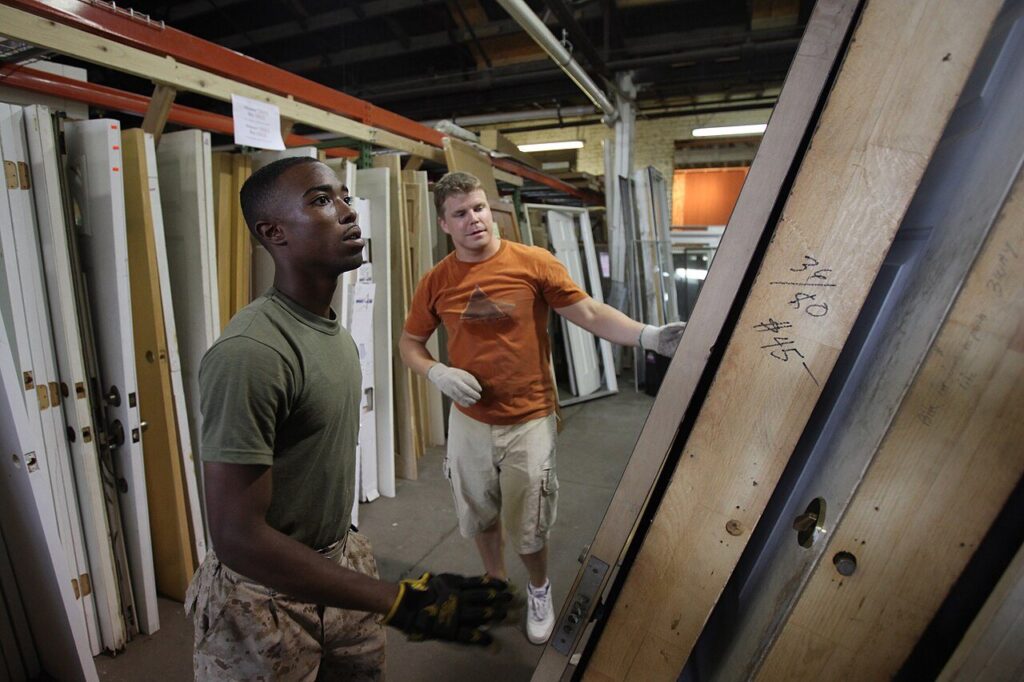
Indian River Habitat distinguishes donating merchandise from participating in a deconstruction project. A donor with a freestanding piece already available may be able to arrange a drop-off or request pickup. A builder or homeowner with reusable materials still in place can ask about a salvage operation associated with a remodel. The distinction matters because an installed item can lose much of its usefulness in the process of being removed. The people planning the work need to know what Habitat can accept, who is responsible for getting it ready and when the team needs access. Local deconstruction program
A useful first conversation is specific. How many cabinets are involved? Are the doors and drawers present? Is the piece still installed? Where is it located, and when does the owner's contractor expect the space to be clear? Photos and measurements can help staff understand the proposal if requested. A donation inquiry is not a confirmed collection, and a project timetable should allow for the answer. On a tight remodel schedule, waiting until the morning a crew arrives can leave too little time to evaluate material that another household would gladly put to work.
The same principle applies to someone clearing furniture out of a home. The store lists categories including cabinets, countertops, sinks and kitchen items on its merchandise page. Staff can explain the condition requirements for particular items and what is practical to collect. A donor should use the store's current drop-off hours, which differ from its retail opening time, and arrange an actual pickup before having anyone wait at the property. “Free pickup” describes a service the organization offers. It still takes space on a vehicle and time on a crew's schedule to move a particular item. Donation and pickup information
The buyer at the other end
Imagine someone looking for storage for a laundry room. They may be able to use one cabinet that would be too small for a whole kitchen renovation. A buyer planning a long run on a wall has a different problem. The height, depth, position of doors and total width determine whether a useful bargain will actually fit. Bring the measurements of the space and any fixed obstacles. A simple sketch of a wall, with the door, switches and clearances marked, is often easier to consult on a sales floor than a photograph that makes everything look approximately the right size.
A secondhand dining table raises another question. Its top may be the perfect size for the dining room while its legs or width make it hard to get through an entrance. A buyer needs to consider the route into the home and the vehicle available to collect it. ReStore posts a pickup cutoff for sold items. Check the current terms with the desk before paying, particularly for anything that requires another person or a larger vehicle to move. A purchase is a much better outcome for everyone when the donor's old table can actually leave the sales floor and reach its new owner.
There is also a small pleasure in allowing the object to change the project. A pair of matching lamps can solve a problem in a guest room without matching every piece already there. A single upper cabinet might be just the right scale for a utility space. Buying in this way requires being quite strict about functional dimensions and rather open-minded about appearance. It is the reverse of arriving with a catalog photograph and expecting the store to produce an identical item. A return visit may reveal a completely different set of possibilities.
Where the proceeds go
Indian River Habitat says profits from its ReStore help build future Habitat homes. The organization’s published financial reporting treats the ReStore as one part of a financing picture that also includes contributions, grants, fundraising and other revenue. That distinction makes the local transaction more tangible. A cabinet sold from the floor need not be installed in a Habitat house to contribute to the organization's work. It can go to any buyer who can use it. The net proceeds from the store help support a housing mission that is larger than any one purchase. Indian River Habitat financial highlights
For a contractor coordinating several trades, it is useful to name the person who can authorize release of the materials. A homeowner may own the cabinets while a contractor controls access to the work site. Putting those people in touch with the store before the job starts can make the difference between a workable donation and two crews arriving with incompatible instructions.
People with time to give also have a place in that system. Habitat describes volunteers working in the ReStore as well as on construction sites and home repairs. A person who is interested in housing but would prefer a store environment can ask specifically about that work. A builder can ask about salvage. A family with an extra sofa can begin with the merchandise policy. The steady accumulation of these fairly ordinary decisions is what makes the organization’s reuse model possible. A cabinet leaves one kitchen, another family finds storage it can use and the sale supports the next round of housing work in Indian River County. Local volunteer work