How Gifford built a place for the hours after school
Follow the Gifford Youth Achievement Center from its first classrooms to high school internships, adult programs and practical enrollment details for families.
Community institutions often begin around an ordinary table. In 1996, Dan Richardson and Dr. A. Ronald Hudson met at the Gracewood Fruit Company to discuss a place in Gifford where education and recreation could share a roof. Two years later, children could walk through the doors. Today a kindergartner who needs an adult to listen while she reads and a high school student considering a first internship both fall within the reach of the organization they helped create. Between those two ages lies much of the story of the Gifford Youth Achievement Center.
The original name used the word “Activities.” Indian River County approved plans for the center in 1997 under the management of the Progressive Civic League of Gifford. Carter Hopkins joined the leadership effort when Richardson became ill. The first facility opened February 15, 1998, with 18,000 square feet. In 2015, the organization adopted “Achievement” in its name. The earlier word still captures something about its origins. The founders had imagined a place where young people could do things together. The later one focuses attention on what those hours could add up to over a school year or a childhood. GYAC’s institutional history
A place between school and home
The center’s afterschool program accepts students from kindergarten through twelfth grade. That makes a broad promise about who belongs, but very different kinds of work can fit inside it. A younger student might need to read directions aloud before starting a page of problems. An older one may understand the problems and need quiet time to complete them. A teacher or volunteer who sees the same child repeatedly can discover which situation they are facing. On a single afternoon the difference may look small. Over several weeks it can change which assignments leave the child's backpack unfinished.
GYAC describes degreed teachers, staff and volunteers in its afterschool program. For a parent trying to understand its connection to a child's school, one enrollment detail matters. The center specifies that families must complete and submit the school district's Focus Community Agency Release of Student Information form before enrollment is complete. A program application and the school district release serve different purposes. The program also draws attention to transportation processing. A family that expects a school bus to bring a child to GYAC should establish when that arrangement begins and make another pickup plan until it does. Current afterschool program
In a program spanning thirteen grade levels, parents and caregivers can help by describing precisely what their child is working on. “She needs help in math” leaves a tutor a wide field to search. Explaining that the child can multiply but gets stuck deciding what a word problem is asking gives a teacher somewhere to begin. A teenager may want help identifying a deadline or getting feedback on a paragraph before submitting a longer assignment. The adult meeting the family at enrollment can also explain how questions about progress should travel between home, the school and the center during the term.
Why the classrooms kept growing
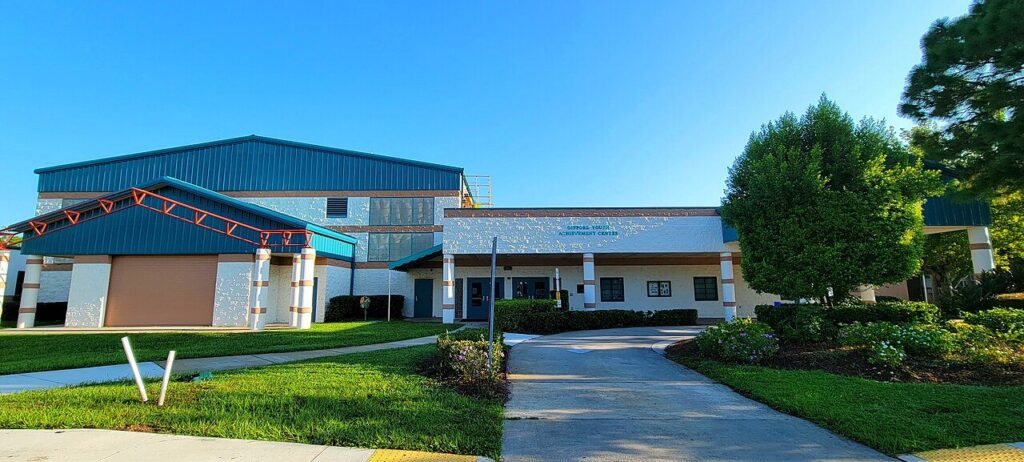
The building's history gives an unusually clear measure of demand. By 2013 the center had leased three more modular classrooms, citing annual waiting lists of more than fifty students. In 2019 it opened the Cis and Bill Glavin Educational Center with eight classrooms and four offices. GYAC describes its facilities today as covering 38,000 square feet. Compare that with the original 18,000 and consider what a classroom actually buys. It allows two groups needing different instruction to work at the same time. Office space gives staff somewhere to plan and meet with families while students use those rooms.
The link to education after high school goes back almost to the first year. In 1999 the center partnered with the institution now known as Indian River State College on the Kellogg Academic Program for Success, designed to help first-generation college-bound high school students. That historical partnership illustrates a difference between encouraging a student to go to college and helping them work out how to get there. A teenager may already have the aspiration. Questions about the order of applications, who can supply a reference and what deadlines matter can still stand between an idea and a submitted application.
The Youth Employability Program added another route in 2022. GYAC's annual report describes career assessment and employability preparation during the school year and opportunities for paid work experience in summer. The 2026 program calendar also records a summer internship start. For a young person, the distinction between preparation and placement matters. Exploring several kinds of work can be worthwhile before deciding which field to pursue. For a family, knowing that a training period and a potential work experience occupy different parts of the year helps when planning summer employment or travel. Program report · 2026 internship calendar
Work that can be learned on both sides of a desk
An employer considering an internship has a practical question to answer: what could a student meaningfully learn there? A defined assignment, a named supervisor and time to explain how the work fits the larger business give a young person something to carry away besides a line on a résumé. A student can bring equally concrete questions about work hours, getting to the site and how feedback is given. An introduction through a local organization is valuable precisely because these details can be discussed before a first shift. Contact GYAC about the present program and matching process rather than assuming an opening at any particular employer.
The center also serves adults. Beyond Special K was created in 2000 for adults and seniors. Over the years the organization has documented offerings ranging from art and exercise to activities developed with local partners. That changes how a family might recognize the institution. A grandparent may know it through an adult class, an elementary student through homework time and a teenager through a workplace opportunity. Each has an independent reason to come through the door. A list of youth activities alone would miss the way this one local address can remain useful long after a student outgrows the afterschool room.
For families in Gifford, the most direct starting point is the program that fits the person now. The center’s contact page provides the office details for questions about enrollment, volunteering and connecting with staff. Asking about a reading assignment, a possible internship or an adult program may sound like three different conversations. The achievement of the original meeting at Gracewood was to create a local institution capable of hosting all three. Contact the center