What makes a skate park different from an empty patch of pavement in Sebastian
Sebastian’s rebuilt Barber Street skate park has concrete ramps, boxes and a shared floor. See who can use it and how the city’s rules shape a session.
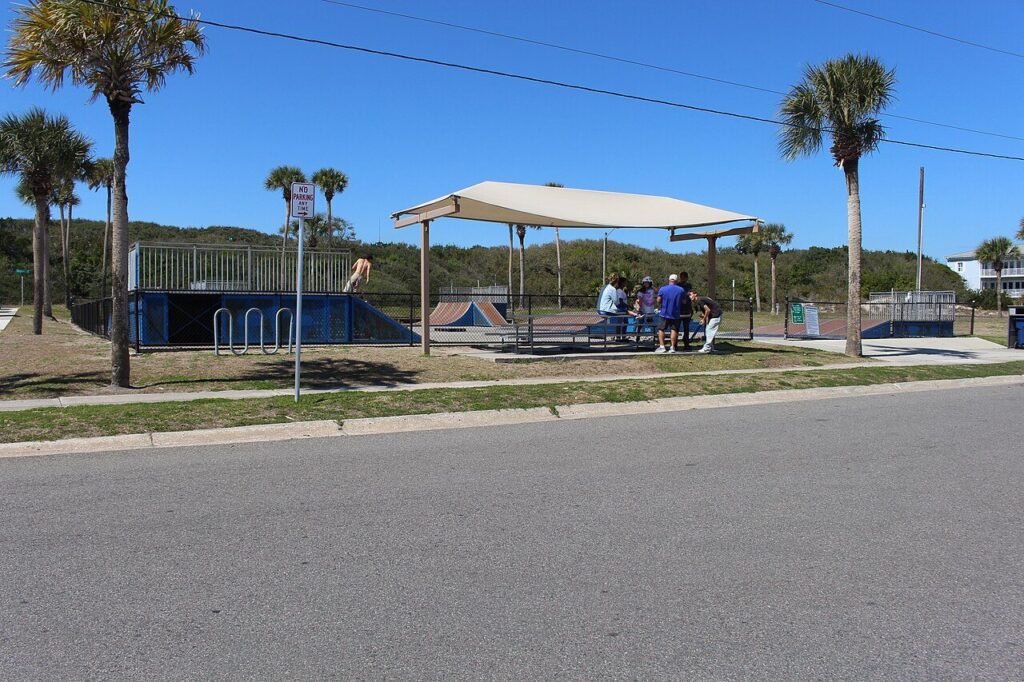
In a baseball game, a person standing still beside a base may be exactly where they belong. On the concrete floor of Sebastian's skate park, someone standing still in the middle of a line can change what another person is able to do. Both sports share the Barber Street Sports Complex, but they organize space differently. The baseball diamond has fixed stations and a sequence of plays. A skater's route emerges from the choice of approach, obstacle and exit. That difference helps explain why Sebastian publishes rules about how many skaters may use the park at once, which equipment belongs there and where people should leave their belongings.
The city describes the rebuilt skate park at 1121 Barber Street as a concrete facility with three ramps, boxes and a Jersey barrier. Even the floor is part of the design. A skater does not use an obstacle in isolation like a piece of indoor gym equipment. There has to be room to approach it, space to move after it and a way for the next person to know when that area is clear. A facility can cover much the same ground as a paved lot and offer a far more complicated set of choices. City skate park description and rules
The moving space around each feature
A first-time spectator might notice the highest structure first. Someone who already skates may be looking instead at the distance between two features and at the other people moving through that space. A concrete box creates a different line from a ramp. A freestanding barrier divides possible routes in still another way. A particular path that seems available to one person can cross the route another has already begun. For a parent who wants to understand what a young skater is looking at, watching a few full passes from outside the skating area can reveal more than staring at one obstacle.
A route begins before the part spectators recognize as the interesting moment. It continues after that moment as the person moves away. This is one reason the city's limit of fifteen skaters matters beyond the number printed on a rules sign. Fifteen people distributed around a park are not the same thing as fifteen people each owning a separate patch of concrete. The usable areas overlap. When a park is already at its published capacity, someone arriving next needs to wait. A larger gathering should plan for people watching or taking turns instead of assuming everyone can enter together.
The city limits the park to skateboards and inline skates, often called rollerblades. Its posted rules exclude bicycles and other wheeled equipment, require helmets, shirts and shoes and identify additional protective equipment it recommends. A family with several kinds of wheels should check that list before loading a car. A younger sibling with a scooter may love watching but cannot assume the scooter is permitted on the skating floor. The city also directs people to keep belongings and pets outside the skating area and to avoid using a wet surface. The current rules are available directly from Sebastian.
An unsupervised space beside organized sports
Sebastian's facility page dates the change to unsupervised operation to September 29, 2019. A public skate park can offer access without supplying an instructor, monitor or organized session. This distinction matters for young people heading there for the first time and adults deciding whether to accompany them. A person hoping for formal teaching should establish that a real class exists before describing a visit as a lesson. A caregiver planning to watch should identify a place outside the skating area and make a meeting arrangement with the young person before they begin.
The broader complex contains two Little League fields, an intermediate baseball or softball field, a senior baseball field, multipurpose fields, two basketball courts, batting cages and the Creative Playground. A family might therefore use the same address for several entirely different activities. A sibling at a scheduled baseball game may have a coach coordinating attendance. A skater at the park has no such arrangement simply because the two programs are near each other. The playing areas, meeting points and arrangements for supervision should be made clear to whoever is providing transportation. Barber Street Sports Complex
For a visitor coming from Vero Beach, the posted skate park window is daytime, from eight in the morning to sunset. That describes ordinary operating hours. It does not override a closure, a wet surface or a posted site notice. If a family plans to combine skating with an evening game elsewhere at Barber Street, compare the times. Ball players may still have an activity to attend after the skate portion of the outing has ended. A specific arrangement about when to meet prevents the youngest person from waiting at the wrong end of a sprawling complex.
What a spectator can learn in one visit
A useful way to watch a skating session is to follow a single feature through several different approaches. One person may use the space leading to it and then change direction. Another may be concentrating on repeating a familiar movement. Someone else may spend time watching before deciding they want a turn. A parent does not need the vocabulary for every trick to recognize persistence or a thoughtful choice to wait. A conversation afterward can begin with the route the skater found interesting, or what made a busy stretch of the floor harder to read that day.
A public park also gives people who do not skate a way to understand why a dedicated site matters. A child watching an older rider wait for someone else to finish can see a practical rule of shared space in action, even before they know the name of anything on the concrete.
A town choosing to provide a skate park makes room for a form of recreation that does not require matching jerseys, a season roster or an opponent to arrive for play to begin. It also creates a shared obligation familiar from every other public sports facility. People making individual choices have to account for the people beside them. Sebastian's combination of permanent concrete features, a capacity limit and a family sports complex makes that particularly visible. The facility works when skaters can use the routes its designers made possible and when the next person has enough space to take a turn.