The Sebastian oyster that put a lagoon name on the raw bar
How Sebastian Silvers reached local seafood counters, what a farm name tells an oyster buyer and how hatcheries, nurseries and growers fit together.
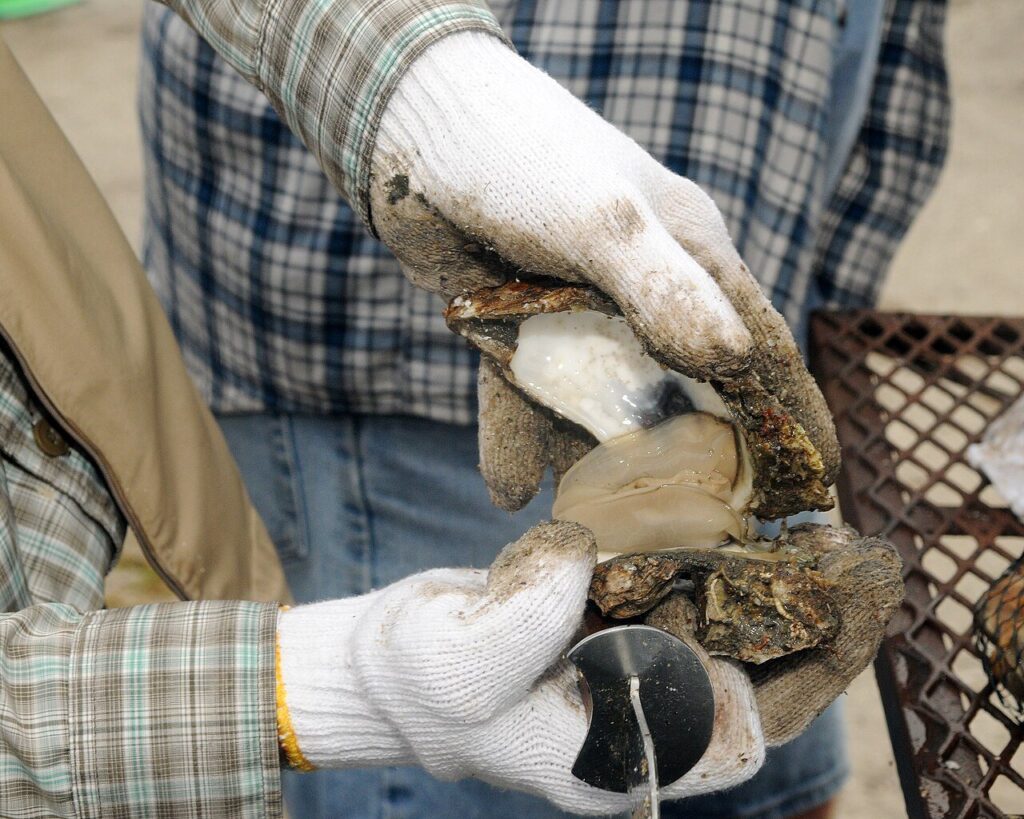
When Nicolette Mariano began delivering oysters to local restaurants and fish markets from her Sebastian operation, a seafood counter gained something more specific to print on a sign than Florida oysters. The name was Sebastian Silvers. It identified a producer, a stretch of coastline and a product that a customer could ask for again. Sebastian sits beside an estuary famous for wildlife and boating. Growing a food that could travel from those waters to the counter brought the lagoon into a different kind of conversation, the one that happens just before someone orders half a dozen.
A farm name arrives at the seafood counter
In a local report from the farm’s early deliveries, WPTV identified Mariano as the owner of Treasure Coast Shellfish. It documented the first stage of sales to customers including Pelican Seafood Company in Fort Pierce and Basin Seafood and Fresh Fish Market. Read those names as a record of the business at that time. A seafood market can change its suppliers or receive a different shipment from one week to the next. The question for a shopper now is which farm supplied the oysters available today.
A Sereia Films documentary on Treasure Coast Shellfish, cataloged by the Southeastern Aquaculture Communications Collaborative, follows the food from farm to plate. A farm name can be recognized in several places: in a documentary, on a market board and in a restaurant’s description. Each source contributes something different. The film traces the people and work behind a company that diners may first encounter as a few words on a menu. A menu identifies what a restaurant intends to serve. The person opening the box can explain the oysters available for that particular service. For customers who want local food, learning to ask that last question is as important as knowing the first name.
What growing a shellfish means in Florida
The Florida Department of Agriculture and Consumer Services describes a sequence beginning with tiny shellfish produced in a hatchery. They grow further in a nursery, then move to grow-out on submerged leases before sale through certified facilities. Think of this as several different jobs along one supply chain. A farm selling oysters under a name a diner recognizes need not perform every stage itself. The people producing seed, tending growing shellfish and preparing a shipment each contribute separate information to the product that reaches the counter.
That sequence also explains the odd word seed in an industry dealing with animals. In this usage it signals a young stage of the shellfish, small enough to be moved and grown to saleable size. It does not make the oyster a plant. The University of Florida’s 2026 seed supplier list is a trade resource intended for that stage of production. A person looking to order dinner should seek a restaurant or market. A grower looking to stock a nursery seeks an altogether different product, even though both transactions involve an oyster.
A name printed on a raw-bar menu compresses all of that work into a few words. If two farms serve the same general region, one may market a name associated with a town and another may emphasize its lease area or family identity. That makes a farm name valuable to a customer who enjoyed a particular batch. It also means that reading a list of oyster names is closer to reading a set of origins than a set of recipes. The cook may open several different oysters in precisely the same way and still present a meaningful choice.
What can a customer compare?
Start with what is actually on offer. Ask the server or fishmonger which oysters came from Florida, and then which part of Florida supplied them. The state fronts more than one coast. A broad state label is perfectly accurate while saying little about whether the shellfish came from the Atlantic lagoon beside Sebastian or another growing region. If the answer identifies a producer, ask how its product appears on the menu or sales label. A spelling on a receipt or a photo of the board is easier to follow up than a farm name remembered only by sound.
For a person who eats oysters regularly, order two origins together if the restaurant offers them. Look first at shell shape and the amount of room inside rather than trying to predict flavor from a romantic place name. Compare the oysters as they arrive, then decide which accompaniments to use. A squeeze of citrus or a strongly flavored sauce can make it harder to tell what part of the experience came from the oyster itself. The object of the comparison is to identify a preference, not to recreate someone else’s description of the lagoon.
An oyster farm and a reef restoration project can both appear in the same local newspaper for good reasons. Their immediate purposes differ. One grows a food crop that is expected to enter a commercial supply chain. The other works toward habitat goals under a project’s own rules. Visitors should observe those boundaries and buy through a restaurant or seafood dealer. Seeing shellfish growing in the lagoon is an invitation to learn about the estuary, while an identified, commercially supplied lot is the starting point for a meal.
The value of a familiar name
It is easy to picture buying locally grown produce. A person visits a farm stand, sees the grower’s name and buys a bag to take home. With oysters, the route is less visible. Most diners encounter the finished shell in a restaurant, long after the nursery stage and well away from the water where it grew. A named product like Sebastian Silvers gives the customer a place to begin following that route backward. It also gives the grower something a diner can specifically ask for on a return visit.
For anyone introducing a guest to the Treasure Coast, this is a particularly good food story to tell over a menu. Point out Sebastian, locate the lagoon, then ask about the actual oysters on the list that day. They might come from somewhere else entirely. That answer still teaches something useful about the difference between a restaurant beside the water and seafood raised in it. When a Sebastian-grown oyster does appear, the town name will now mean more than an attractive phrase on a chalkboard.