How the Hales mailed a Vero Beach fruit stand to the rest of the country
Polly Hale’s account of hand-addressed fruit orders shows how an Indian River citrus stand became a mail-order business and why the packing work mattered.
A fruit stand can serve as many people as drive past and stop. A postcard can reach a customer who has already driven a thousand miles away. That small difference was central to the business Steve and Polly Hale built in Indian River citrus country. Before a box of Florida fruit could become a holiday tradition in a distant household, somebody had to remember a name, write an address, select fruit fit for the journey and trust a delivery system with the result. The Hales’ own account gives unusual prominence to those unglamorous steps.
The first customer list was a household job
In a 1997 recollection later published by Hale Groves, Polly Hale described assembling names at the kitchen table. The list included relatives, friends and people who had bought oranges or grapefruit from Steve’s stand. Postcards offered to send citrus to their homes, and an order came back by mail. The first list was therefore neither an anonymous audience nor a collection of people who happened to subscribe. Some of its members had tasted the product, met the seller and already made the trip back home. The postcard renewed a relationship that began beside a Florida road.
A gift order changes that relationship again. The person paying, the person receiving and the people doing the packing may live in three different places. A box with the right fruit and the wrong gift message can be a poor present even when it is an excellent shipment. Polly’s recollection includes typing shipping labels at night and writing gift cards. It is tempting to treat those as supporting tasks while giving the growing and picking all the credit. From the recipient’s perspective, the card that identified the giver was part of the product.
From roadside juice to fruit that had to travel
The company’s history dates Steve and Polly’s roadside stand to 1947. It remembers fresh juice and handwritten labels. Juice served at a stand puts the emphasis on what happens immediately. The customer can taste it, decide whether to buy more and ask questions before leaving. Whole citrus sent through the mail faces a different trial. Fruit must withstand handling, arrive in useful condition and communicate something of the grove to a person who cannot look out of the stand and see Florida around them.
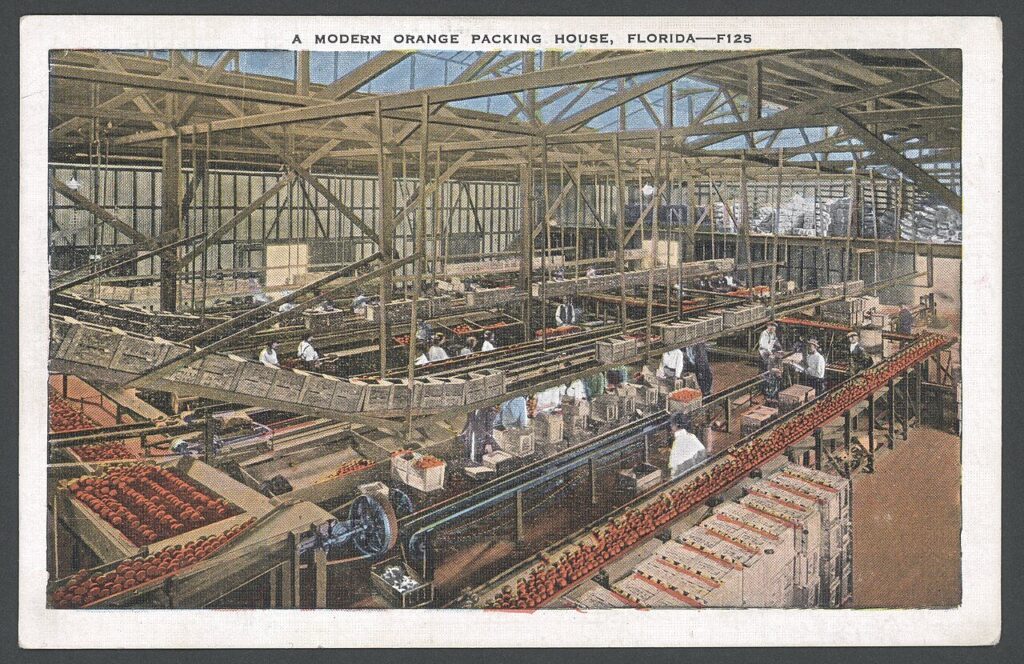
Polly’s account describes Steve picking fruit, followed by washing, drying, waxing, inspection and grading at the packinghouse. The steps explain how much work sits between fruit on a tree and fruit nestled into a gift package. Inspection selects individual pieces. Grading helps a shipper build a predictable offering from a natural crop that varies. Labeling and packing then connect that selection to one recipient. A business could do any of those jobs well and still disappoint somebody by getting another step wrong. Remembering the whole sequence gives the ordinary carton a different sort of significance.
A fruit-box buyer can still use this distinction. Look at the variety, count or weight, expected shipping period and any description of origin. The product photograph shows the appearance the seller wants to convey, while the order details establish what the customer can expect. A mixed box might be just right for a household that likes to compare oranges and grapefruit. A smaller single-variety shipment may fit somebody who lives alone and already knows a favorite. The most generous-looking package on a screen can be the wrong choice if its recipient has little room to store it.
A Florida name can tell more than one history
In another account of its origins, the company describes Steve Hale visiting the Vero area as a student before the launch of the stand. It connects his interest in the trade to seeing fruit in a packinghouse and tasting oranges and grapefruit in the citrus-growing region itself. There is an appealing symmetry here. Exposure to the local product persuaded him of its commercial potential. The business he and Polly built then had to persuade other people of that same thing without asking them to travel to Vero first.
Indian River County’s public assessment of the Hale Grove site places part of the former citrus landscape in a different context. County acquisition records describe land on US Highway 1 north of the Wabasso crossing as former grove property, with fallow land among its later conditions. That record describes a particular piece of ground. The Hale Groves name also identifies a gift-fruit business that customers can encounter through a catalog. Those two records belong beside one another in the history of the area, but a present-day shipping label alone cannot identify the parcel where an individual orange grew.
For visitors who remember long drives past groves, that distinction explains part of the disorientation of returning years later. A familiar brand can survive a change in the view from the road. The work associated with an old location can carry on in different arrangements, while the land acquires another public or private purpose. Read the land records when the question concerns acreage and the former site. Read the company’s shipping information when the question concerns what can actually be ordered and sent to a particular address.
What to put on the gift card
A little personal information still improves the gift in a way a bigger box cannot. Explain why the fruit was chosen. Perhaps the recipient once bought juice on a drive through Indian River County, or perhaps a visit to Vero was the first time an orange tasted memorable enough to send home. Ask when the person will be at the delivery address and pick the shipment accordingly. A seasonal gift that arrives while the recipient is away loses the advantage that the Hales worked so hard to create between picking, packing and delivery.
The story of a citrus business is usually illustrated with bright fruit and tidy rows of trees. The archive makes a case for a second image: a kitchen table, a stack of postcards and two people trying to reach somebody who had stopped at their stand. That was the step that let an Indian River visit continue after the customer left town. The box delivered the fruit. The names, addresses and messages turned it into a gift.