A Vero Beach naval warehouse found a second life brewing beer
Walking Tree Brewery’s Vero Beach home was built for naval supplies. Its founders’ account traces the route from backyard brewing to a wartime warehouse.
A former naval supply warehouse is a surprising place to look for a beer with the name Babycakes. Yet the building and the oatmeal stout illuminate different halves of the same Vero Beach story. The building belonged to the machinery of a military air station. The beer grew out of backyard brewing and competitions. Walking Tree Brewery brought the two together on the mainland, between the area associated with Dodgertown and the Piper aviation facility. An outing here offers something other than the usual Treasure Coast combination of a drink and a water view.
The brewery’s history identifies the site as a 24,000-square-foot naval supply warehouse built in 1945. Its account starts the brewing venture in a backyard, followed by involvement with local clubs and regional competitions. That sequence explains why the brewery talks about both recipes and real estate. Solving the problem of how to make beer repeatedly at a commercial scale is different from solving the problem of what to brew. An existing industrial building supplied an answer to one question, with substantial work still to do on the other.
Read the building before reading the tap list
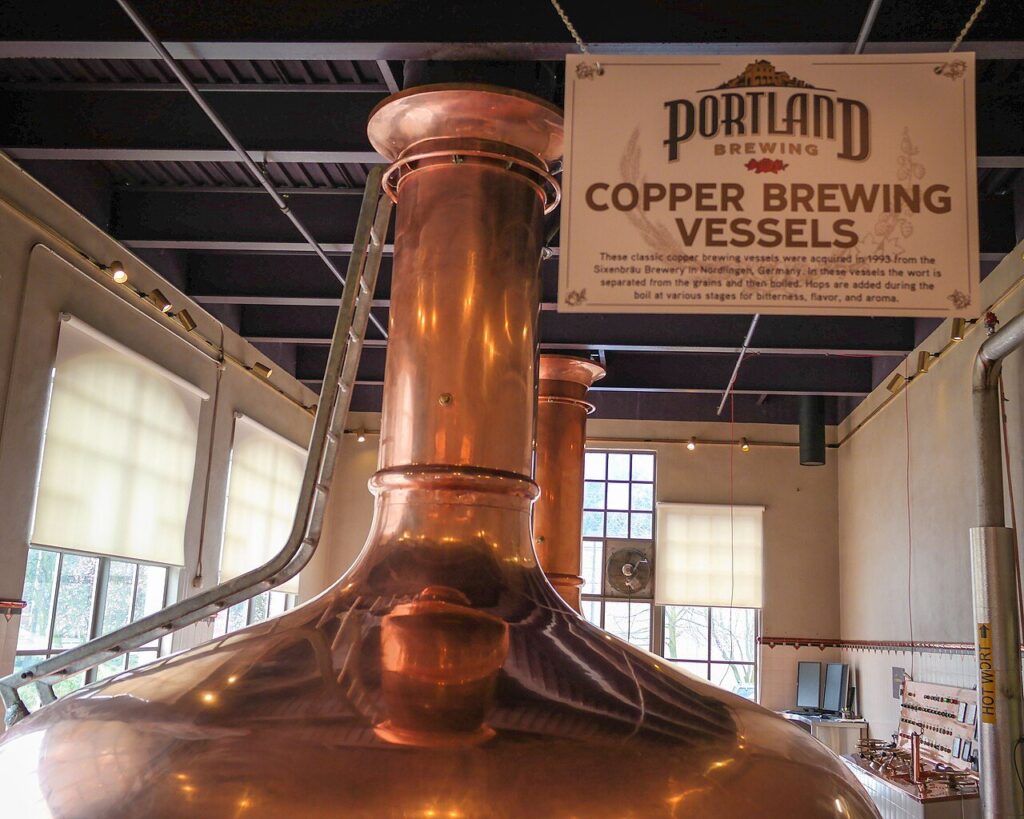
A warehouse designed around the movement and storage of supplies is a different container for a business than a storefront built around a small dining room. Its scale gives a visitor a way to think about the work behind a glass. A brewer needs space to receive ingredients, hold equipment, move liquid and deal with the containers in which the finished beer travels. A customer usually encounters the process only at the last few feet, where a tap, a glass and a counter bring it within reach.
Walking Tree’s history page includes a series of pictures documenting the work on the site. They offer a useful starting point for somebody interested in the building itself. Compare a construction image with a view of the finished space, looking first at the spans and supports instead of the furnishings. The exercise is a way to distinguish what belonged to a large industrial structure from the choices made when it took on a new public role. The photographs document stages in a particular project, rather than illustrating an anonymous “industrial” design style.
Why an oatmeal stout belongs in the origin story
The founders single out Babycakes Oatmeal Stout in their account of early brewing competitions. Its name returns on the brewery’s beer guide. That continuity gives the visitor something more concrete to follow than a general claim that a business has roots in homebrewing. Here is the name of a beer connected to those early efforts, alongside a published roster that later grew to include rather different styles. Availability in the taproom can change, so consult the current list before promising anyone a taste of a particular release.
A stout can be a revealing starting point for a discussion about expectations. Dark color alone tells a drinker very little about how sweet a beer will taste or whether it will feel heavy. “Oatmeal” names an ingredient associated with the style. It does not tell you that a glass will resemble breakfast cereal or that you have to find a particular fruit or dessert flavor in it. If you order it, notice separately the first aroma, the impression of roasted grain, the texture and what remains after a sip.
Three names and three different drinking decisions
Walking Tree lists Sandy Feet American Wheat Ale, Babycakes and Barnacled Manatee Barleywine among its beers. Those names offer three different entry points to a style conversation. Wheat ale puts a grain and a broad family of beers out front. Oatmeal stout signals quite a different grain bill and visual expectation. Barleywine is a beer style despite the last part of its name. Before ordering, check actual strength and available pour size on the current menu. A name is a clue to a drink, not a measure of how much belongs in a serving.
For two adults who want to learn a little about beer, splitting the decision by style is more useful than ordering two things solely because both names sound appealing. Ask what is currently being poured, whether smaller portions are available and which pair would show a noticeable difference. Compare individual impressions before looking for an official tasting note. One person’s roasted impression can be another person’s impression of bitter chocolate. The vocabulary should help identify what you enjoy, not turn the visit into an exam on the correct answer.
Match the outing to the right part of Vero
This is an airport-area mainland destination. If half your group is planning a beach walk and the other half is interested in the brewery building, send the actual location to everyone before setting a meeting time. A warehouse address can put visitors in a different part of town from the image an out-of-town guest forms when hearing “Vero Beach.” That is part of its appeal. It also changes how people should arrange a ride home, particularly if the group intends to taste more than one beer.
The brewery’s own site and its taproom information are the places to check what’s pouring and what is planned when you visit. Treat an event and ordinary service as two different visits. Music, a gathering or a special release may be exactly what a group wants. A friend whose real interest is the building may prefer a quieter time. Ask separately about food service on the intended day, especially if anyone is relying on the visit for dinner rather than a drink.
Perhaps the most interesting pairing here is a photograph with a pint. Look again at the historic use of the building, then at a beer linked to the company’s early experiments. Neither alone fully explains what happened in this corner of Vero. A wartime warehouse could have found any number of uses. A backyard recipe could have remained a weekend pastime. For a time those stories ran on separate tracks. The chance to consider both in the same place is something a list of the region’s beer styles alone would never convey.
A designated driver can still make a good historian for the group. Hand that person the construction photographs and ask everyone to find one feature of the original building that survived the change of use. It gives people who skip the tasting a substantial part in the visit and brings the conversation back to the particular place everyone came to see.