What the untidy line of seaweed does for a Vero Beach shorebird
A Vero Beach walk along the wrack line reveals food, shelter and clues about the last high water. Learn to read it and leave feeding birds room.
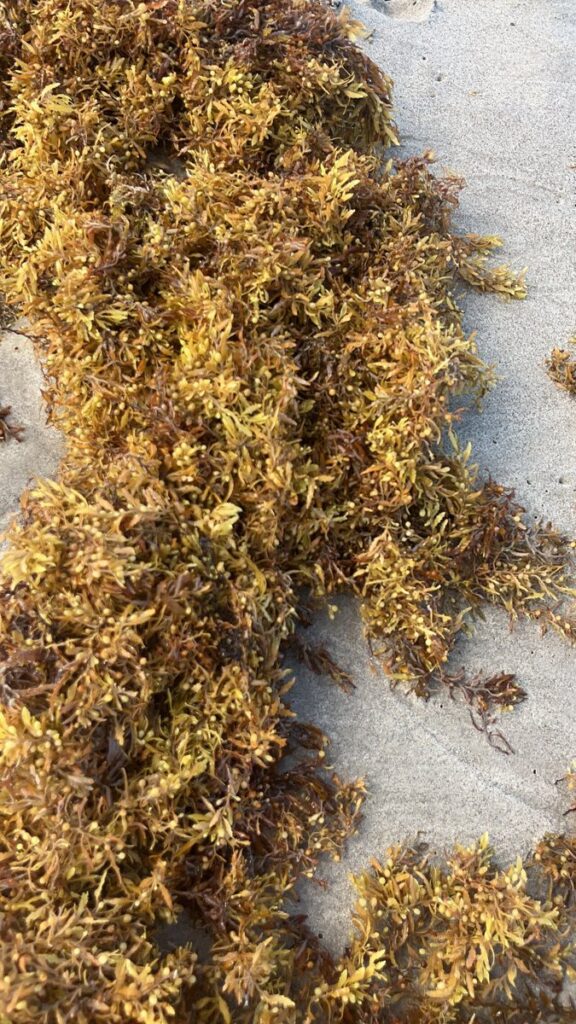
A line of seaweed can make an otherwise tidy stretch of Vero Beach look as if someone interrupted the cleanup halfway through. To a shorebird, that irregular stripe can be one of the more useful addresses on the beach. The line brings together material carried by water, small animals using it for food or shelter, and birds searching for a meal. Once you know what to look for, the interesting walk is often along the edge of the seaweed, at a respectful distance from anything feeding there.
Start with what washed in
Wrack is a general term for natural material deposited along a shore. Florida visitors often associate it with brown Sargassum, but a strandline can contain different kinds of seaweed, pieces of seagrass and other natural debris. The University of Florida Extension explanation of wrack describes how stranded vegetation contributes moisture and nutrients and supports small animals. Its examples come from another part of Florida. The useful principle for Vero is that what washes ashore depends on what the water has carried there.
Try describing the line before naming its components. Does it form a narrow ribbon, a scattered series of clumps or a broad mat? Does a second band lie farther up the beach? Look for differences in color and moisture without assuming that color gives you an exact time of deposition. Wind, waves, material type and drying all influence what remains visible. A photograph at a recognizable public access can become an interesting comparison if you take it again after a change in weather.
When someone calls every brown mass Sargassum, it is worth slowing down the identification. The Florida Department of Health’s Sargassum information sheet describes the seaweed and its role as habitat while floating at sea. Once large amounts wash ashore, they can also affect people’s use of a beach. Acknowledging the nuisance of a heavy accumulation does not erase the ecological value of ordinary wrack. Nor does the value of wrack mean every object caught in a strandline belongs there.
Follow the birds with your eyes
Indian River County’s 2026 beach preservation plan appendix identifies the swash zone and fresh wrack as areas where shorebirds commonly occur along the county’s Atlantic coastline. The swash zone is easy to pick out on a beach walk: it is the strip where the water runs up and retreats. A fresh band of wrack may lie above it. Watch how a bird uses one band, then the other, rather than assuming the whole beach offers the same feeding opportunity.
Pick one bird from a distance and track it for a short, defined period. Does it investigate a clump, probe repeatedly in sand, or run back with the water? If it leaves your field of view, end that observation. Avoid following so closely that you drive the animal along the shore. Move away if your approach interrupts feeding. There is little value in recording a bird’s response to a wrack line if the most important thing determining its behavior has become the person with the notebook.
A small group can make this exercise more interesting without crowding the birds. One person can describe the waves, another the distribution of stranded material and another the bird’s behavior. Compare what each thought mattered. A wave arriving beside a cluster of seaweed might bring a bird into the observer’s view, for example, without proving that the bird ate anything there. Field notes work best when they separate these events instead of tying them together with a confident explanation the group could not actually verify.
The beach has more than one kind of tidiness
There is a sensible distinction between picking up a wrapper and stripping the shore of natural material. Take away your own litter. If a discarded item can be safely retrieved without approaching wildlife or entering a posted area, disposing of it properly helps keep it out of the water. Leave natural wrack and the creatures using it in place. An unidentified object that could be sharp or hazardous is something to flag to the beach manager rather than handle as part of a family scavenger hunt.
It is equally important to respect the space above the wrack. Audubon Florida’s beach guide links the strandline with dunes and the animals that use the beach. Stay on designated access paths across dunes and give posted nesting areas a wide berth. There is no need to climb the dune for a top-down photograph of the stripe. From the beach itself, a low oblique angle can show the relation between ocean, fresh wrack and dry sand in a single frame.
For parents, a good collection to bring home is a set of descriptions rather than a bucket of material. Find three shapes: a ribbon, a knot and a fan. Photograph them where they lie, leaving room in the frame to show their surroundings. Ask which might shelter something beneath it and what evidence would help answer that question without turning the whole band over. The exercise shifts attention from possession to curiosity and leaves the next person something intact to examine.
If you want to compare two beach accesses, give both a fair look. Walk a similar length of shoreline at each, note whether the tide is rising or falling at the nearby prediction station, and record whether another group had just passed through. A single count of birds made moments after someone walked a dog past them may describe a disturbance more than a feeding preference. Keep the initial descriptions short enough that the same person can make both without rushing, then compare the distribution of wrack before comparing the birds. The exercise gives a familiar local beach a new dimension even when you cannot put a species name to a single bird.
A final walk parallel to the water makes the point more clearly than a lecture. On one section, the strandline may be continuous. On another, water may have scattered it or left it high above the current swash. The same beach offers several arrangements over a fairly short distance. Note the one you saw and the date. The next time a visitor asks whether the beach is “clean,” you can give a more informative answer: whether you observed human litter, what natural material was present, and where the birds were finding their own use for it.