The builders of Bathtub Reef live in tubes made of sand
Why Bathtub Beach on Hutchinson Island has a living worm reef, how the colony changes water and sand movement, and what visitors can see from shore.
Ask how a beach got its name and the answer usually involves a family, a ship or a road. At Bathtub Beach on southern Hutchinson Island the explanation begins with an animal small enough to hide inside a narrow tube of sand. Thousands of living structures together can alter the way Atlantic water reaches the beach. In calm weather that can leave relatively quiet water on the landward side. It is how a stretch of open coast near the St. Lucie Inlet came to acquire the name of a household fixture. In rough weather the comparison can disappear completely.
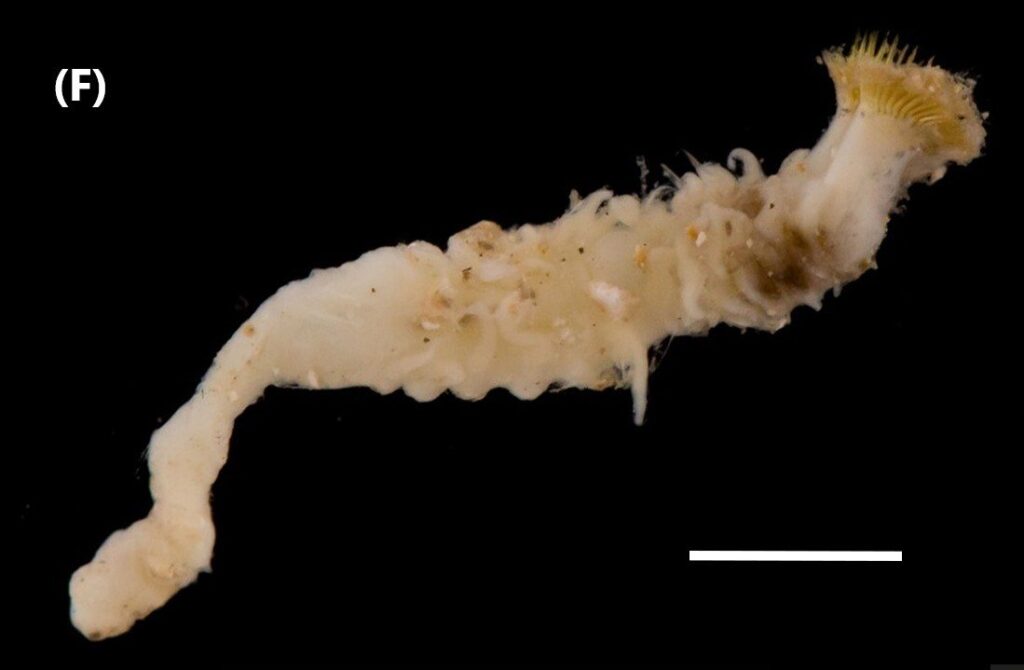
The builders are marine bristle worms in the family Sabellariidae. Florida Oceanographic Society identifies the local species as Phragmatopoma caudata. The low mounds they build are different from both a coral colony and a rock ledge, despite the everyday use of the word reef for all three. A casual visitor may never get a close look at an individual worm. Once you know how the reef is put together, the reason for keeping your weight off it becomes much easier to understand.
A building material from right outside the door
A young worm settles on a firm surface and starts a protective tube from grains of sand around it. Its neighbors use the same method. Tubes attach alongside one another, and the colony can grow into something far larger than any one occupant. The Florida Oceanographic Society’s illustrated worm reef sheet shows the relationship between one animal, the enclosing tube and the outline of a whole mound. Most of the worms it describes are about three-quarters of an inch long.
The geometry is the important part. The hard-looking surface of the colony is also a collection of entrances. The worms build small sand hoods that help protect them from drying when a low tide leaves the surface exposed. A shoe can press a hood into the tube and seal it. The damage is easy to miss from above. A single footprint may leave most of the mound standing while breaking the relationship between many tiny animals and the water outside their doors.
That is different from stepping on the bare shell of a long-dead animal. The apparent grit and roughness of the surface make it look durable to a person accustomed to concrete. Each animal, however, needs the opening to its own tube. Take that distinction seriously when choosing where to put a foot or a hand. Leave the reef surface alone, including exposed portions that look dry. Breaking off a piece to inspect the texture takes part of the architecture away from the occupants that made it.
A quiet strip of water has conditions attached
On a calm day, waves reaching the reef can lose some of their energy before they reach the inner water. People standing at the shoreline may see a change in the way the surface looks on either side of the formation. Martin County’s Bathtub Beach guide explains that the effect is particularly apparent in calmer spring and summer conditions. Choosing a name for a beach freezes a recognizable impression into a phrase. It cannot freeze the weather or the height of the water that produced the impression.
In fall and winter, or with a strong storm offshore, the low reef cannot reliably shelter the inner water. The county describes the possibility of strong currents within the reef and substantial breaking waves outside it. An old vacation photograph showing families in a placid pool tells you something about that particular day. For a present-day decision, use the county’s link to current conditions and the flags and guidance at the beach. A trip to look at the water from land is still a visit to the reef, including on days when entering it is a poor choice.
The reef also offers habitat and changes how the immediate surroundings are arranged. Small pools can remain when water falls, and other organisms can use the relief created by the mounds. You can study this with a simple visual comparison from shore. Look for a sequence of crests approaching from the ocean side, then follow what becomes of the same set of waves farther in. Try again when conditions differ. The visible absence of a placid inner zone on a rough day is itself a useful observation about how low the structure is compared with the moving water.
What happens to the sand behind the name
A protective feature might sound as if it should always help a beach grow. The county describes a more complicated pattern. During calm conditions sandbars can move toward shore and contribute sand to the beach. After periods of rough water, the low offshore reef can also impede the movement of sandbars returning from farther out. The same structure that breaks up waves under one set of circumstances can affect the return of sand under another. A narrow beach behind a living reef is therefore no contradiction.
This is a question with consequences beyond the line where people put down towels. Repeated loss of sand and dunes can expose facilities and MacArthur Boulevard to damage. The county’s history lists several nourishment and storm recovery projects. Read their dates beside the explanation of the seasonal cycle. A photograph of a wide beach just after work has ended and another taken following a storm are records of two stages in that history. Between them, both public works and waves may have contributed to changes that are visible from the same spot.
For a visit, start with the county address on Southeast MacArthur Boulevard in Stuart. Check the current access and ocean conditions before driving south along the island. If a member of your party wants a tangible souvenir, the society’s drawings are better than a piece of reef. A child can sketch a tube, then draw another alongside it and keep going until small shapes make a mound. Only after drawing those individual homes does the scale of the builders’ achievement begin to register.
On this shore a grain of sand can be part of the loose beach, part of a moving bar or a carefully positioned piece of an animal’s front door. The differences can be invisible from a few feet away. They matter to a living reef, to the shape of the beach behind it and to the simple choice of where a visitor stands.