Before Rio Coco had two Vero Beach cafés, it had a school project
Follow Rio Coco from a Central American school project to a Vero Beach farmers market, an airport-side roastery and a café in the Pocahontas Building.
The two Vero Beach addresses associated with Rio Coco Coffee tell a story that starts at neither of them. First came a school project in Central America. Then came an idea about selling roasted coffee to support it. A stall at a Vero farmers market preceded a warehouse café near the airport, and the downtown café came later still. Read in that order, the familiar question “Where do you get your coffee?” suddenly has at least four possible answers. You can be asking about a crop, a roaster, a neighborhood or the reason the business exists.
The founders’ published history places the beginnings of Project Ezra in 1986, in refugee communities in the region of the Río Coco. It describes Michael and Laura Bagby’s work with Miskito communities and a school project that predated the commercial coffee venture by years. The connection is important, but so is the order. In this account a school did not emerge as an extra feature of a profitable café. The question of how to fund teaching helped give the café business its purpose.
The idea needed a roaster
Coffee is a complicated way to turn a generous impulse into a product. Someone must grow it, handle the crop, arrange transportation, roast the beans and find customers for the finished bag. Rio Coco’s account describes coffee farmers in Nicaragua and a connection in North Carolina with roaster Larry Larson. It dates the business idea to 2004. That geography complicates any simple description of the coffee as “local.” People in several places helped bring a product to buyers long before anyone walked into a Vero Beach storefront bearing the name.
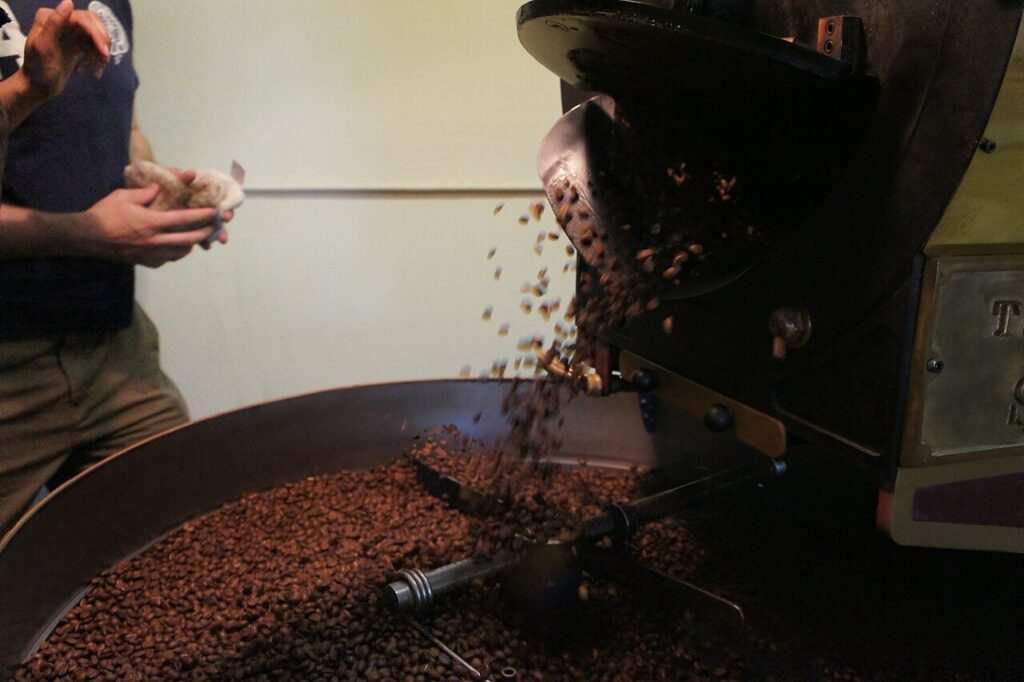
The company later brought roasting equipment into its Florida operation. Its history describes the purchase of a twelve-kilogram Diedrich roaster in 2008. That figure describes a machine, not the volume in an average order or the output of the business today. The useful distinction for a coffee drinker is where roasting entered the story. A café can serve beans roasted elsewhere, sell green beans grown elsewhere, or roast imported beans itself. In this case a machine and people trained to use it made Vero part of the production story as well as the sales story.
A farmers market gave the coffee a public address
The family’s account of its early team places coffee service at the Vero Beach Farmers Market in 2008. For a new roaster, a market stand can do something a sealed bag on a distant shelf cannot. It puts a cup in a customer’s hand and someone familiar with the product on the other side of a relatively small table. A person deciding whether to buy beans for home can taste the brewed coffee first. The person pouring can find out what customers mean when they ask for something strong.
That word alone can mean several things. One drinker wants a darker roast flavor, another wants a more concentrated brew and a third wants a big cup that will stay interesting after milk goes in. A useful café question would describe what you drink at home, the equipment you use and whether you prefer the coffee black. The answer might lead to a different roast, a different grind or simply a more suitable brew method. Those are distinct decisions that advertising words on the front of a bag rarely settle.
One warehouse bay and two Vero addresses
Rio Coco’s guide to its locations describes the original Vero operation as one warehouse bay with a café in front and a roastery behind it. The company dates that opening to December 2011 and places it on 43rd Avenue on the west side of Vero Beach Airport. The word “airport” here is a neighborhood clue. Someone planning to meet a friend should use the café’s actual street address, 3300 43rd Avenue, rather than assuming the meeting place is an airline terminal or past a security checkpoint.
The business says it expanded into additional bays in 2013 and opened its Living Room event space in 2016. The other Vero café, in the Pocahontas Building at 14th Avenue and 21st Street, opened in 2018. This gives a visitor two quite different ways into the same business. Choose the airport-side address if the history of the roastery is what caught your attention. Choose downtown if coffee is one stop during a walk in the historic district. A working roastery’s presence does not itself promise tours. Ask about access before promising someone a behind-the-scenes visit.
A third café helps explain the name
The company’s location guide also lists Utila, an island off the Honduran coast, and dates the opening of that café to August 2011. That puts it before the first Vero café. The Nicaraguan school project, Honduran island café and Florida roastery are connected in the company’s account, but they are different places with different functions. The location printed on a bag of coffee may describe another place again. Check the origin of the particular beans you are considering rather than assuming every coffee on the shelf came from a school community.
Rio Coco describes its funding model as using profits to support the educational work in Nicaragua. A purchase and a direct contribution are therefore different transactions. A person who is interested mainly in the schools can follow the links to the project and read what it reports. A person buying coffee can ask about the beans in the cup. It is perfectly possible to be interested in both and to want different evidence for each part of the story.
A good way to finish the visit is to take home the most specific detail you learned. It might be the name of a producing region, the way a particular roast works in your kitchen, or the fact that Vero customers were tasting Rio Coco in an outdoor market before either local café opened. That last detail changes the picture of the business in a useful way. The city did not simply acquire two places to sit over coffee. It became one of the places where a much longer idea found customers, equipment and a home.
If you are arranging a coffee tasting for friends, keep the bag beside the cups. Read its description after everyone has tried the first sip. People often find different things in the same brew, and the producer’s notes make an interesting second opinion. They need not become the answer everyone is expected to give.