What a pound of Florida stone crab claws buys on the Treasure Coast
Understand the Florida harvest season, shell weight and ready-cooked claws before ordering stone crab from a Treasure Coast seafood counter.
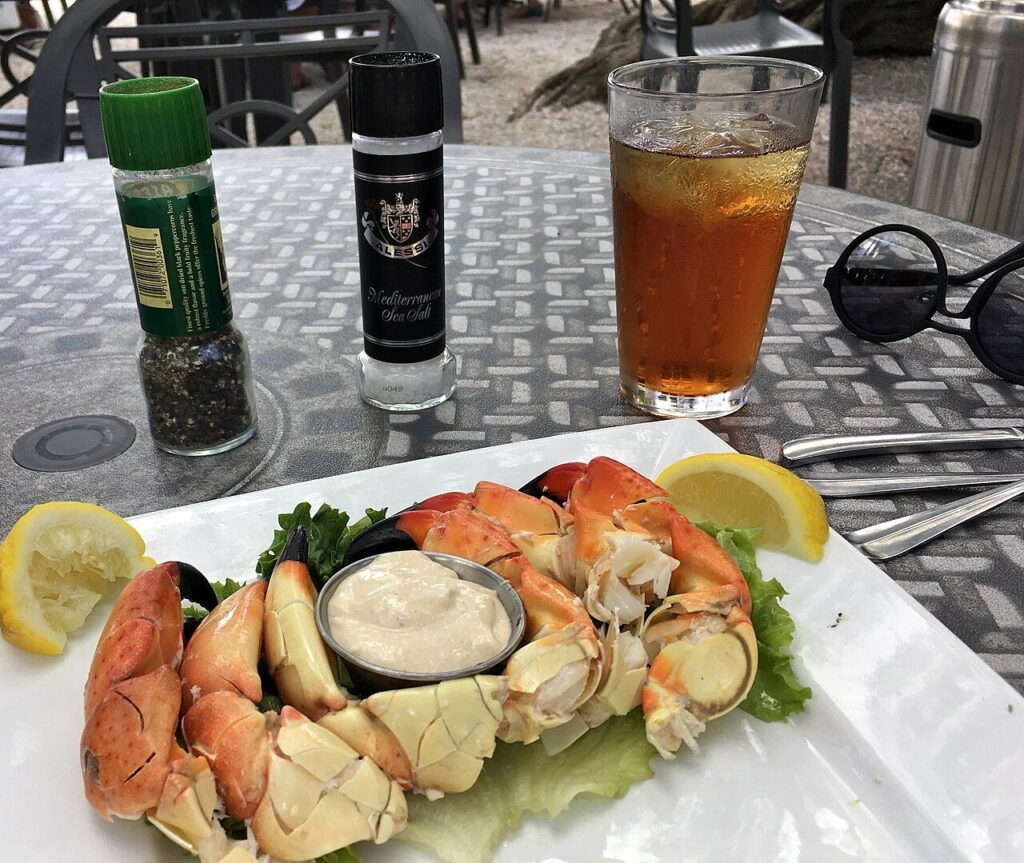
A pound looks like a wonderfully precise answer until you bring it to a stone crab counter. That pound includes the substantial shell that protects each claw. Its value at dinner depends on how much meat you expect, what else you are serving, and whether you are buying an appetizer for several people or the principal food on the table. The number on the scale is real. It simply answers a different question from how many portions you can put on plates.
For a local example, the Downtown Fort Pierce Farmers Market vendor directory lists stone crabs among the seafood offerings associated with Local Seas East Fisheries. That is a place to start looking, not a guarantee of stock each Saturday. Availability, size grades and prices can change. Check with the seller, particularly if you have invited guests on the assumption that claws of a particular size will be waiting. Start with the occasion, and then decide how much shell-on seafood the occasion actually needs.
Use a yield estimate before comparing prices
The Florida Department of Agriculture and Consumer Services guide offers a useful rough conversion. About two and a half pounds of cooked claws yield a pound of picked meat. Turn that around and a pound of claws yields roughly six and a half ounces of meat on average. Neither figure is a promise about the claws on today’s scale. It does, however, expose the mistake in treating a pound of claws as the equivalent of a pound of boneless fish.
Imagine a supper for four where crab is one cold starter before a substantial main course. A pound of claws shared evenly may offer each person a small taste of picked meat and the pleasure of cracking a shell. Imagine instead that the crab is the reason everyone has arrived, and that there are few sides. Those same claws look different. Ask the seller how many individual claws of the size on offer typically make a pound. Portioning an average weight evenly is one thing. Dividing three large claws among four guests is quite another.
A Florida season and a Florida catch are different facts
The Florida Fish and Wildlife Conservation Commission lists a commercial harvest season from October 15 through May 1. The commission also describes conditions under which licensed dealers can sell inventory placed in stock before the closure. Seeing claws for sale outside the harvest season is therefore not on its own proof of when or where they were taken. Ask when they were harvested or received, whether they were frozen and what the seller can tell you about origin. Today’s sales date is not a substitute for any of those answers.
The regulation makes a crucial distinction between harvesting a claw and bringing home a whole crab. It sets a minimum size for harvested claws and protects egg-bearing females. A retail shopper looking for an attractive serving does not need to measure claws at the dinner table. What matters for the purchase is understanding why a commercial seafood counter is selling the claws rather than a pile of whole stone crabs. Anyone planning to harvest for themselves should go directly to current rules for their own activity and area.
Why the counter sells cooked claws
The state’s consumer guide describes claws being cooked soon after harvest. For a shopper this changes the job at home. You are generally arranging, chilling or gently preparing a cooked product for service, rather than dealing with a raw crab that must first be cleaned and cooked. Ask the seller to identify the state of the particular claws you buy and how to store them. Make seafood the last purchase of the outing, put it into a properly chilled container and take it directly home.
If you want the theatrical pleasure of cracking shells at the table, buy a suitable cracker or use the method the state describes with the back of a heavy spoon. Work on a stable surface where stray fragments can be seen. One firm, well-placed crack is easier to pick through than a shell crushed into many tiny pieces. Put an empty bowl within reach for the shell and give each person a plate with room to work. Cracking a claw on the edge of an already crowded platter rarely makes the meal more elegant.
An intact claw and a cracked claw have different uses
Ask whether the seller can crack claws and how that changes their advice about storage. The state specifically distinguishes intact shells when discussing freezing. Plan to serve a precracked purchase promptly according to the seller’s guidance. Its consumer guide recommends keeping cooked claws in the coldest part of the refrigerator and using refrigerated purchases within two days. If you have an elaborate dinner planned later in the week, the timing of the shopping trip matters more than whether the sauce is ready on the first day.
A chilled serving with mustard sauce is familiar in Florida. Drawn butter and lime offer another route described in the state guide. Serve the sauce on the side for the first claw so a guest can judge the meat before adding anything. There is also a good case for keeping the rest of the plate simple. A starchy side, a crisp vegetable and something acidic can make a modest portion feel like a complete meal without burying an expensive ingredient under a second heavy sauce.
Put the real comparison on the receipt
Two specials at two vendors become comparable only if you know what each is pricing. Note the price per pound, whether the weight refers to cooked shell-on claws or picked meat, the approximate size mix and whether the product was frozen. Include in your decision the value of someone else doing the picking. A person making soup might reasonably prefer a ready-picked product, while a person hosting a leisurely supper may consider cracking the claws a central part of what they are buying.
The practical payoff comes the next time you see a market sign. Instead of asking whether a pound is “enough” in the abstract, you can describe the dinner, the number of diners and how the crab will be served. A knowledgeable seller can work with that information. You come away with a purchase that fits the meal and a much clearer picture of how a Florida fishery becomes a very particular pleasure at a Treasure Coast table.