How to book a room at Vero Beach’s historic Driftwood Resort
A guide to Driftwood’s historic buildings, Breakers units and poolside layouts, including which rooms guests can check online and which require a call.
One of the easiest mistakes to make at Vero Beach’s Driftwood Resort happens before anyone gets near the Atlantic. The resort has an online reservations page, a collection of virtual room tours and a document describing different units. They answer three different questions. A poolside apartment that looks just right in a virtual tour may never appear in the online booking search. A document with a price beside a specific unit may be an offer to sell a week of ownership. For a traveler who simply wants a few nights on Ocean Drive, the best starting point is knowing which door to open.
Two old buildings within a bigger resort
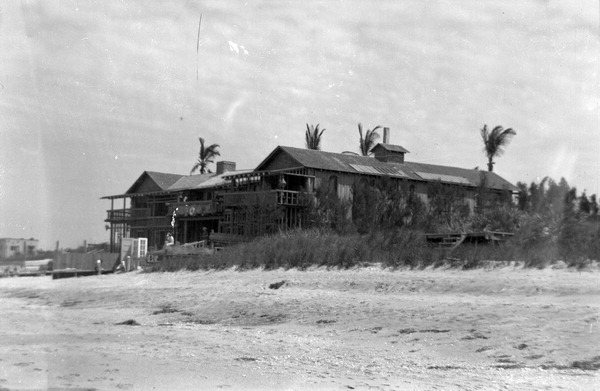
Waldo E. Sexton built the two buildings that became the Driftwood Inn and Restaurant in 1935, according to the resort’s history. It credits the cypress logs and paneling to the swamps around Blue Cypress Lake. That is a striking journey for something that looks so at home on an Atlantic beach. The timber connects the hotel to an inland landscape west of Vero that a visitor could miss altogether on an Ocean Drive vacation. The buildings entered the National Register of Historic Places in 1994.
The National Register documentation describes two buildings conceived and operated by Sexton. Contemporary guests encounter a resort with several separately named kinds of accommodation. Those are different scales of history. Someone who wants to sleep in a particular building should identify it when inquiring. Someone drawn more generally to the restaurant, the architecture and the neighborhood might enjoy staying elsewhere on the property. A National Register listing for the original structures tells very little about the room, view or route to the water attached to a specific reservation.
What you can actually reserve online
The reservation page identifies its online inventory as non-oceanfront studios. For other units and views it directs travelers to the resort itself. Consequently an unsuccessful date search for a one-bedroom would say little about whether one exists or can be rented. Equally, a successful studio reservation books the room described in that confirmation. A picture of the ocean somewhere else on the site adds no assurance about the view. The useful next step for a specific request is a direct inquiry with dates, number of people and one or two acceptable unit types.
There is a practical advantage in naming a second choice. For two adults who plan to spend most of the day away, a smaller studio may be quite sufficient even if they originally pictured a balcony. For a family putting a child to bed early, a bedroom door may matter much more than the scenery outside it. Give the person checking availability those priorities in order. A reply about a poolside efficiency can then be evaluated on its merits, without having to start again to find out whether there is an entirely separate sleeping room.
Take the virtual tour in pairs
The official tours put three particularly useful comparisons within reach. The resort names a Breakers poolside one-bedroom, a Breakers poolside efficiency and an A Building studio. Start with the two Breakers examples. Their labels share a poolside position, letting a traveler concentrate on interior layout. Follow the space from the entrance to the sleeping area in each. Consider where a companion could read while somebody else sleeps, where an open suitcase might go and whether a sofa doubles as a bed when the unit is fully occupied.
Then look at the A Building studio. The ability to see a representative interior is especially valuable here because the property has such a distinctive architectural identity. People often form an image of the bedroom from an exterior photograph. A tour allows a much more ordinary but consequential question about the space around a bed or the path to the bathroom. Ask the office whether the tour depicts the specific available unit or illustrates its category. For a guest counting on step-free access, a measurement or a particular bathing arrangement, get an answer for the assigned accommodation.
Rental inventory and interval ownership
The Driftwood calls itself an interval ownership property in its owner resale packet. It distinguishes Breakers units from Driftwood Ocean Villas and lists various buildings and cottages. The document gives travelers some sense of why the names and layouts proliferate. Its financial details deal with owners, weeks and maintenance fees. A visitor arranging a rental should request a separate quote stating the nights, room type, total and cancellation terms. Bringing an owner’s unit description to the office can help start a conversation about a layout without establishing that it is for rent.
A mixed group can use the same distinction to avoid accidentally planning two different vacations. If one household owns a particular week, the other can tell reservations which building it hopes to be near. Get confirmation of actual sleeping capacity for the rented unit, and decide whether proximity alone will serve or whether people need the same floor. Friends meeting for meals may be perfectly comfortable in different buildings. Relatives sharing morning childcare may have good reason to want something much more precise. The property’s vocabulary gives them the means to ask.
The part of the stay that everyone can share
Waldo’s, the restaurant at the Driftwood, identifies its address as 3150 Ocean Drive. Its own site is the place to check dining details independently from the room reservation. A traveler intrigued by Sexton’s buildings can make a meal the architectural outing of the day, even if the available sleeping accommodation is in another part of the resort. It also makes a sensible meeting place for friends booked elsewhere in Vero. Give everyone the restaurant name and street address so they can find their own way without a room number.
When the office replies, save the description beside the reservation confirmation. A few specific words such as Breakers, one-bedroom and poolside communicate more on arrival than a long thread about a charming historic hotel. They also free the group to enjoy what really is unusual about the place. Guests can spend a night on the barrier island, eat beside the ocean and look for the inland cypress in the buildings Sexton left behind. Each experience belongs to the Driftwood. Choosing the right unit allows the three to fit together on the same trip.