What Vero Beach can do when a plane keeps circling your neighborhood
Vero Beach explains which flight patterns it can influence, why Sunday training hours differ and where a resident’s aircraft noise report actually goes.
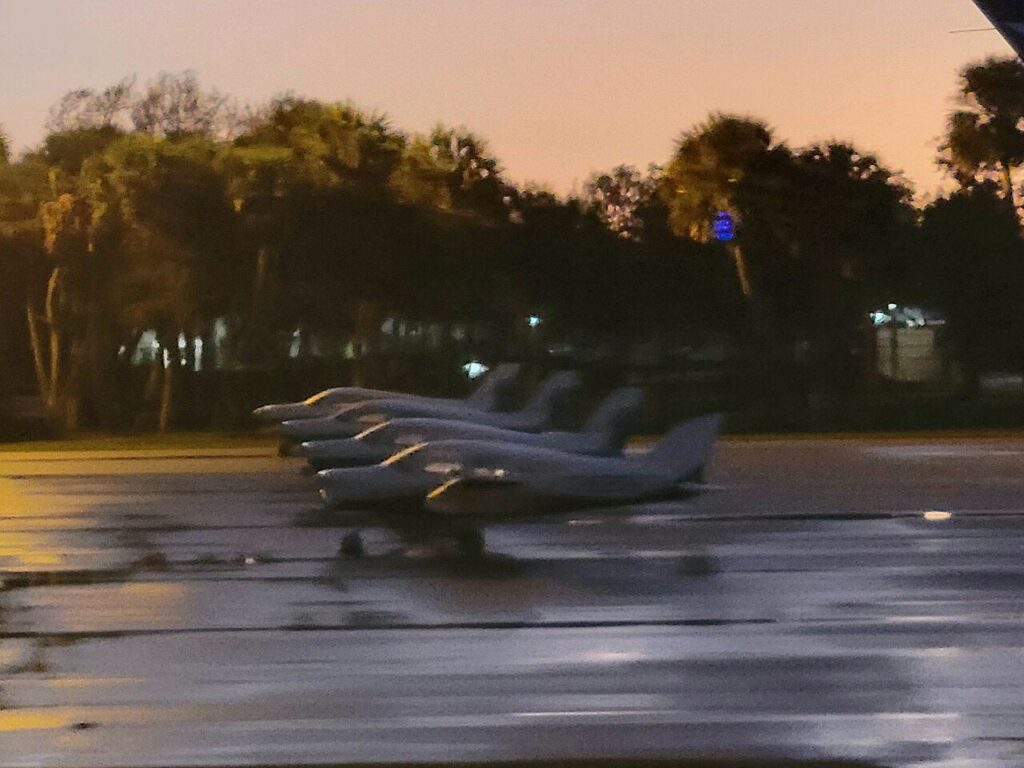
A plane passes over the same patch of Vero Beach several times on a Sunday morning. From the ground it can sound like a pilot ignoring a published schedule. The city’s noise program tells a more precise story. The schedule applies to a particular maneuver. The city also distinguishes an aircraft flying a traffic pattern from a mechanic running an engine on the field. Which sound you heard, where you heard it and when it happened affect what the people receiving a report can do with it.
The scale is easy to miss from the passenger terminal. The airport says the federal control tower has counted more than 200,000 operations a year since 2023. An operation is a takeoff or a landing. That measure captures training and other general aviation activity as well as airline service. It is neither a passenger count nor the number of different airplanes using Vero. One airplane that practices landings can contribute repeatedly to the total. The distinction helps explain why an airline timetable does a poor job of predicting what neighbors will hear.
The Sunday distinction
In a touch and go, an aircraft lands and takes off again without coming to a full stop. The airport lists local touch-and-go hours of 7 a.m. to 10 p.m. Monday through Saturday and noon to 10 p.m. Sunday. Sunday morning stands out precisely because the later start involves that practice maneuver. It would be a mistake to read noon as the opening time for the entire airport. An arriving passenger plane, a helicopter passing the neighborhood or a departing private plane can all be audible that morning without having performed a touch and go.
The airport describes its community noise procedures as voluntary and requests that operators follow them when safety permits. It also says airport management does not monitor compliance with those procedures. The FAA has authority over aircraft operations and pilots, including traffic patterns. The city manages the operating surfaces and related facilities on the ground. That division matters if someone expects a city employee to order an aircraft to take a different route over the phone. The same employee can provide the airport’s published expectations to a pilot or a training school. The airport publishes its flight and maintenance procedures here.
The document distinguishes aircraft types. It requests a pattern altitude of 1,000 feet above ground for propeller aircraft and 1,500 feet for turboprops and jets. Those figures are local guidance for the traffic pattern. They do not establish the height of a particular airplane above your roof throughout its approach. An observer rarely knows an aircraft’s exact altitude from its apparent size. An accurate account can say that a plane was visible to the east before it turned south, or that the same sound recurred after several minutes. The pilot’s altitude can remain an open question.
A sound that stays in one place
A sustained engine sound from the direction of the field raises a different set of questions. A mechanic may run an engine to check its operation while an aircraft remains on the ground. The airport asks tenants to use an established area on their leased property and limit a maintenance run there to roughly 15 to 20 minutes. It directs extended work or repeated runs of comparable duration to designated areas for Runways 22 or 12R. The requests address both the location of the sound and how long a neighbor might hear it.
The published maintenance window is 7 a.m. to 9 p.m. If work must take place outside that window, the airport directs it to the designated runway areas. A normal preflight engine check uses the appropriate departure runway’s run-up area and falls outside the maintenance guidance. For a resident describing a late engine sound, the most useful detail might be its duration. A sentence such as “the sound stayed in the same direction for about twelve minutes” conveys more than assigning it to a particular business whose activity the resident could not see.
Distribution also matters. The airport says it sends its instructions to tenants and area flight schools and posts signs for pilots on the runways. A neighbor curious about the basis for the published limits can trace parts of the noise program to recommendations from an ad hoc committee in 2002. The operating page remains the place to check the actual procedures. An old recollection of a neighborhood agreement may omit the Sunday distinction or describe a time that applies to a different activity.
Making the local report useful
The city’s online noise reporting form requests the date, local time and type of aircraft. The type choices include helicopter, jet, single-propeller, multiple-propeller and unknown. Choosing unknown is a perfectly informative answer if the sound was heard indoors or after sunset. Read the clock during the occurrence if possible. If the event ran from one time to another, include both in the description. For repeated passes, describe what repeated rather than assuming that every sound came from the same aircraft.
The form separately asks whether the person reporting would like contact. A phone number or email gives staff a route back if the answer is yes. The city also explains that submissions become public records and are subject to requests. A neighbor can give the location needed to understand the sound and leave out unrelated details about family members or medical circumstances. If several households discuss an event afterward, each account is most useful when it sticks to what that particular observer could see or hear.
The city explicitly identifies this form as an internal record. It does not forward submissions to the federal agency. A person seeking the FAA’s noise contact should follow the federal contact link on the same page and make a separate inquiry. Save the original date, time and description before submitting either form. That way a follow-up can refer to the same occurrence even if the two offices respond on different dates. A local entry records a community experience. A question about federal operating authority has its own recipient.
The best account from a neighborhood is often quite modest. It distinguishes a pass over the house from noise across the field, gives a specific time and leaves room for an unknown aircraft type. In an airport community where one training plane can make more than one appearance in the same afternoon, those few observations give a reader of the report something concrete to work with.