Who can request a free smoke alarm from Indian River County Fire Rescue?
What Indian River County Fire Rescue’s smoke alarm application asks about eligibility, bedrooms and existing alarms, where to send it and what happens next.
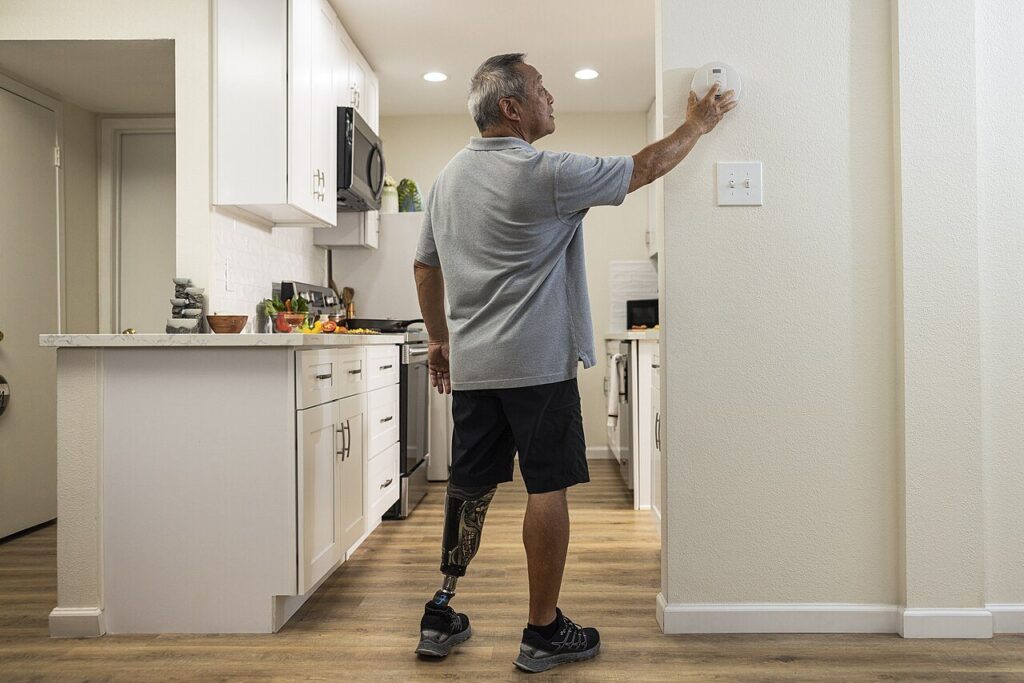
A resident who finds an aging smoke alarm in a hallway can start with two different questions. Does the alarm still work, and can the household get help replacing it? Indian River County Fire Rescue has an application for the second question. The one-page form describes a free smoke alarm program for people served by the department, designed to assist residents of lower-income housing and seniors on lower fixed incomes. The paperwork asks about the people in the home and the way the bedrooms are arranged. It ends with a promise of contact from Fire Rescue about receiving or installing an alarm.
For someone helping a parent, a neighbor or a tenant, the first thing to obtain is the actual county smoke alarm application. It carries the Fire Prevention Bureau’s address in Vero Beach, two ways to submit it and a phone number for questions. These details matter more than the wording of a neighborhood social media post. One is an invitation to apply for a local service. The other might describe what happened in someone else’s house, under circumstances that differ from yours.
Start with the address and the service area
The first qualification on the form concerns the fire department serving the residence. An Indian River County mailing address, the name of a nearby city or the address of a relative filling out the form is a different piece of information. If there is uncertainty about who serves the home, give the bureau the residence address and ask before sending in household details. The number printed on the form is 772-226-1673. This is the program contact for questions and applications. For a fire or an immediate emergency, call 911.
The form describes the intended income groups without printing a dollar threshold, an income table or a list of financial records to attach. Anyone unsure how the description applies to a particular household can ask the bureau directly. A national figure for a different assistance program would not resolve a local eligibility question. The form also asks whether the applicant owns or rents. It gives that question a blank answer line. A renter should report the arrangement accurately and can ask the bureau how a landlord or property manager should be involved if installation is discussed.
Count people and sleeping areas separately
The three age groups on the form are children under 18, adults from 18 through 61 and adults older than 61. The form asks for counts in each group, followed by the total number of bedrooms. In a multigenerational home, one set of figures describes who is there and the other describes the building. Two adults sharing one bedroom do not make two bedrooms. Counting people first and rooms second is an easy way to give a clear answer without trying to guess the number of alarms the household might receive.
Next come the number of floors and the question about sleeping rooms at opposite ends of the home. Picture the route from one bedroom door to another. In one home all the doors may open into the same small hall. In another, the main living area separates bedrooms at opposite ends of the house. The number of bedrooms can be identical. The locations of the sleeping areas are quite different. If a household has an unusual layout that a yes-or-no answer fails to describe, mention it to the bureau when someone follows up.
The application asks whether anyone is disabled and whether working alarms are already present. Those answers can identify questions to raise in a conversation about the household’s needs. For example, someone who cannot reliably hear a standard alarm may want to ask which alerting options are available and who can advise on suitable equipment. The application itself does not specify a particular model or promise a particular device. State the need plainly rather than checking a box and assuming it settles a question about equipment.
Signing and sending the request
Read the statement at the bottom, then print the applicant’s name, sign and date the form. The statement covers participation and responsibility for improper installation or defective units. The county accepts the completed form by mail to Indian River County Fire Rescue, attention Fire Prevention Bureau, 4225 43rd Avenue, Vero Beach, FL 32967. Its published email address is fireprevention@indianriver.gov. The bureau’s document center is another starting point for finding its forms. A resident asking for this free program does not need to select an unrelated construction permit from the same office.
Before sending, check that the bureau can reach the person at the home. A relative completing paperwork on a visitor’s phone may enter the wrong callback number almost by habit. Print legibly on a mailed form, or check that all of a photographed or scanned form appears in the email attachment, including the signature line. Because the form contains a residence address, contact information and household details, use the published bureau address for the completed application. A public neighborhood group is a place to share a blank form or a link.
What to do with the alarms already in the house
The county says a member of Fire Rescue will make contact after receipt about receiving or installing an alarm. The form does not publish an appointment date, a waiting time or a guaranteed quantity. While a request is pending, a household can review the alarms it already has. The U.S. Fire Administration’s home smoke alarm guidance calls for alarms inside bedrooms, outside each separate sleeping area and on every level. It recommends monthly testing, following the manufacturer’s instructions and replacing smoke alarms at ten years. Battery care depends on the kind of alarm.
A unit on a ceiling can look perfectly ordinary long after someone has forgotten when it was installed. Write down the room, the last test date and any manufacture or replacement information available on the alarm or in its instructions. A household member who cannot safely reach a unit can ask someone for appropriate assistance. Avoid promising family members that a pending application has solved a present problem. The working alarms, the request for help and the bureau’s eventual response are three separate pieces of information.
The application finally comes back to the floor plan. Someone at the bureau reading it cannot see the far bedroom from the kitchen, know which neighbor is helping with phone calls or tell from a street address whether an existing alarm works. A clearly completed page gives that person a better starting point. Keep a copy and record the date you sent it so the next conversation can move from identifying the request to helping the people who live there.