Dinner in Vero Beach: Ocean Drive or 14th Avenue?
Compare Ocean Drive and downtown Vero Beach for dinner, from Atlantic-facing restaurants and shared fondue to parking, timing and gathering a group.
A visiting friend says “somewhere on the water.” Another wants to hear music. The person driving would like to park once. In Vero Beach those three requests can easily produce three different dinner reservations. Ocean Drive gives the Atlantic a place in the evening. The blocks around 14th Avenue give dinner a downtown setting with more reasons to turn a corner. What makes the choice interesting is how differently two groups could use the same streets, even if both order seafood and spend about the same amount of time at the table.
Start with the map, then decide what counts as a view
Ocean Drive runs through beachside Vero. An address on that street can put a restaurant at the water, inside a resort or across the street from the beach. A picture of waves on a booking page says little about the table being held. If seeing the ocean during dinner is the whole point, ask whether a water-facing table can be reserved, whether the restaurant seats that area by arrival and whether the view survives a move indoors. A family that simply wants to see the Atlantic before eating has many more choices.
Consider two identifiable landmarks. Waldo’s is inside the Driftwood Resort at 3150 Ocean Drive. The Ocean Grill tells its own story through a building constructed on a dune in 1941. Both can anchor an evening about old beachside Vero, but a booking at one does not give access to the other’s tables or parking. Give your group the name and entrance of the actual restaurant. A text that just says “meet at the beach” can leave people looking for each other across several blocks.
A downtown dinner can extend well beyond 14th Avenue
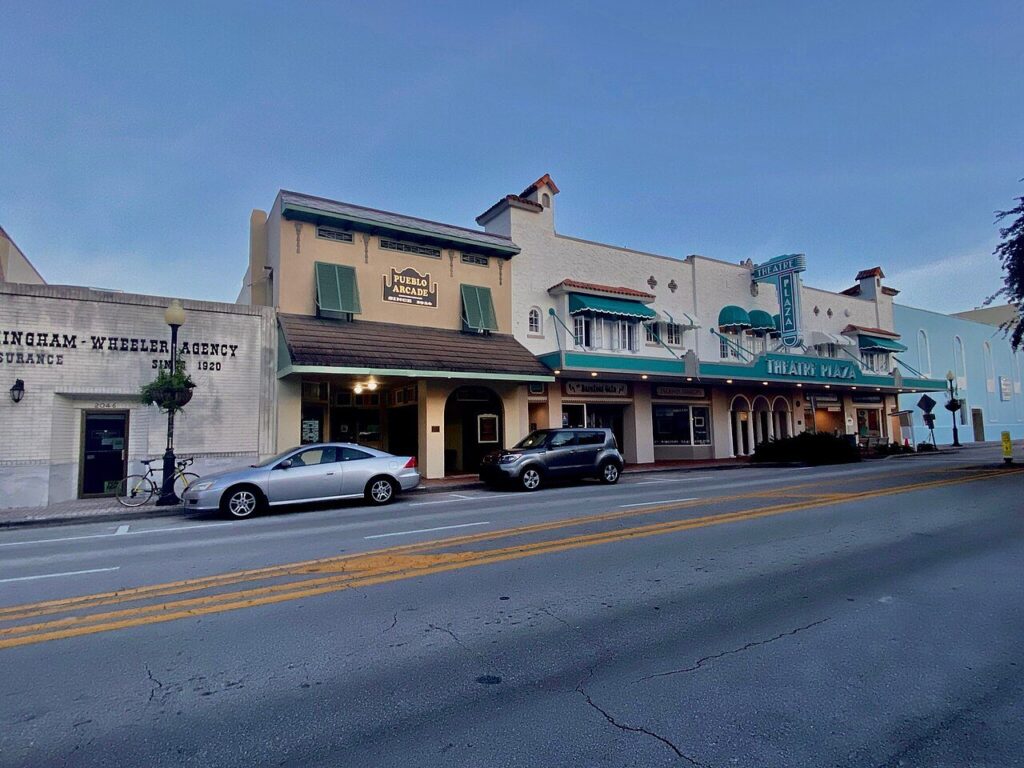
The county visitor guide describes the historic downtown district around 14th Avenue between 17th and 26th streets. Think of that as an area to explore, not a promise that every restaurant, gallery and shop occupies one short pedestrian strip. Pick an actual meeting point and a second destination within the distance your group wants to walk. If you want to see art before dinner, look up that particular gallery’s closing time first. The available window can be quite different from a kitchen’s evening hours.
The Kilted Mermaid illustrates the difference between a neighborhood and a street address. Its address is 1937 Old Dixie Highway. Its description emphasizes cheese and chocolate fondues, small plates and original music. That gives a group a specific reason to reach beyond 14th Avenue itself. It also changes how to organize the table. Sharing a fondue is a different proposition from ordering six separate entrées, particularly if two people expect to leave before a performance begins. Share the menu link with the invitation so the format is clear.
A sunset plan on the Atlantic needs a little translation
An east-facing beach and a westward sunset are different things. You can enjoy changing light over the Atlantic without seeing the sun settle into that ocean horizon. If a guest has pictured precisely that moment, explain the geography before promising the best seat in the house. Conversely, someone hoping for daytime water views may get more from an early meal or breakfast. Cobalt’s menu page distinguishes its dining room, lounge and oceanside patio and lists more than one meal service. That opens possibilities beyond a conventional dinner booking.
For a beach walk followed by dinner, work backward from the reservation. Choose where to leave the sand, where to meet someone joining only for the meal and whether anyone needs to change shoes. Shoes that work on sand can be uncomfortable on pavement, especially if everyone expects to continue shopping afterward. On an evening when an outdoor walk is optional, a short route near the restaurant is more useful than an ambitious route that leaves half the table worrying about arriving late.
Decide what the group wants to hear
For a conversation among friends who rarely see one another, background noise matters at least as much as cuisine. Calling a place that lists music and asking exactly where the performance happens is more productive than requesting its “best table.” A seat near the stage might be the best table for two listeners and the least suitable one for eight relatives holding a reunion. Ask when the act starts, whether another room is available and how the sound carries to the patio.
The trade-off works the other way around, too. If music is why you chose downtown, book or arrive on the basis of the performance schedule. An early meal can end just when the musicians are setting up. Kilted Mermaid publishes a program that includes open mic, trivia and original music. Treat those as different experiences when making a plan. Someone looking for an uninterrupted set by an original artist may not want the give and take of an open mic, however enjoyable both can be.
Make the reservation reflect the people who are coming
A couple celebrating over dinner and a group with a grandparent and two young children can enjoy the same neighborhood for different reasons. Ask about the step or distance between drop-off and entrance, a place to wait indoors and whether the whole party must be present to be seated. Those are more precise questions than asking if the place is “easy.” Share an approximate finishing time if someone has theater tickets, but let the restaurant tell you whether that timing fits the meal you intend to order.
For a group arriving separately, a single message can remove most of the friction. Include the entrance, the reservation name, the time you expect people at the host stand and whether the walk or music is before or after dinner. Distinguish the restaurant’s parking instructions from nearby public parking. A hotel guest’s parking arrangements do not automatically apply to a dinner guest, and an evening downtown should begin with finding a permitted space rather than guessing which storefront owns an empty lot.
Our choice for a first visit depends on what people want to remember. Choose Ocean Drive when the Atlantic or the architecture is part of the invitation. Choose downtown when a gallery, a sharing table or a specific performance gives the evening its shape. And if both sides appeal, give them separate meals. A morning on the beachside and an evening on the mainland will teach a visitor more about Vero Beach than a rushed attempt to squeeze two dinners into the same reservation.