How to shop the Vero Beach Farmers Market for an actual meal
Turn a Saturday at Vero Beach’s Oceanside market into dinner, with a flexible shopping list, questions for vendors and room for a find you didn’t plan.
At 3000 Ocean Drive, the Vero Beach Farmers Market asks you to make two quite different shopping decisions. One is what looks enticing enough to eat right here. The other is what you will actually turn into dinner once you’re home. A cup, a pastry or something fragrant from a vendor is an excellent answer to the first question. It can also distract you so thoroughly that you leave with six delicious things that do not add up to a meal. There is an easy fix that still leaves room for surprise.
Start with a sentence rather than a recipe. “I want a vegetable-heavy supper for two with something left for tomorrow” gives you more latitude than a list calling for a specific variety of tomato, an exact herb and one particular kind of fish. A grower can tell you what is worth cooking this week. That conversation goes better when you know whether you have a stove, a grill, a vacation rental with one small pan, or only a knife and a place to sit.
Know which market you are visiting
The market organizer lists Saturday mornings on Ocean Drive and dates the market’s start to 2007, when the Oceanside Business Association founded it. Business Inspiring Kindness now hosts it. That history matters because the mission extends beyond selling produce. Small businesses, nonprofit groups and horticultural vendors share the market. Somebody selling a beautiful orchid or an imported tea belongs within that mix. A visitor looking exclusively for vegetables grown a few miles from the beach has a different question to ask at each stand.
The organizer’s profile of Wang & Dickerson, for example, describes a Vero-based tea business sourcing leaves from estates around the world, with a particular connection to Taiwanese tea. The company can be local even when tea leaves are grown overseas. A vendor’s location, a product’s place of manufacture and its ingredients’ origins are three separate pieces of information. Ask the one you care about. “Where was this grown?” is much easier to answer than “Is all of this local?”
Give yourself a first lap and a short list
On a first walk through, look for the part of dinner that will determine everything else. It could be one leafy vegetable in good condition, a loaf you want to build sandwiches around or a cut of meat suitable for the pan you have. Notice which vendors offer portions that suit your household. A bargain-sized bundle is only a bargain if you want three meals from it. Then look around once more for two supporting ingredients instead of committing to every appealing display on the first pass.
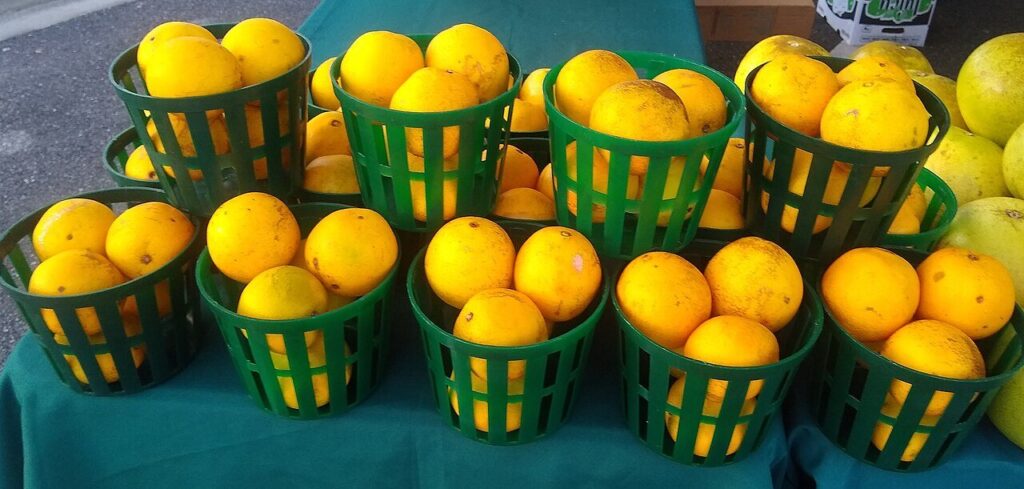
Consider a simple realization of that vegetable-heavy supper. One item will be cooked, one eaten raw and one used for contrast. You might roast dense vegetables, shave a crunchy vegetable thinly and add something sharp or fragrant just before serving. If an interesting citrus fruit is available, it can provide juice for the dressing and zest for the cooked component. You can use the same plan with several different combinations without asking a vendor to produce an item out of season.
Let the seller teach you one useful thing
People often ask for “the best thing here,” which requires a seller to guess what you like. Try a question with an endpoint. Which greens would hold their texture in a pan? Which fruit would travel well until tomorrow? Which loaf would work with a wet sandwich filling? If you have a cooler and want a protein, ask what portion the vendor suggests for two people and how the product is sold. You may end up buying less, but more of it will turn into a meal.
Okeechobee Farms lists the Vero market among its locations and describes raising its animals in South Central Florida. That is a useful example of a regional vendor with its own published account of origin. A listing does not promise a particular cut will be on a table every Saturday. Follow the vendor’s own update or ask about availability if your trip depends on a specific purchase. Leave a second option open so that the visit still makes sense if the item is sold out.
Plan the walk back as carefully as the walk in
The popular combination of market shopping and a beach walk works differently depending on purchase order. If you intend to linger near the ocean, do it before buying food that needs refrigeration. Bring an insulated container if you expect to buy chilled items and go directly home afterward. Place anything crushable at the top of the bag or carry it separately. These small decisions determine whether your ripe find arrives on the counter ready for supper or already squashed under something heavier.
For someone visiting with a dog, the organizer permits leashed animals and specifically mentions the heat of the asphalt. Decide whether bringing the dog makes sense for the length of your trip. Bringing another person can help if you expect to juggle bags, drinks and a leash. For someone coming with children, let each child choose between two ingredients you know you can use. At home that ingredient can become their contribution to the meal, which is a more satisfying souvenir than a bag nobody remembers choosing.
Make Saturday’s purchase visible on Sunday
Before putting everything away, separate what needs using first from what will keep. Photograph or write down any unfamiliar variety and its seller. The small detail you want next week is surprisingly hard to reconstruct from an anonymous paper bag. If you buy tea, for example, write down the seller’s suggested steeping time and whether the leaves can be infused more than once. If you buy greens, note whether the stems can go into the pan with the leaves or need a head start.
Finally, keep one opening in the plan for a thing you could not have anticipated. A different citrus variety, a new loaf or an unfamiliar herb is enough. Use it in a way that lets you notice it before folding it into a complicated dish. That combination of a dependable plan and one small experiment is what turns the Oceanside market from a pleasant Saturday browse into a place where you learn how this part of Florida eats.