How to read a Sebastian riverfront seafood menu at Blackfins
At Capt Hiram’s in Sebastian, a riverfront seafood menu tells several stories about preparation and place. Here’s how to tell which is which.
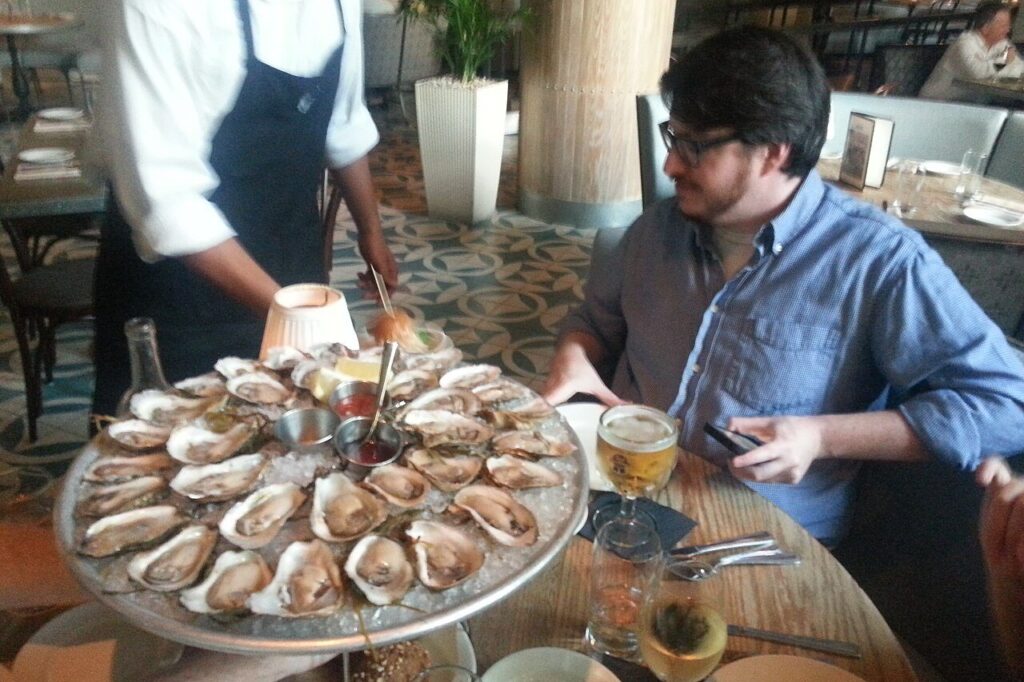
Order oysters in Sebastian and you have already made one geographic decision. You know where you are eating. You have not necessarily learned where those oysters were harvested, how they will be served or which part of the dish the kitchen considers its signature. At Blackfins, Capt Hiram’s riverfront restaurant, the difference is particularly easy to see. The menu ranges from seafood served with relatively little adornment to a named oyster preparation with several toppings. Each tells a different story about what it means to eat on the waterfront.
The Sebastian River Area Chamber identifies fishing as a mainstay of early Sebastian. Its account also connects the area with Pelican Island and the origins of the national wildlife refuge system. Harbor, fish, birds and boats belong to the town’s sense of place. The existence of that history does not tell a diner where a specific fish was landed this morning. To learn about the food itself, move from the broad story of the town to what a restaurant actually says about the dish.
Start with the kitchen’s own distinctions
The Blackfins restaurant page separates breakfast and main menus and links to the Sandbar menu as well. It describes a riverfront deck and lists examples including conch fritters, crab cakes, fish tacos and peel-and-eat shrimp. A traveler deciding where to meet friends should start by choosing the actual restaurant and meal service. Sending everyone to the resort without specifying the place to eat leaves needless room for confusion, particularly if some members of the party are expecting music and others have a dinner reservation.
The descriptions also distinguish between different levels of specificity. “Fish tacos” tells a reader how fish reaches the table, but the phrase alone does not identify the species. “Crab cakes” names an ingredient and a format while leaving questions about seasoning and accompaniments. Blackfins describes its peel-and-eat shrimp as local saltwater shrimp, which is a more explicit sourcing statement. If source or species is the reason for ordering, ask about the item available at that service. A precise question is easier for the kitchen to answer than a general request for the freshest thing.
What makes a Dirty Oyster a named preparation
Blackfins describes its Dirty Oysters as shucked oysters dressed with caviar, sour cream, onion and hot sauce. That is a kitchen’s composition, not a geographic name for a type of oyster. A person hoping to compare the taste of oysters from several growing areas may want to ask first about origin and simpler preparations. Someone interested in how this particular riverfront kitchen builds a signature plate may be interested in the toppings precisely because they change the experience of the main ingredient.
Look at what each component contributes before reaching for more sauce. The onion can supply a different texture, the cream changes how heat is perceived and the added roe contributes another kind of salinity. These are reasons to order the named preparation on its own terms. There is no obligation to treat an oyster as a blank canvas, and there is no reason to insist every oyster should arrive covered with the same condiments. A group sharing a plate should know which version it has ordered before debating what an oyster is supposed to taste like.
Breakfast changes the waterfront equation
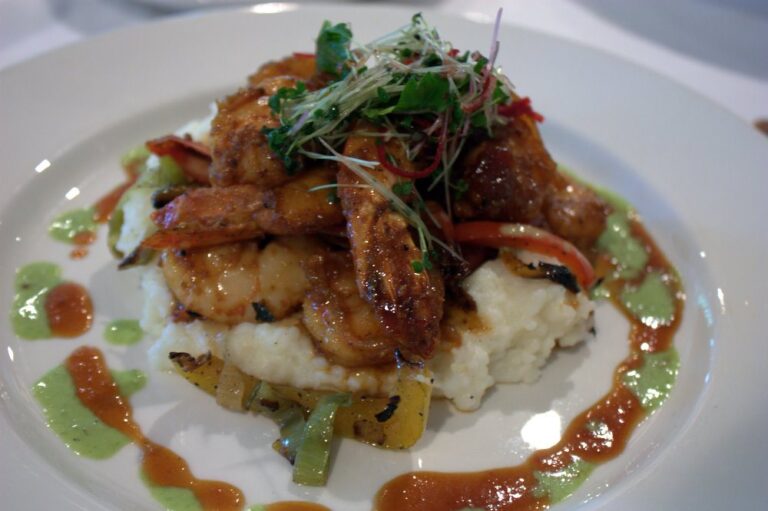
The restaurant’s own description puts shrimp and grits among the breakfast possibilities, alongside biscuits and gravy and omelets. That creates a different kind of riverfront outing from a dinner built around appetizers and several courses. Morning may suit someone interested primarily in sharing a meal before the rest of the day’s activities. Another guest may prefer dinner because a leisurely sequence of small plates is part of the occasion. The meal period affects what to expect from the kitchen, regardless of how attractive the same water looks through the window.
A person coming with a boat trip or another timed commitment should tell the host when the party needs to leave and should check the operator’s own departure instructions separately. A restaurant being inside a waterfront resort does not guarantee that a dining reservation and an excursion can run back to back. Be especially cautious about planning a relaxed breakfast for a large group when one member has committed to being elsewhere at a fixed hour. Build the meal around the earliest departure rather than the time everyone else would like the meal to end.
Define what a waterfront seat means to your group
The terms “waterfront restaurant,” “riverfront deck” and “table with an unobstructed view” describe different things. A fixed address says something real about the building, while a specific table assignment depends on availability and operating arrangements. Someone traveling with a guest who has limited mobility may place more value on a short, level approach or protection from weather than on being at the outside edge. Ask about the entrance, route and seating arrangement directly. A photograph of a deck can show the setting without resolving those questions.
Blackfins directs parties of eight or more to contact the restaurant directly. A larger party can use that conversation to sort out whether everyone plans to share starters or order individually, and how the kitchen handles special requests. Check what the term “peel-and-eat” entails if someone wants a meal they can manage easily in formal clothes, and what the topping on a named dish includes if an ingredient would be a problem. Making these choices before food arrives prevents a shared table from becoming a series of last-minute substitutions.
The lasting lesson of a Sebastian waterfront menu is how many kinds of local knowledge can fit on one page. The history belongs to the town. The waterfront belongs to the particular site. The name and preparation of a dish belong to the kitchen. The origin of an ingredient belongs to the producer or fishery. Separate those ideas and dinner becomes more interesting, not less. You can order a signature oyster because you want to know what Blackfins does with it, enjoy the water from a Sebastian table and still ask where the oyster came from.
One practical detail is worth writing down if you discover a particular shrimp or fish you like. Note both the name and the preparation on the day you ate it. On a return visit, that information gives a server something useful to compare with the current catch, even when the kitchen is offering a different species.