How an empty oyster shell earns a second life in the lagoon
Florida Oceanographic Society’s reef work shows how a shell becomes habitat, why scientists count baby oysters and what a volunteer should check before donating shells.
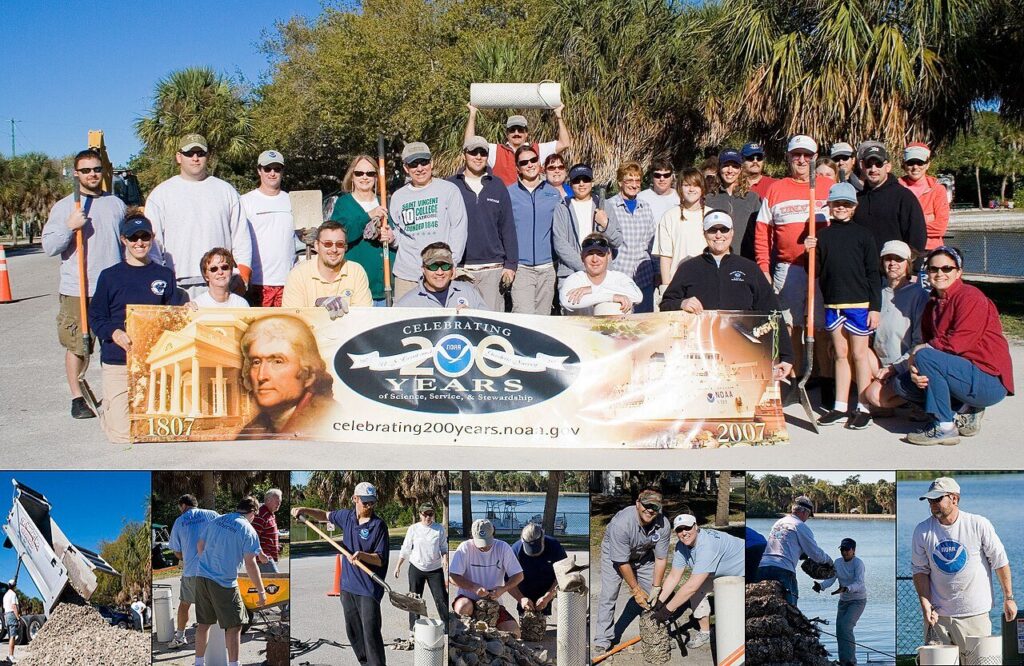
An empty oyster shell looks like the least promising part of an oyster dinner. The meat is gone, the shape is awkward and the surface is rough. In the right location, that rough shell can offer exactly what a young oyster needs: a hard place to attach. Florida Oceanographic Society, based in Stuart, has used that relationship to restore reef habitat in the St. Lucie Estuary and Indian River Lagoon. Following a shell’s second life is a good way to understand both the appeal and the limits of hands-on coastal restoration.
Start with the surface
The society describes its Florida Oceanographic Oyster Restoration program, known as FLOOR, as a way to use shucked shells in reef construction. Young oysters that settle are called spat. In nature they can attach to existing shell, including shell from live and dead oysters. As successive oysters settle and grow, the collection of individual hard surfaces can become a more complex reef. One shell is a modest beginning. Its value lies partly in what can grow upon it later.
Think about the difference between a pile of shells and a functioning oyster reef. One can be measured as material delivered; the other depends on living animals, their survival and their environment. Photographs taken on installation day show an important stage, but they cannot establish what the reef will look like a year later. That distinction is worth keeping in mind when reading a community update. The number of bags deployed and the number of live oysters found subsequently are both meaningful measurements, but they answer different questions.
The program explains the wider role of oysters in the estuary, including filtration and habitat value. It is tempting to convert those roles into an instant promise about a waterway. A particular installation, however, operates within conditions that vary in place and time. The physical extent of a reef, the number and size of the animals and conditions in the water all matter. An optimistic statement about the species is not a measured result for a given patch of shoreline. Look for what the project monitored after construction.
Follow the restaurant partnership accurately
In the program’s account, participating restaurants supplied shells that could be used in restoration instead of going to landfill. That is a satisfying connection between the restaurant table and the local water, and an easy one to overstate. As checked in November 2026, the society’s FLOOR page explicitly says it is currently not collecting recycled shells from partner restaurants. The account of how the project has operated and the current collection status appear on the same page. Read both before setting aside a container of shells or arranging a delivery.
If you operate a restaurant, it is more useful to ask the project what it can currently accept than to arrive with an unscheduled load. Storage, transport, preparation, volunteer capacity and placement have to work together. A partner might have ample shell at one stage and need help with another. For an individual diner, the right takeaway is that a coordinated program can turn a local by-product into habitat. It is not an invitation to carry household shells to a public shoreline and deposit them there.
One way to teach the idea without collecting shell is to draw the sequence. Begin with the restaurant, then add the people organizing collection, the people preparing the materials, the restoration site and the people doing later monitoring. Leave a space between each pair and ask what must happen for the next step to work. The exercise reveals how much of the work takes place off the water. It also explains why suspending collection does not necessarily say anything about whether scientists are continuing to monitor reefs.
The smallest oysters can answer a large question
The society’s oyster research description explains an elegant way to track settlement. Staff suspend pairs of clean shells from supports at about the level of live reefs. They bring the shells back to the lab each month to count new spat and examine some shells in more detail twice a year. A clean shell put out for a known interval gives the team a beginning and end to the observation. That is rather different from finding an old shell and guessing how long each small oyster has been there.
Imagine comparing two sites after a month. At one, a collector has several new oysters; at the other it has none. This is evidence of a difference on the sampled collectors during that interval. It cannot on its own prove that the second site never has settlement or explain which condition caused the difference. Repeated samples allow researchers to ask whether a pattern persists. The society’s monitoring overview places this work alongside observations of seagrass and mangroves in local waters.
For readers who enjoy charts, read the unit before comparing results. A count per collector, a percentage of living oysters and a square footage of restored reef describe different things. A larger number in one category cannot automatically cancel out a smaller number in another. Good project storytelling preserves those distinctions. It should be possible for a reader to say whether a figure describes volunteers’ work, physical material, reef area or the living animals the work is intended to support.
Choose a useful way to take part
Vero Beach readers can use the society’s restoration program directory to find current opportunities and decide whether the trip to the Stuart area fits. Look for a dated activity and the organizer’s instructions before gathering equipment or recruiting a group. A volunteer preparing materials may see a different portion of the program from someone interested in data. Either job can be useful, and a clear description helps a participant arrive with realistic expectations of the day.
A question to bring to any program is what result the team hopes to observe after volunteers have gone home. A project might aim to provide more settlement surface, learn when spat arrive or follow what happens to a reef over time. Each answer suggests a different way of measuring success. On a coast where it can be difficult to see below the water, the empty oyster shell offers an unusually tangible starting point. The living evidence that comes afterward is what makes it more than a clever way to reuse the remains of dinner.