A horseshoe crab at the waterline can become a useful Indian River record
Learn the difference between a casual horseshoe crab sighting and a trained survey, and find the reporting routes for Indian River County beachgoers.
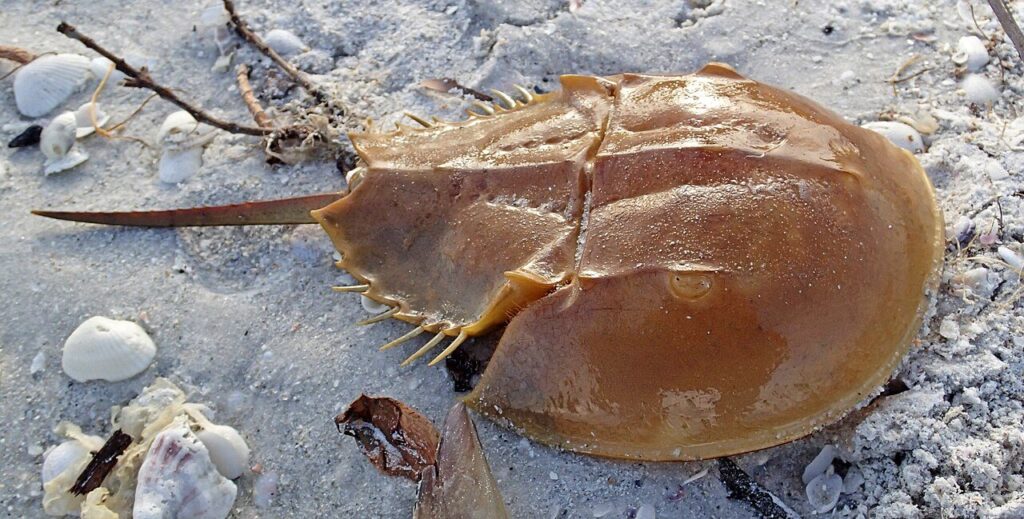
A horseshoe crab is a gift to anyone teaching a child how to notice wildlife. The broad, domed front and long, straight tail give it such a distinctive outline that a drawing made with a finger in the sand can capture much of its shape. On the Indian River Lagoon, seeing one can also be the beginning of a useful observation for researchers. The first decision is surprisingly simple. Are you describing something you happened to see, or are you taking part in an organized survey? Both can contribute, in different ways.
Learn the outline before trying to count
The Florida Fish and Wildlife Conservation Commission’s species profile is a good visual reference. It describes the large U-shaped front of the shell, a joint behind it and the tail, called a telson. The telson is used by the animal to right itself. For an observer, knowing this makes the elongated shape much less mysterious. Use the agency’s photographs to learn the anatomy instead of turning a live animal over for a look. You can document a surprising amount from where you stand.
Look for movement and where the animal sits relative to the water. If you find only a shell, say so. If you see one animal moving toward another, record that description rather than immediately assigning a motive. In a group of partly submerged animals, sketch the arrangement before estimating a total. It is much easier to explain a rough count if you can say which animals were visible together and which shapes partly overlapped. A photo from a respectful distance is useful when it preserves that context.
FWC says horseshoe crabs nest throughout the year in Florida, with seasonal peaks in spring and fall. That is a statewide description, not a calendar appointment at the particular beach you have chosen. A single visit outside a peak season can yield a sighting, and hours spent looking during a peak do not guarantee one. The best plan for a casual beach walk is to notice what is there and know the reporting route in advance, without basing the whole trip on finding a spawning group.
Report an observation everyone can place
Indian River County’s natural resources guide directs readers to FWC’s horseshoe crab survey information. Start there or on FWC’s nesting beach reporting page. Read the form before deciding how to frame the observation. A count, a date, an approximate time, a location and a description of what the animals were doing are much more useful together than a photograph captioned only “look what we found.” Use the channel indicated for the type of animal or tag observed.
Precision should reflect what you know. If the entire group was visible at one moment and you counted five live animals, say five. If you counted five and the cloudy water might have hidden others, say at least five in your personal notes and follow the reporting form’s instructions for estimates. Distinguish between the public access where you parked and the section of shoreline where you made the observation. They may be some distance apart. A landmark, direction and approximate distance can help you recover the right location afterward.
A family group can divide the jobs. One person keeps track of time and place, another notes behavior and a third takes a wide image without disturbing the animals. Compare the accounts while still on site. A disagreement may reveal a useful detail: two people may have counted the same individual in successive positions, or the person with the camera may have been looking at a different group. Combine the information into one clear report of the shared encounter rather than filing several accounts that resemble independent discoveries.
What trained volunteers do differently
In 2015 the Florida Fish and Wildlife Research Institute and the University of Florida began the citizen-science initiative called Florida Horseshoe Crab Watch. Trained volunteers assist biologists with standardized surveys, tagging and resightings. The program lists county contacts, including Indian River County. Someone who would like to follow the same beach over time can use that directory to ask about current local participation. Training and a defined survey procedure distinguish this work from an ordinary sighting sent in after a walk.
Consider two records of zero animals. The first is from a person who glanced out of a car window while crossing a bridge. The second is from someone who completed a specified survey of a designated shoreline during an assigned period. Both might truthfully say they saw no horseshoe crabs. The information those statements contain is quite different. A recorded survey effort gives a researcher a way to relate the result to where, when and how somebody looked. This is why following the organizer’s procedure matters even on an uneventful shift.
The program publishes seasonal results, including numbers seen, tagged and resighted. Those categories should stay separate when reading the reports. Animals tagged during a period and animals sighted during it can overlap. A resighting can link an observation back to an earlier encounter. Adding all three categories as though each represented a different individual would produce an impressive-looking total with a misleading meaning. Look at the explanations accompanying a table and read the reporting period before comparing it with another area.
Tagging belongs with the trained program. If an unexpected tag is visible during a casual visit, a photograph of the tag that can be obtained without disturbing the animal may help you read it later. Use the agency’s directions for tagged animals and describe anything you could not read. It is better for a number to be incomplete than for a guessed digit to connect your observation with a different animal in the study.
For a child who drew that first outline, the progression from sketch to data can be the most interesting part. An accurate drawing preserves a shape. A date and place turn it into a record of an encounter. A series of records made the same way can support questions about where nesting animals appear. None requires chasing a crab, moving it to a better background or guessing what it was doing underwater. The family can leave the shoreline with a story grounded in exactly what they saw and, if the observation fits the reporting criteria, a small contribution to the knowledge of the lagoon.