How to make a GoLine connection work in Indian River County
Plan a practical GoLine round trip in Vero Beach, Gifford, Sebastian or Fellsmere with the operator’s route map, live tracker and county transfer-hub information.
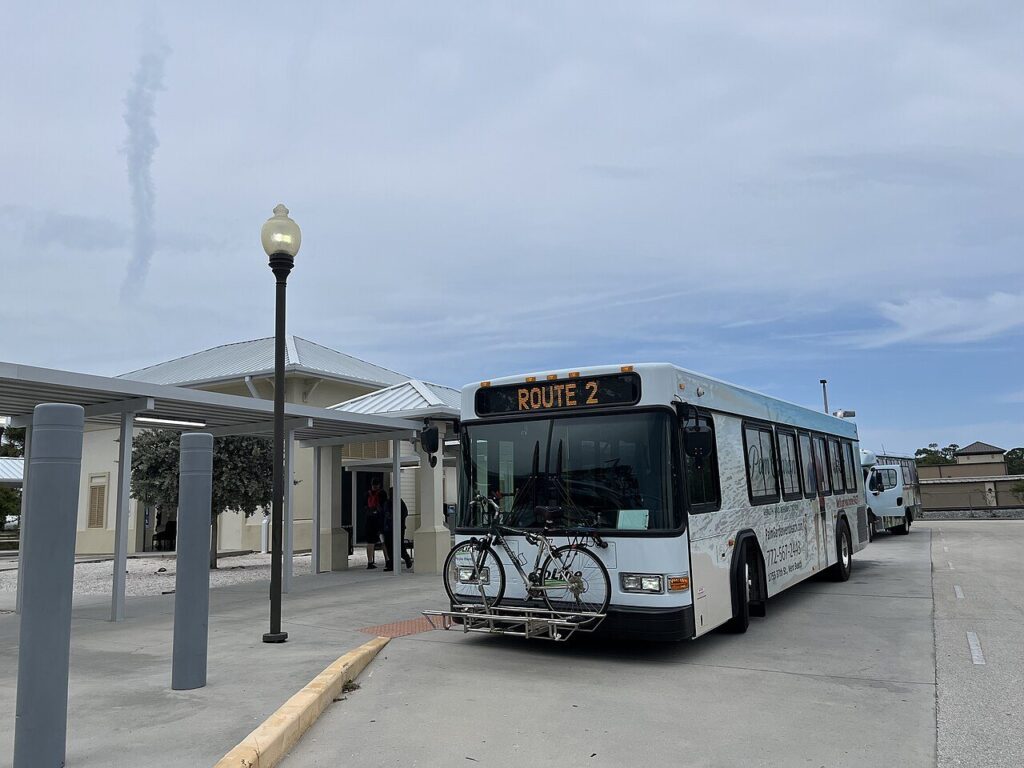
A bus trip from Vero Beach to an appointment across town has two destinations. The first is the appointment. The second, often forgotten until late afternoon, is the place where you can catch the bus home. Indian River County’s GoLine system serves a network of transfer hubs rather than promising a one-seat ride between every pair of addresses. Knowing which hub links two routes can matter more than knowing the number of the bus that stops closest to your door.
GoLine is operated by the Senior Resource Association and is open to riders of all ages. The operator’s current service page describes 14 fixed routes, zero fare, bicycle racks and a real-time bus tracker. A person planning a first trip does not need to budget for a transfer fare or buy a subscription. The real costs to plan for are time, walking distance and the possibility that a missed connection could move arrival outside an appointment window.
Where the routes meet
The county’s February 2026 transit coordinating board materials locate the Main Transit Hub on the south side of 16th Street in Vero Beach, next to the Florida East Coast Railway. They describe restrooms and covered waiting space there. The document identifies other hubs at the Indian River Mall, the North County Transit Hub, Gifford Health Center and the South County Park Intergenerational Center. Those names are more useful for planning connections than a general search for buses to Vero.
The county describes connections at hubs timed to make transfers possible. Treat that as a feature of the network when reading the timetable, rather than a guarantee that any arriving bus will wait indefinitely for another. A traffic delay or a rider boarding farther along a route can change the timing. If a missed transfer would mean missing a medical visit or a work shift, plan for an earlier journey and ask the operator about the particular connection before relying on it for the first time.
A transfer hub also helps narrow down a routing question. Instead of asking whether a bus goes from Gifford to a destination somewhere in Vero Beach, identify the stop closest to the destination and the hub that connects its route to yours. A dispatcher can then answer a specific question about a direction or a time. If the two stops with similar names are on opposite sides of a busy road, ask which boarding location serves the direction you need. A vehicle going the other way is a poor backup even when its route number matches.
Work backward from the time you need to arrive
Begin with the destination entrance, not just the address printed on a bill or class schedule. A large medical complex may have more than one entrance; a campus may put the building you need well away from the stop. Estimate the time between stepping off the bus and checking in. Only then choose a trip scheduled to arrive before that time. If your first route transfers to a second, write down both times. The end of the first ride is not the time you will arrive at the appointment.
Do the same planning backward for the trip home. For example, if a class can overrun by fifteen minutes, check which outbound connections are still available after that delay. A later departure on the first route has limited value if the last useful connection at the hub has already gone. In a two-leg trip the last through journey can end earlier than the last bus you see on either timetable. Saving a screenshot of both relevant schedule panels gives you a reference if mobile service is weak.
The county’s transit materials describe evening weekday and expanded Saturday service as improvements introduced in 2024. Those systemwide descriptions help explain why an older printed timetable may be out of date. They do not establish identical service hours on every route today. Use the operator’s current route sheet for the actual day. The operator also identifies Thanksgiving, Christmas and New Year’s Day as days without GoLine service. A regular Thursday timetable cannot answer a question about a Thanksgiving trip.
Using the tracker without losing sight of the schedule
A tracker answers a different question from a timetable. The timetable shows a planned pattern. A live location helps you see the vehicle as the trip is happening. Before interpreting a moving marker, match its route and direction with your stop. A bus approaching the hub from another direction may be ending its run or entering a different part of the pattern. If a marker disappears, do not assume the route has been canceled. Consult the operator’s service information for disruptions or call for clarification.
The operator describes fixed-route passengers as needing to board, get off and carry their packages on and off the bus. That matters particularly on a grocery trip. Choose a load you can actually handle during a transfer, not just on the short walk from the store to the first stop. A bicycle rack can extend the distance you can travel at one end, but the presence of racks does not promise an available space on a particular vehicle. Plan what you would do if the trip does not unfold exactly as expected.
People whose needs make a fixed-route journey difficult should discuss the actual circumstances with the operator. Describe which part of the trip is the barrier: reaching the stop, boarding, making the transfer or reaching the destination. A question about another service or an accommodation can then be directed to the right staff. Do not assume that the Senior Resource Association’s name limits the public bus to seniors, or that all services offered by the organization follow the same eligibility process.
The advantage of learning one dependable round trip is that it becomes a building block. Once you recognize the hub, the direction of travel and the return stop, another destination on the same route takes less planning. The operator’s route finder and current timetable are the place to start. A note with the hub name, both connections and the last workable return is what turns a map of fourteen routes into a trip you can use on an ordinary day.
A simple detail to save with the route number is the name of the connection you would ask about if delayed. A call about getting to the main hub before the next leg will make more sense if you can identify the transfer location, direction and the specific bus sheet you used. That also avoids confusing a mall connection with a downtown connection when the destination served by the second leg sounds similar.