Why the best place to see Pelican Island is across the water
Walk the Centennial Trail near Sebastian to see how a rookery, a pond and a boardwalk tell the story of America’s first national wildlife refuge.
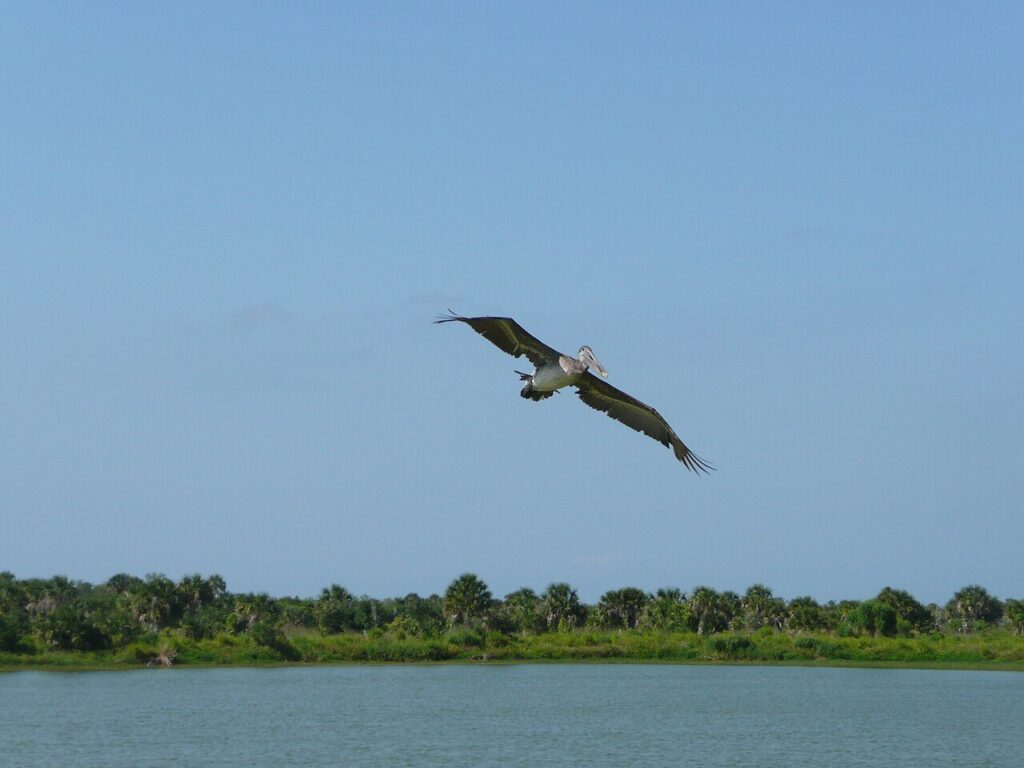
The destination on a map of Pelican Island National Wildlife Refuge can be misleading. The part that carried the original name is a piece of land in the Indian River Lagoon, but the most rewarding first visit begins on a trail on the barrier island. You can pass a pond, follow a boardwalk and look across the water at the rookery. The distance is deliberate. It leaves the birds a place to be birds and gives people a way to understand what the federal government set aside here in 1903.
Find the walking entrance
From the Vero Beach side, start with the Fish and Wildlife Service’s directions for Pelican Island. The public use area is on Historic Jungle Trail off A1A. The agency places it roughly 3.7 miles north of Wabasso Beach Road or 3.3 miles south of Sebastian Inlet. Save the refuge map while planning. A place pin dropped on the island itself can be a remarkably poor set of driving directions, particularly for the second car in a group arriving at a different time.
There is no visitor center at this refuge. Build your arrival around a trailhead and a map rather than an indoor information desk. The agency lists the trails as open from sunrise to sunset. Plan the return within those hours too. If someone in your party needs detailed information about access, surfaces or the facilities available during the visit, use the refuge contact listed on that same page before setting off. The mail address in a search listing is less helpful than a confirmed entrance and a shared meeting point.
Take the short trail slowly
The federal hiking guide identifies the Centennial Trail as an accessible three-quarter-mile route. Its pond, boardwalk and observation tower make it an unusually good short introduction to the refuge. A group with a keen birder and someone more interested in local history can stay together. The distance is short enough to allow time at the points in between. Reaching the farthest point as quickly as possible misses most of the reason to choose this walk.
Start at the pond with an exercise that works for new birders. Look without binoculars first. Find the line where vegetation meets water and scan along it in short sections. Look for a change of shape or movement instead of hunting for a particular species. Once you see something, choose a stationary feature beside it, keep your eyes there and raise the binoculars. It is much easier to relocate a bird with a particular clump of vegetation in mind than with a general impression that it was somewhere across the pond.
Give a child or a less experienced observer a different assignment from the person making a species list. Which bird stood still the longest? Which one left the water to perch? How many shapes can you distinguish from the length of a bill or the way a neck is held? These are questions everyone can answer without arguing over identification. Matching one carefully observed bird to a reference afterward can teach more than copying a long list of names that someone else called out on the trail.
Read the boardwalk as a piece of history
The boardwalk links a single small island in Florida with a much larger national story. The Fish and Wildlife Service identifies Pelican Island as the country’s first national wildlife refuge. This is a good place to ask what protection looked like at that scale. The central issue for a rookery is a particular patch of ground and water where birds can gather without continual interruption. It makes sense that a national system could begin with an island small enough to miss if you were looking for a grand landscape.
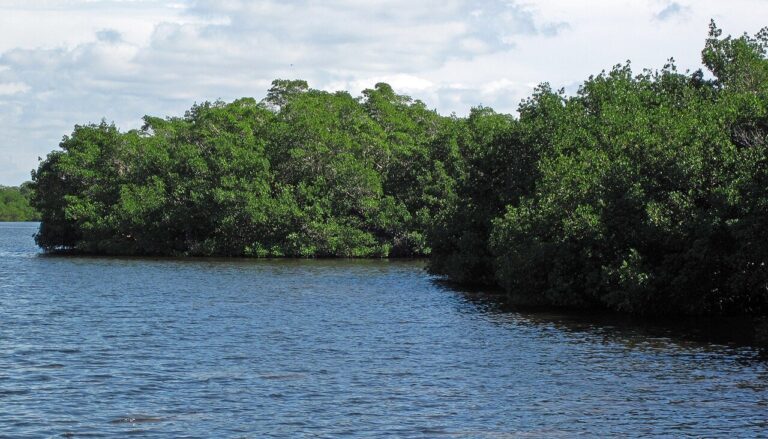
Use the walk to separate the island from the refuge that now bears its name. The refuge manages other habitats, including maritime hammock, mangroves and salt marsh. The island is one feature within that larger landscape. A bird that uses a nesting place also needs somewhere to feed and somewhere to move between the two. From the visitor’s side of the water, try to find more than one habitat boundary. The difference between the pond edge and open lagoon is a starting observation that does not depend on a rare sighting.
Set expectations at the overlook
Take binoculars if you have them, or share one pair. Across water, a phone’s maximum digital zoom can turn a bird into a small jumble of pixels. A wide photograph that puts the island in context often makes a better record of this visit. Try including some lagoon in the foreground and leave room in the frame for the length of the island. A picture of a bird in flight is easier to place afterward if you have also kept a picture of where it was going.
Expect variation between visits. A flock in the air, several shapes at rest or very little visible activity are all possible experiences of the same protected landscape. Distance, glare and viewing angle affect what an observer can detect. If you record a number, specify what it counts: birds seen in the air at one moment, for example, rather than every bird on the island. When birds disappear behind vegetation, mark a minimum observed count and resist adding them again each time a head comes back into view.
The refuge’s illustrated trail brochure is useful for deciding whether another walk suits the group after the Centennial Trail. Read its diagram alongside the day’s refuge notices. The fact that other paths extend farther through the property does not mean everyone has to tackle one on a first visit. On a short outing, revisit the pond on the way back instead. You already know where to look, and returning under different light can reveal details you missed only a few minutes earlier.
If the group leaves with just three things written down, choose one behavior, one location and one question to pursue. A bird diving at the edge of the lagoon has more meaning paired with where it was seen than a name entered without context. The open question might be historical rather than biological: how did this patch of water acquire national significance? That is a productive way to end a walk whose greatest privilege is being allowed to see a rookery from far enough away to leave it undisturbed.