On horseback at Frederick Douglass Memorial Park
Plan a guided beach ride or a visit with your own horse at Frederick Douglass Memorial Park, and see how this South Hutchinson Island tradition was documented.
A photograph in the State Archives of Florida shows horseback riders at Frederick Douglass Memorial Park in 1994. Someone planning the same outing today can look up the work of photographer James L. Gaines, then place a reservation to ride on this stretch of South Hutchinson Island. It is an uncommon opportunity to compare a Florida tourism image with an experience that is still possible at the place where it was made. The first choice is quite concrete. Will you be riding one of the operator’s horses, bringing your own or coming along to watch from the shore?
Those are three different outings at 3600 South Ocean Drive in Fort Pierce. A guided rider deals with a private operator. Someone bringing a horse deals with the county permit system. A companion on foot is visiting a beach park. Sorting the party into those groups beforehand answers several questions about cost, timing and where people should meet. It also saves a family from promising a ride to a child before checking whether the operator can accommodate them.
The park in the old photograph
The county identifies the park’s namesake as Frederick Douglass, the abolitionist, editor and author. The Florida Memory catalog record for the photograph uses a variant spelling of his surname. Entering the image number K893858 will get you to the right item regardless of spelling. The archive dates it to 1994 and places it in the Department of Commerce collection, crediting Florida’s Division of Tourism as an additional creator. That provenance tells the reader why an image of an afternoon’s riding ended up in an official collection.
A tourism picture records two things at once. It shows what was in front of the photographer and what people promoting the region wanted prospective visitors to see. Here, horses on an ocean beach were already part of the public image of Fort Pierce more than three decades ago. It makes a good picture to pull up for anyone in the group who would like to know what distinguishes this stop from a conventional trail ride. It cannot establish today’s access arrangements, which changed temporarily during road and parking improvements.
Reserve a horse or arrange a permit
For a guided visit, go to the Tours on Horseback reservation page. The operator takes reservations by phone or email and describes the beach ride as walking only. Expect a chance to notice the coastline from a different height and at a different pace. Anyone picturing a gallop along the surf should understand the arrangement before paying. The operator also publishes age and weight requirements and advises on clothing. Confirm those details for each rider, along with the meeting time, current price and procedures if the day’s ride changes.
A family group should ask how many riders can go together and where a nonrider can wait. State the ages of children when reserving, even if an older sibling has ridden elsewhere. Being experienced at a stable at home does not change a local operator’s booking requirements. If the outing is also a birthday celebration or a photo session, say so during the reservation conversation. The same business lists special-event arrangements separately, and time set aside for a standard walk may not suit a whole party trying to stage portraits.
The St. Lucie tourism office distinguishes guided customers from people bringing their own horses. Independent riders need a county permit before riding on the beach. Follow the county link from the tourism page to check availability, the process for the intended date and how equestrian access is organized. A reservation made with the operator for another family member does not grant access for your own horse. Likewise a county permit addresses permission to bring a horse. A guided rental requires an arrangement with the business supplying it.
Two neighboring addresses appear in older directions
Frederick Douglass Memorial Park and John Brooks Park are on the same road, but that does not make them interchangeable destinations. A temporary construction closure sent equestrian activities to John Brooks while the county paved the access road and parking lot and improved drainage at Frederick Douglass. In February 2025, TCPalm reported the county’s announced reopening and the return of equestrian activities. This explains why an old notice or a saved screenshot may send you to John Brooks even if your confirmation gives a different meeting place.
Use the address supplied for your actual appointment. A group driving from Vero Beach or Stuart should share that address before leaving, particularly if the riders and the people waiting on foot are coming in separate cars. For anyone arranging their own horse transport, ask where to take the trailer as part of the permit inquiry. The public beach entrance on a phone map and an appropriate arrival point for a vehicle with a trailer answer different questions. The county or tour operator can settle the matter for a particular date.
If beach riding is only part of the outing
Riding on the island and riding through a St. Lucie County preserve offer different landscapes. The tour operator lists Bluefield, Paleo Hammock, Teague and Pinelands as options for inland rides. It asks prospective riders to contact the business for those bookings and lists several possible trip lengths. Someone whose main interest is time in the saddle may prefer discussing an extended preserve ride. Someone specifically seeking the view in that 1994 photograph should request the beach ride. Booking one on the assumption that it includes the other would put a visitor on an entirely different portion of the county map.
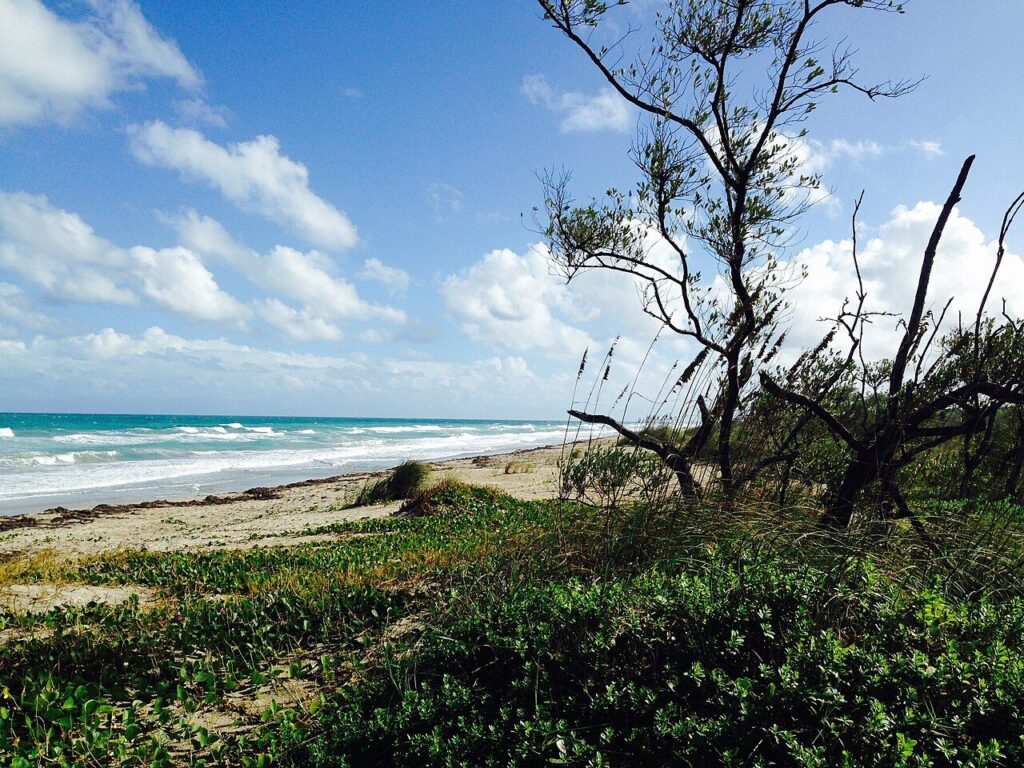
There is a perfectly good reason to come along without mounting a horse. A companion can compare the archival photograph with the modern setting, walk by the Atlantic and choose a time to reunite with the riders. A morning that works for the person on foot as well as the person in the saddle makes a better shared memory. The two can look at Gaines’s photograph afterward and ask which parts of their own day it records surprisingly well, even across the decades, and which parts of the beach experience fell outside the photographer’s frame.
The archive also credits the photographer by name. If you put together your own album afterward, borrow that good habit. Write down the site, the date and who took the picture. Thirty years from now, those modest details could make a family snapshot as easy to place as the state’s old tourism photograph.