What a horse and a steel eclipse tell us about Vero Beach’s sculpture gardens
A bronze horse and a steel ring reveal two ways of seeing sculpture as the Vero Beach Museum of Art prepares new gardens and courtyards in Riverside Park.
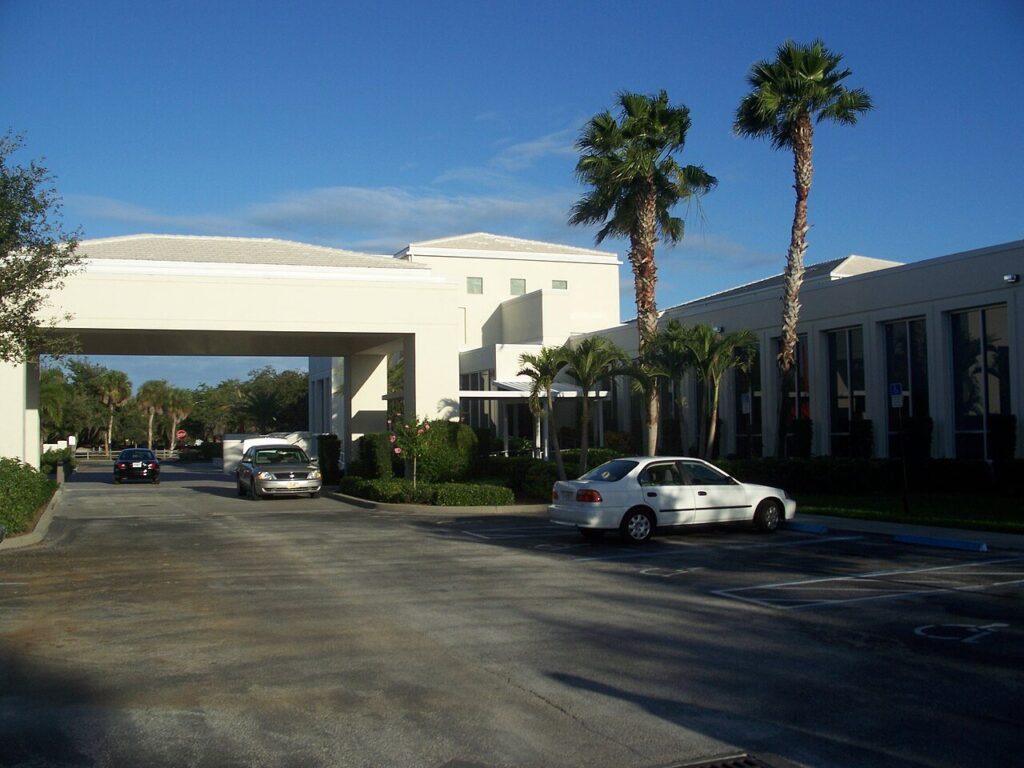
A steel ring can make the sky look like part of a sculpture. A horse made of bronze can persuade an eye that it is looking at wood. Both ideas belong to the Vero Beach Museum of Art’s collection, and both explain why the ground around a museum deserves as much attention as the objects inside it. For now, the encounter has to begin somewhere other than a walk through the sculpture parks. The museum’s visitor notice says the parks and café have closed indefinitely during campus improvements. Its collection records, meanwhile, offer a way to look closely at works that could easily be passed in a few seconds on a walk. Museum visitor information
A circle seventeen feet up
George Rickey’s Annular Eclipse VII dates to 2000. The museum lists stainless steel and gives its dimensions as 204 by 104 by 20 inches. In a catalogue a measurement like 204 inches can slip past a reader. Translated into seventeen feet, it begins to suggest the very different experiences of seeing this object from across a space and approaching its base. At a distance the eye can take in the upright and its circle together. Nearby a person has to look up, and the angle changes the relationship between the ring, the ground and whoever is looking. The museum credits its Athena Society with funding the purchase. Museum sculpture catalogue
Rickey developed a group of late sculptures inspired by the appearance of an annular solar eclipse. The George Rickey Foundation describes the astronomical image behind that choice and the circle raised on a pole. Think about what happens when someone looks through that circle in a photograph. The portion of sky inside it is materially identical to the sky outside, but suddenly it has an edge. Nearby foliage or the corner of a building could change that reading entirely. A photographer deciding where to stand can make an uninterrupted disk of blue or a busy patch of branches occupy the same opening. The Rickey Foundation on the eclipse series
Movement presents a second difficulty for a still photograph. Rickey explored ways of allowing currents of air to move components of his sculptures. A picture can show the arrangement of metal at the instant the shutter opened, but its reader cannot tell how long that arrangement lasted, when it was last different or which parts moved together. Two people drawing from the same place might make different and equally attentive records. Looking at the foundation’s images of Rickey’s work, it is worth pausing over the differences between changes the artist makes possible and changes caused entirely by the viewer walking a few steps. The foundation on movement in Rickey’s work
A horse assembled twice
The museum’s 2017 Deborah Butterfield exhibition approached the problem from the other direction. An animal is already familiar to most visitors, even those with little interest in sculpture. The question is how little material an artist needs to suggest its weight, stance and particular character. The museum illustrated its account of the exhibition with its own untitled Butterfield from 2003, identified as bronze with a patina. That last word describes the finish on the metal. Someone who recognizes a horse immediately may take a good deal longer to recognize what it is made from. The museum’s Butterfield exhibition and collection work
Butterfield’s early horses used mud, clay and sticks. In the late 1970s she began working with reclaimed metal, and the museum describes her subsequent practice of casting bronze from pieces of fallen wood. The distinction gives the finished work its peculiar tension. You can follow a form as if it were a branch and at the same moment know that what survives in front of you is metal. The artist’s decision begins before the casting, with the selection of a piece whose bend or broken end might suggest a shoulder or a leg. The cast preserves the consequences of that decision.
Try following the outline in the museum’s photograph without naming the animal. Where does a continuous curve give way to open air? Which short piece points in the same direction as another, separated from it by a gap? Then allow the word horse back into the exercise. Those shapes now have anatomical jobs. A gap can help explain a turn of the body just as much as a solid piece. A family can try the same exercise by sketching the empty spaces first. The animal becomes a discovery in the drawing instead of a familiar outline to be filled in.
Seven courtyards change the question
The museum’s building project in Riverside Park gives those experiments in looking a local future. The published design by Allied Works, with landscape architecture by Unknown Studio, calls for three terraces and seven courtyards. The museum gives their combined area as 14,400 square feet and includes a rooftop terrace with a view of the Indian River Lagoon. The planned gallery area is 22,000 square feet. Those figures describe a considerable part of the project devoted to moving between rooms, open spaces and different points of view. The design brief leaves the eventual placement of individual collection works an open question for readers. Campus transformation fact sheet
A courtyard offers a curator choices that a wide sweep of lawn cannot. The approach through a doorway can frame the first view of a work. A turn in the route can preserve a surprise. An enclosing wall can give a complicated shape a quiet background, while a planting can place a rigid edge against leaves that constantly change their position. None of those effects requires a visitor to know an artist’s name. Their success can be measured in ordinary experiences, including whether two people approaching from different sides stop at the same point or notice quite different things.
The museum announced in October 2026 that it expects to leave its current facility in mid-February 2027 except for the collections wing. It plans to open a temporary education hub at 1716 Highway A1A in March 2027 while the Riverside Park campus moves toward a projected 2028 opening. Families planning an art class can follow the hub announcements. Visitors hoping to see a particular object should consult the museum’s exhibition and visitor information before setting out. In the meantime, the collection pictures make a pair worth remembering. One work lets a patch of sky become its subject. The other lets the eye assemble a horse out of the spaces between pieces of bronze. The museum’s interim location and schedule