The paint can, dead battery and old monitor do not all belong in the cart
Find the correct Indian River County drop-off for paint, rechargeable batteries, electronics, home sharps and renovation debris, including weekday closures.
Clearing one garage shelf can turn up four kinds of waste in the space of a few feet. An old monitor sits beside a half-used can of house paint, a rechargeable battery and a bag of packaging. The materials all came from one home, but they do not belong together in a blue recycling cart. Indian River County’s five customer convenience centers accept several materials the curbside program cannot take. They also have limits, different weekday closures and a distinct role from the county landfill. Sorting the load before leaving home saves a second trip and gives site staff a much clearer account of what arrived.
The first question is who produced the waste. The county describes convenience centers as residential facilities. The fact that the work took place at a house does not make every truckload from a contractor an ordinary household load. The second question is what each item actually is. An intact monitor can be described as electronics. A mystery liquid left by a previous owner cannot safely be described as old paint simply because it was stored beside the brushes. When the contents are uncertain, call the solid waste district for instructions rather than guessing how the material should be packed or transported.
Start with the material, then choose the destination
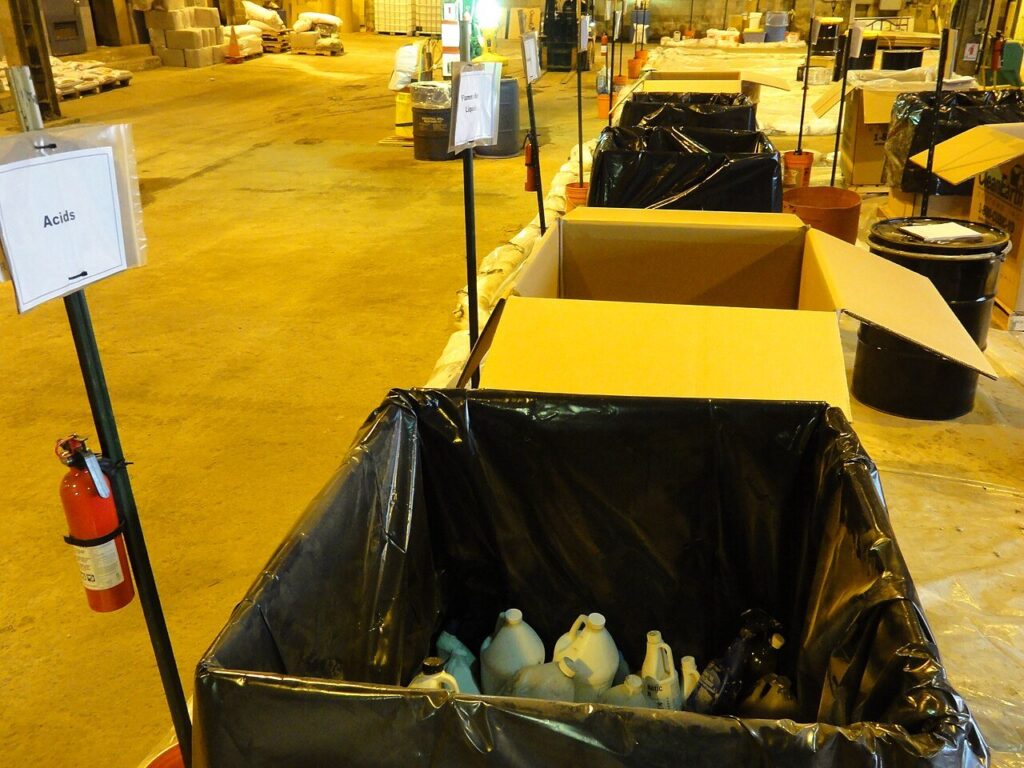
The county’s center and landfill directory lists household hazardous materials accepted at convenience centers, including rechargeable lithium-ion batteries, fluorescent bulbs, used motor oil, paint and items containing mercury. The list covers both oil-based and water-based paints. A resident clearing a workbench can set aside the items by type and keep original identification with them where possible. A readable label helps a worker distinguish paint from another liquid sold in a similar can. Do not mix two leftovers to save space.
The centers also accept household materials outside the usual curbside cart, including electronics, scrap metal, tires, white foam packaging, plastic film and bags. That list does not mean those materials can be bundled into one bag and put out for ordinary collection. A center can route a separated item to an appropriate place on site; a cart already filled with commingled material cannot provide the same opportunity. Ask the attendant where to unload unusual items before placing them beside a container that looks roughly suitable.
Residential cleanup often includes more than one type of project. Suppose a family replaces a bedroom computer, removes old lumber from a renovation and prunes a tree on the same weekend. The computer fits the electronics category. The county directs construction and demolition debris to the main landfill and identifies it as chargeable. Branches more than three inches in diameter and land-clearing debris also go to the main landfill. A small load can include items for different destinations. Its size alone does not settle whether a convenience center can accept it.
Timing depends on which side of the county you use
The centers list regular operating hours of 7 a.m. to 6 p.m. All close on Wednesday and on certain designated holidays. Several also close on Tuesday, while others close on Thursday. Roseland at 7860 130th Street, Winter Beach at 3955 65th Street and Gifford at 4901 41st Street have Tuesday and Wednesday closures. Oslo at 950 1st Place and Fellsmere at 12510 County Road 512 have Wednesday and Thursday closures. Anyone arranging a weekday cleanup should check the actual destination before putting a full load in the car.
The difference is easiest to see on a Thursday. A resident who normally uses Oslo might have a center open elsewhere even though Oslo is closed. On a Tuesday the pattern reverses for Roseland, Winter Beach and Gifford. A Wednesday is different again because every convenience center has the regular closure. The main landfill has its own hours and schedule. Checking a map pin that says only “county waste” is a poor substitute for checking the named facility and the material being carried.
For bulky leftovers from a renovation, the landfill’s fee schedule answers a question the center list does not. The county explains that scale-house staff charge according to the applicable material and rates and links the fee information from the directory. If an estimate matters to the budget, describe the load to the district before assuming the ordinary household arrangement applies. Keep clean household recyclables separate from construction debris where practical. That gives staff a more accurate description than saying the pickup truck contains “stuff from the house.”
Home sharps follow their own program
Indian River County and the local Florida Department of Health publish a separate household sharps guide. It identifies the health department, landfill and five convenience centers as locations where residents can obtain a free new sharps container. It also identifies properly marked filled containers as eligible for drop-off. The guide asks residents to present proof of residency. Pick up the proper container before it is needed when possible and follow the program’s directions for return. Loose needles do not belong among packaging materials, cans or ordinary recyclables.
The program distinguishes between getting an unused container and returning a filled one. A relative helping someone clear a home may know where the return site is but have no appropriate container at the house. Contact the program to describe that situation before moving individual items. The flyer lists the Solid Waste Disposal District at 772-226-3212 and environmental health at 772-794-7440. Use those contacts for clarification about this local program, including what to bring and where to hand the container to staff.
The state health flyer is aimed at household use. A business or professional producing waste in the course of providing a service should ask for the rules for that activity instead of using a household handout as authorization. This distinction matters when a family is coordinating both personal care at home and work performed there by a paid provider.
A successful drop-off begins with a small inventory rather than a destination typed into a navigation app. Write down the categories, note what remains unidentified, separate construction materials from ordinary household items and choose the center whose weekday hours fit the trip. Where a resident once saw a single shelf of clutter, the county sees different materials moving through different collection programs. Respecting that distinction lets a garage cleanup finish at the right counter, scale or collection point the first time.