The best seat in the Waxlax Theatre might belong to the person running sound
A sound booth sixty feet from the stage, a sprung dance floor and backstage monitors explain how an 808-seat Vero Beach school theatre supports live performance.
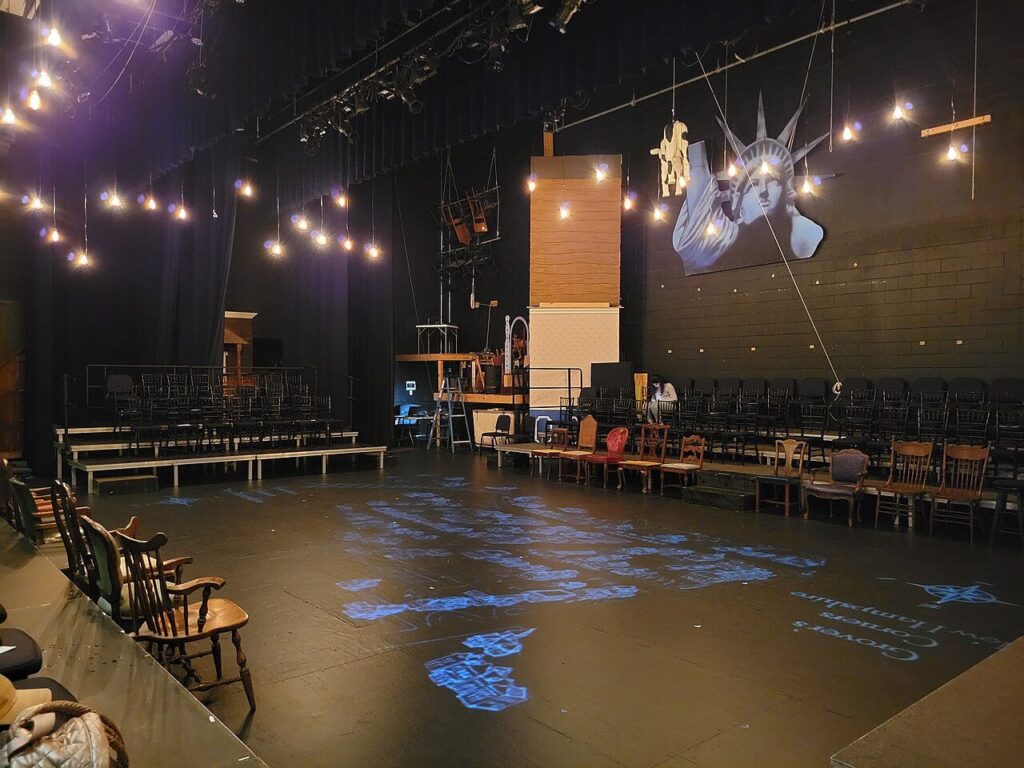
Sixty feet separates the technical booth from the lip of the stage at the Waxlax Center for the Performing Arts. A visitor choosing tickets might prefer to be much closer. Someone mixing a performance needs a different perspective. From the audience side of the room, that person can hear the relationship between the voices, the amplified sound and the space in which listeners are sitting. At Saint Edward’s School in Vero Beach, the distance is one of many small facts in a facility description that explain why a school theatre is an educational instrument in its own right.
The school lists 808 seats arranged in five divisions, each with orchestra and mezzanine seating. It identifies the mezzanine as requiring stairs. The stage includes a sprung dance floor and a projecting front section finished in maple. Separate technical positions and backstage listening and viewing arrangements allow people outside the audience's field of vision to follow the performance. Much of the equipment sounds specialized on paper. Its purpose becomes clearer if you follow a single passage of music or a stage entrance from rehearsal to the moment the audience experiences it. School facility description and seating information
A song changes when it leaves the rehearsal room
Consider a school choir preparing to sing in a large hall. In a smaller rehearsal room, a singer may hear nearby voices quite clearly and assume that a soft consonant or the end of a phrase will carry. The audience member near the back experiences a different balance. A conductor needs to assess the ensemble; the person in the booth can assess what reaches the room. Students learn to adjust together. The point of a rehearsal on the actual stage is partly to discover which assumptions from the rehearsal room no longer hold once the audience is much farther away.
Spoken drama offers a second way to understand the room. In 2011 the school announced an upper-school production of Thornton Wilder’s Our Town at the Waxlax, with senior Jamari Williams playing the Stage Manager and choral instructor Daniel Koh playing Doctor Gibbs. The title Stage Manager can be confusing here. Wilder gave a character that name and put the character in front of the audience. There is also the actual job of coordinating a performance behind the scenes. A listener following the character’s account of Grover’s Corners hears the results of both kinds of work. The school’s production announcement in Vero News
A listener can hear more by following one voice group for a few measures, then choosing another. Is the main idea moving from one part to the next? Does a backing line become audible only when the rest of the ensemble softens? Is the audience meant to catch the text or experience the texture of the group as a whole? These are questions about interpretation, not just volume. A sound operator can support that intention, while the singers determine much of the balance through breathing, phrasing and listening to one another on stage.
A stage floor is part of the production
The Waxlax stage has a sprung floor for dance. The technical description distinguishes the light-colored maple thrust at the front from the black floor farther back. That visible boundary gives a visitor a way to imagine the different pictures a director or choreographer can make. Bringing a performer forward changes their relationship to the audience. Placing several people farther upstage can reveal a pattern the audience would miss if each dancer occupied the front edge. Light falling on a pale surface reads differently from light falling on black. A floor can help determine what a movement looks like from the seats.
The facility also has a projection screen at the main curtain line that can be moved out of view. A speaker presenting images, a choir performing without a backdrop and actors working inside a set may all use the same volume of space in different ways. If you attend an event with young people interested in stagecraft, ask one person to watch the changeovers. What enters the picture before a performer does? Which change happens in darkness, and which is allowed to become part of the audience's experience? The answers reveal a set of design decisions that rarely appear in a program.
Why people backstage need to see the stage
The school describes live stage video and audio available in dressing rooms and backstage. This solves an obvious problem for a performer waiting out of sight. A printed running order gives the sequence of a show but cannot account for variations in applause, pacing or the length of a spoken introduction. Information from the stage lets a performer understand what is actually happening. A technical intercom serves a different purpose, allowing members of the production team to coordinate their work without sending a person through the wings with a message at each transition.
A substantial performance venue can serve the community as well as its students, but the demands on time are real. Saint Edward's rental information says the center is in educational use during the day and that extensive weekday preparation, construction or rehearsal time is seldom available. A presenter interested in the room should therefore start with the hours required to prepare and strike a show as well as the length of the public event. A two-hour performance can require decisions about rehearsal, equipment and backstage access that begin much earlier. The school supplies contact information for those arrangements through its facility page.
The location of a seat can become part of a conversation afterward. Someone farther back may have seen the shape of a whole ensemble more clearly. Someone closer may remember a facial expression or small exchange between performers. Comparing those accounts gives students evidence about how an audience experiences the same work from different distances.
For an audience member, choose the event first, then check the correct entrance, ticket arrangements and seating access for that particular performance. A school campus used for classes every day is a different setting from a theatre with a publicly accessible lobby at all hours. The reward for attending goes beyond what is announced at the curtain call. Somewhere behind the audience is a person hearing the whole room. Somewhere backstage is a student taking a cue from the performance already in progress. And on stage someone is discovering what a gesture made in rehearsal becomes when eight hundred people can see it.