Reading Zora Neale Hurston’s Fort Pierce one address at a time
Follow the library, school, former newspaper office, residence and cemetery on Fort Pierce’s trail dedicated to the novelist and folklorist.
A writer’s house is an obvious destination for a reader. A former newspaper office, a school and a library can say just as much about the working life of a writer in a town. Fort Pierce’s Zora Neale Hurston Dust Tracks Heritage Trail includes all of them. One virtue of the trail is that it refuses to condense Hurston’s years here into a solitary room or a single famous title. At different addresses a visitor meets a teacher, a participant in public life, a neighbor and the subject of a later effort to restore a writer to public attention.
For a day trip from Indian River County, start with the city’s list of trail markers. It gives street addresses and links to individual accounts. Think of the list as a set of chapters whose order can change. A reader interested in education might begin with Lincoln Park Academy. Someone researching publishing might want to open with the former Chronicle building. People arriving without having read a Hurston book have as much reason to begin at the library as visitors who know exactly which novel brought them to Florida.
Two stops on Avenue D
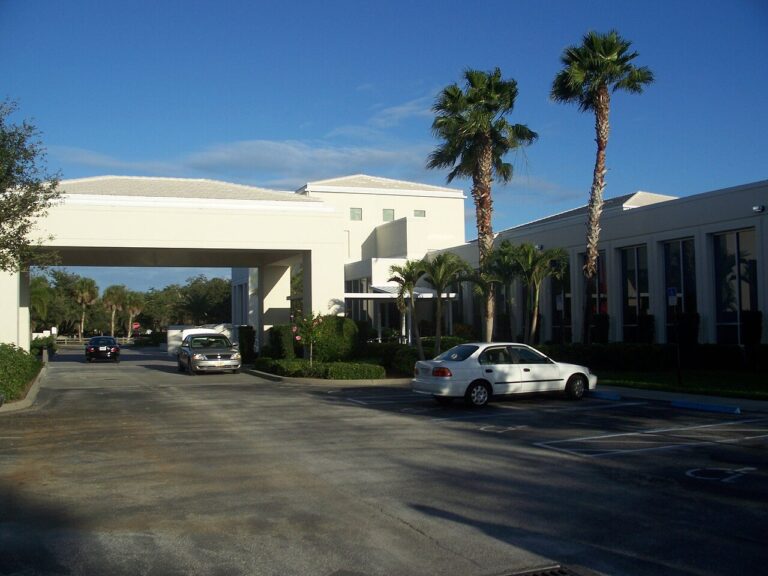
The city lists the Zora Neale Hurston Branch Library at 3008 Avenue D. It places the former Chronicle building at 1529 Avenue D. Although the two addresses share a street name, they do different work as historical evidence. A newspaper is a participant in the affairs of its day. A library named in a writer’s honor gives later readers continuing access to a body of work. At the former newspaper site, ask which voices appeared in print and how a writer encountered a local audience. At the library, look for an edition you would like to spend more time with after the trip.
The reference to a former newspaper office also invites a small discipline in reading. A signed column is one person’s contribution to a public conversation. An unsigned news item or a later remembrance is a different kind of evidence, even if both mention the same person. The city’s newspaper marker gives the publication a local setting. If a library or archive can point you to an issue, copy the date, title and byline along with the passage that interested you. Without those details a page of history can turn back into an untraceable story.
A house near a school
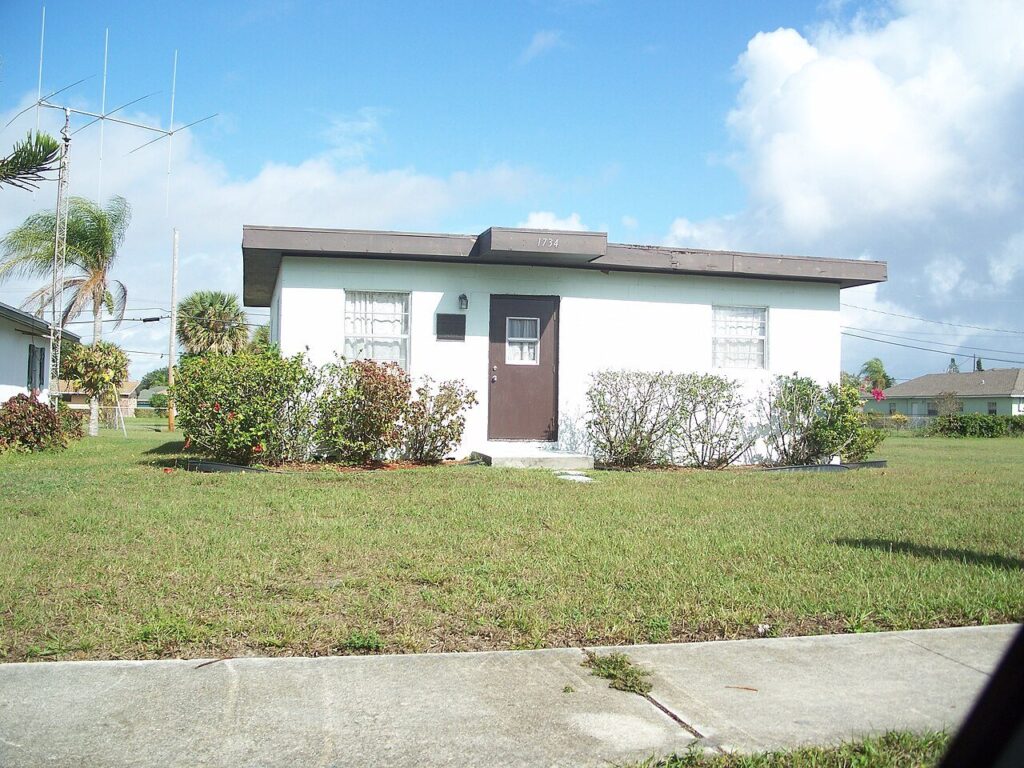
A particularly revealing pair of addresses is the residence and Lincoln Park Academy. The official residence marker places Hurston in the house from early 1958 through late 1959. It explains that the structure moved about 500 feet north in 1995 to accommodate expansion of the academy. The city identifies the trail location as 1734 Avenue L. A marker can therefore accurately identify the structure even when the exact point where Hurston went through the door has shifted. Old street descriptions and the modern trail do not have to line up word for word.
Hurston briefly taught at the academy in 1958. Putting the school and the house together changes the scale at which to think about a literary life. International scholarship can make a writer seem to exist largely in correspondence, on lecture platforms and in print. A day of teaching has different demands. Students, a room and an institution share time with the writing. The city’s descriptions make the connection without requiring anyone to invent a syllabus, imagine a specific remark to a class or claim that a passage in a novel originated on this block. View a school from appropriate public areas and arrange institutional visits in advance.
Listen to a different Florida chapter
There is a complementary way to prepare for the trail that requires no driving. The Library of Congress’s Florida folklife collection preserves sound recordings and written material from federal work in Florida between 1937 and 1942. Among its documents is Hurston’s proposal for a recording expedition. This is an earlier period than her final Fort Pierce years. Listening to the collections and then reading about the trail brings two parts of her career into conversation without incorrectly labeling those field recordings as products of the streets you are visiting.
Try listening to a recording before reading the accompanying description. Notice the pace, the number of voices and whether a performer is explaining a song, singing it or responding to a question. Then check the catalog record for the credited performer and collector. They may be different people, and a collection associated with Hurston contains contributions by other workers too. That habit of attending to the individual voice makes a good preparation for the trail. A literary landmark can carry one famous name while preserving evidence of many people who helped make, document and sustain a community.
At the cemetery, a second story begins
The Garden of Heavenly Rest Cemetery is at Avenue S and 17th Street. Hurston died in January 1960 and was buried in an unmarked grave. In the 1970s Alice Walker went looking for the burial place and commissioned the stone at the site she identified. The city’s cemetery account carefully describes Walker’s identification and the later participation of members of Zeta Phi Beta Sorority. Read it for both histories, the death of a person with friends in Fort Pierce and a later generation’s determination that she would have a public marker. A cemetery remains a place for families as well as a stop on a heritage trail.
That account also credits Patrick Duval with rescuing Hurston’s papers after her death. It is worth pausing over the difference between rescuing pages and finding readers. Saving a manuscript leaves evidence available. Marking a grave, writing a biography, preserving a recording and maintaining a library each place that evidence before people in a different way. None is a substitute for the others. A visitor interested primarily in Hurston’s novels can leave Fort Pierce with a more concrete idea of the number of hands involved in carrying a writer’s work forward.
Choose one street address to remember rather than trying to memorize the whole route. It might be the school because it places the writer among students, or the former newspaper building because it suggests an argument unfolding in public. Take that detail back to the next book you open. The trail has done its work if the name on the cover now belongs to somebody who also had neighbors, a route home and a stake in a particular Florida town.