The doorway that joined a Vero Beach picture house to a shopping arcade
Two National Register properties on 14th Avenue reveal how an early movie theatre and a covered shopping passage once worked together in downtown Vero Beach.
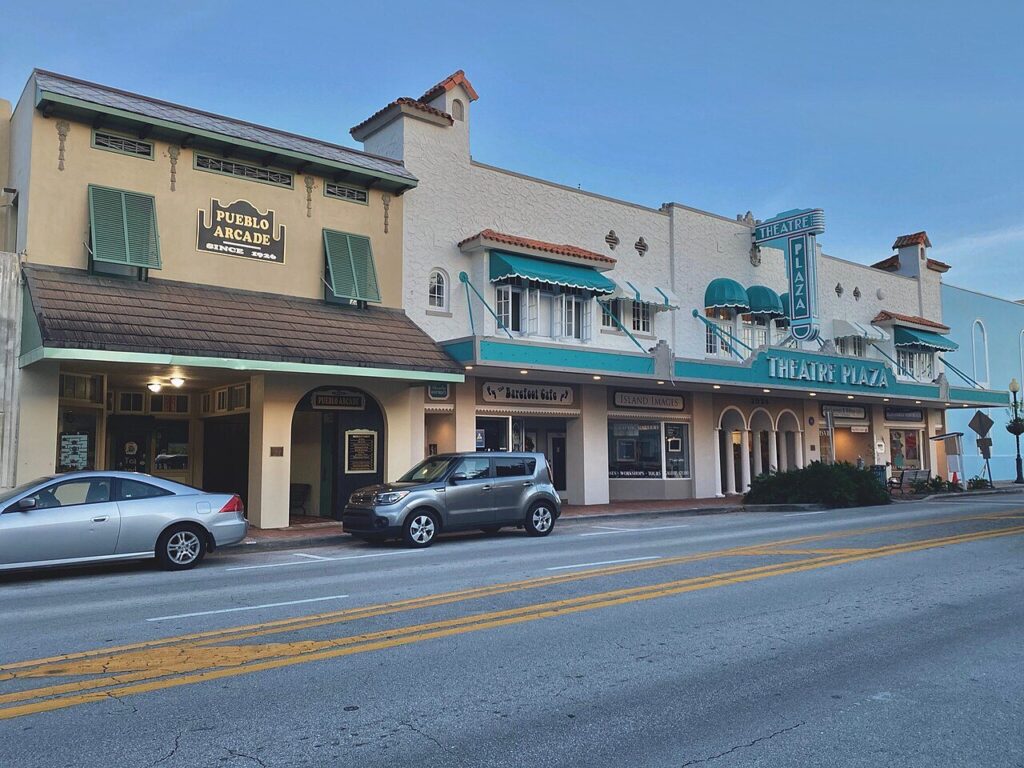
There is a particularly revealing doorway in the historical records of downtown Vero Beach. Halfway along the passage inside the Pueblo Arcade, a short flight of steps once led through the south wall into the Vero Theatre. The architectural survey dates the connection to 1926. By then the theatre had already been standing for two years. On a modern list of historic properties these are two entries with different names, addresses and dates. For someone crossing between them, they made a little district under cover. A person could arrive to see a picture and find other businesses quite literally along the way.
The addresses help the story fall into place. The National Park Service identifies the theatre at 2036 14th Avenue. The separate Pueblo Arcade nomination identifies 2044 on the same street, with the arcade facing west and stretching east toward a rear alley. A visitor need not go indoors to appreciate the urban idea. Imagine two commercial buildings side by side. One draws a crowd at a particular hour. The other contains a passage lined with opportunities to stop and buy something. Cutting a connection between them could serve both kinds of business. Vero Theatre registration · Pueblo Arcade nomination
A building designed around the screen
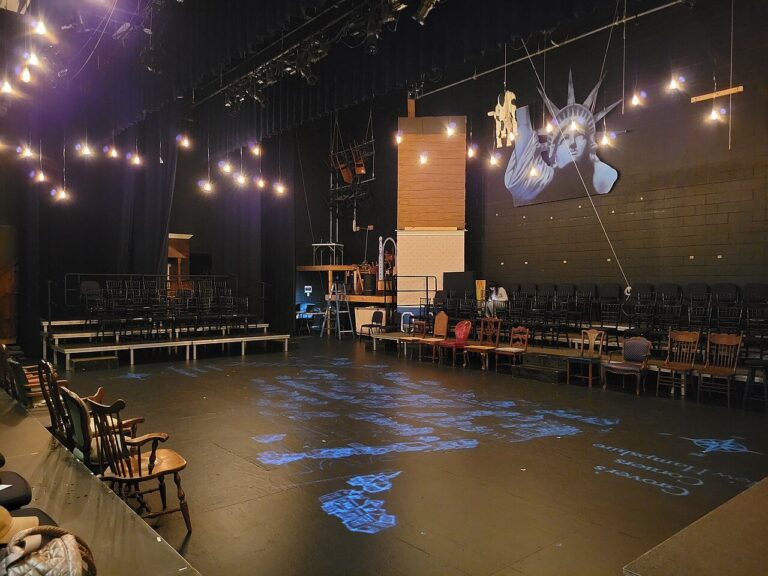
Movies could be shown in Vero Beach before the Vero Theatre opened. What changed in 1924 was that the town gained its first building specifically designed and erected as a movie theatre. A room borrowed for an evening and an auditorium planned around a screen make different demands on an audience. In a multipurpose hall, almost any seat with a usable view might suffice. A picture house needs a sustained, unobstructed view of the same flat surface from many rows. The shape of the auditorium, the balcony and the approaches to the seats become part of the entertainment business.
The theatre nomination identifies F. H. Trimble as the architect. Trimble had worked in Fellsmere before building a regional practice in Orlando. His other work included school buildings, and the document identifies Fellsmere High School among his local commissions. It is an interesting pairing. A school and a picture house both involve moving large numbers of people through entrances and toward designated rooms or seats, though one does it on a bell and the other on a showtime. Looking at the architect's broader practice gives the Vero commission a context that a list of movie titles could never supply. Theatre history and architectural survey
There was more to the theatre building than the auditorium. The nomination describes residential, commercial and entertainment functions in the same structure. That mix changes the story the street frontage tells. An audience might think the building came to life for an evening performance and slept for the rest of the day. A shopkeeper or resident would have known entirely different hours. In a growing downtown, combining uses put more than one source of activity behind the same facade. It also makes the building difficult to understand from a single photograph taken when the street happens to be quiet.
A different meaning of arcade
To many modern readers an arcade suggests video games. In the Pueblo Arcade the term describes a form of shopping passage. The nomination records a tiled interior running through the building, retail spaces on the north side and a rear opening toward the alley. In the entrance floor, hexagonal tile spelled out the building's name. That is advertising positioned where someone about to go inside would look down and see it. Display windows, doors and the band of glass above the storefronts brought the visual language of a shopping street indoors, in a space sheltered from afternoon weather.
Such a plan could turn a narrow frontage into several places to do business. A conventional shop presents one display to the people passing on the avenue. A passage gives several smaller tenants frontage on an interior route. Whether the arrangement succeeds depends on people having a reason to enter and, ideally, to walk some distance through. Here were an entrance from the avenue, a route to the rear and a doorway into a neighboring theatre. The original documents allow a reader to trace the movement without assuming that every historic opening remains a public entrance today.
One business named in the arcade's nomination was the company that became DuBose Jewelers. Researchers could document its long association with the arcade into the early 1990s while acknowledging uncertainty about the precise date it first occupied the space. That distinction is worth preserving. A business can be central to a building's identity even when no one has found the first lease. A family photograph of a storefront, a dated advertisement or a receipt carrying a street address can sometimes fill the gap. It is one reason ordinary commercial records deserve a place alongside formal drawings in a local archive.
What to see from the avenue
For a street-side comparison, first look at the widths of the two entrances and imagine the different patterns of movement they served. A cinema audience can arrive in a rush before a scheduled performance and emerge in another rush afterward. Shops can receive a much smaller trickle of visitors throughout the day. Then consider where a person might have turned if the neighboring building were their next destination. This exercise uses the evidence of plans and photographs without presuming that present tenants welcome unscheduled visitors inside. The city's National Register list can help a reader locate both properties among the other historic buildings downtown. City register of historic properties
The two addresses are especially useful when searching a directory or an old newspaper. Try the business name as well as the building name. Someone advertising a watch repair or a movie had every reason to assume that a contemporary reader already knew how to find the entrance.
The two buildings might easily have been documented as neighbors with no further connection. A few steps in a written survey preserve a different account. The theatre drew people in for something they could not do at home in quite the same way. The arcade gave them a reason to linger or transact business. The doorway joined those experiences and changed how a block of 14th Avenue could be used. In a town history dominated by major openings, prominent names and dates on plaques, this modest detail may tell us as much as any of them about an ordinary day downtown.