Why a Florida Keys shipwreck belongs in a Sebastian museum
Follow Mel Fisher from Vero Beach to the Florida Keys, and learn to tell the Atocha finds of 1622 from the 1715 fleet story along Sebastian’s own coastline.
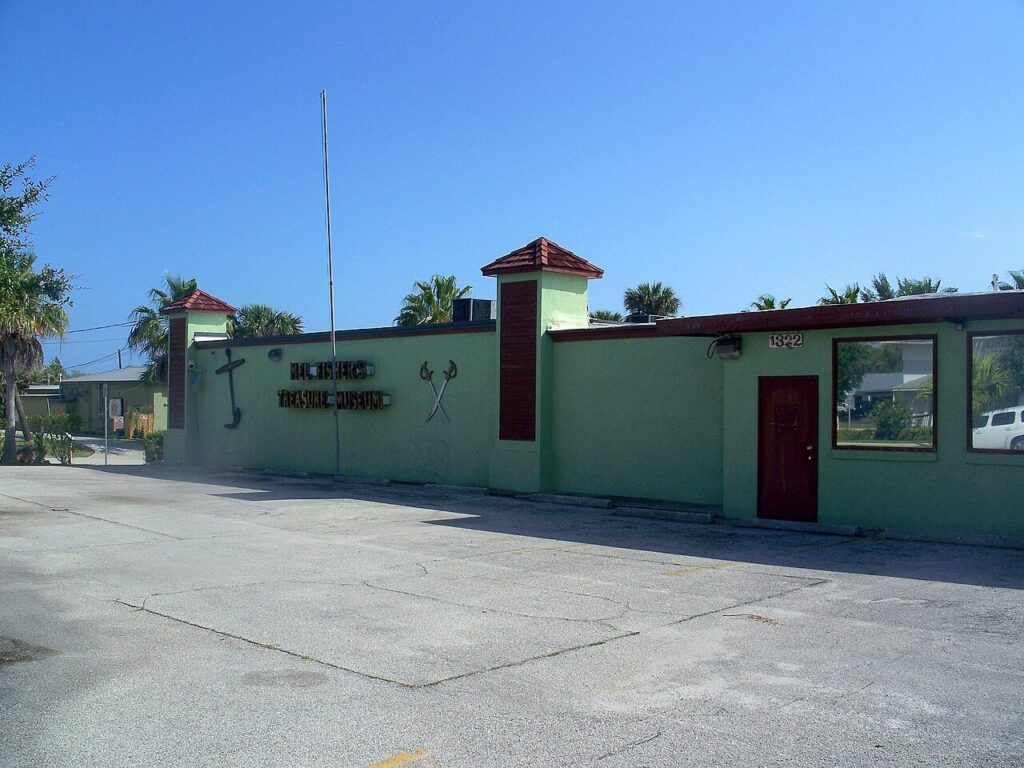
At the Mel Fisher museum in Sebastian it is possible to encounter the story of a shipwreck that happened nowhere near Sebastian. The Nuestra Señora de Atocha went down in the Florida Keys in 1622. The Spanish fleet disaster associated with this stretch of the Treasure Coast happened in 1715, nearly a century later. The person who connects the two is Mel Fisher. His family moved to Vero Beach to work on the latter wrecks, and he subsequently went to the Keys in search of the earlier fleet. One drive along US 1 can therefore lead into two parts of Florida and two different historical centuries.
The museum's own account dates the move from California to Vero Beach to 1963. Mel and Dolores Fisher arrived with their children and worked on the east coast before the search shifted south near the end of the decade. On July 20, 1985, the team located the principal concentration of Atocha material. That date is often the point at which a short retelling begins and ends. The Sebastian setting gives visitors a reason to take a longer view. A family that had already spent years learning to work off one coastline applied its experience to another, where a different set of wrecks raised a different set of questions. Sebastian museum’s account
Read two timelines, not one
Start with the journeys of the ships themselves. By the time the 1715 fleet departed Havana for Spain, the Atocha and her fleetmate Santa Margarita had already been lost for generations. Both maritime disasters involved severe storms, Spanish ships and valuable cargo. Those similarities are precisely what make them easy to confuse. An artifact associated with a 1622 ship tells us nothing on its own about who camped on the Treasure Coast after the later wrecks. A map of Sebastian beach finds likewise should not be used to locate the Atocha. A year and a vessel or fleet name are worth pairing whenever you read a label.
Now begin again with the twentieth century. The order reverses. Fisher's Treasure Coast work on the later fleet came first. His years searching for the older Atocha came afterward. A visitor who organizes a notebook by the date of loss gets one sequence. Someone organizing it by the modern date of recovery gets the opposite. This is one of the genuinely interesting features of the collection. It lets a reader compare what the objects meant to the people transporting them with what they meant to researchers and salvagers trying to identify a site centuries later.
The Florida Keys tourism authority describes the importance of the ship's manifest. Its account lists great quantities of silver in coin and bar form among the goods aboard. A manifest is evidence about what was supposed to be on a vessel. A recovery records what has actually turned up and been identified. Those sets of information may overlap without ever matching item for item. Some materials survive differently from others. Records can organize one person's holdings together while the sea separates the objects. An item can be commercially modest and historically important because it helps link a discovery to a particular shipment. Florida Keys account of the search
The moment before the famous moment
The Keys account preserves an episode from two days before the major discovery. On July 18, 1985, Kane Fisher's crew aboard Dauntless found material including a ballast stone, barrel hoops, copper ingots and silver coins. Read the list slowly. Coins are the most immediately recognizable objects, but a barrel hoop speaks to the containers used aboard a working vessel. Ballast concerns the management of a ship's weight. Cargo and ship fittings tell different parts of the story. The practical history of the vessel comes into view through some of the least glamorous items on the list.
The same distinction applies in a museum. A visitor may be drawn first to a precious material. Then ask what job the object was meant to do. A silver bar can represent a quantity in a commercial shipment. A coin may carry information about where and under whose authority it was struck. An object of personal devotion might have meant much more to a particular owner than the value of the material from which it was made. Precious metal can survive in all three cases while the human relationship to it differs completely. A useful label identifies the object closely enough to let those questions begin.
The 1985 discovery was also a family and crew achievement. Popular accounts usually attach the name of one person to a dramatic find. The detailed record places others aboard particular boats on particular days. A reader can look for the verbs in an exhibit text: who found, recorded, identified, transported or conserved an object? Different people may be responsible at each stage. That question puts labor back into a story whose familiar shorthand makes it sound as if treasure simply revealed itself to the most persistent searcher.
Choose the right Florida museum
The Sebastian location has its own exhibitions, introductory film and visiting information. The museum notes a last film time distinct from the doors' closing time. Someone hoping to see the introduction should check that time before making a late-afternoon trip. Key West has a different maritime museum associated with the Fisher story. And Sebastian Inlet State Park's McLarty Treasure Museum interprets a survivors' and salvagers' camp from the 1715 disaster. A search for “treasure museum Florida” can surface all of these. Use the name and location together when planning a visit or passing along directions.
A visitor comparing the Sebastian material with the local state park has a particularly good question to take along. What changes when a story is organized around a modern search team, and what changes when it is organized around a place occupied by survivors? The same historical disaster can enter the first account as the beginning of Fisher's Florida career and the second as the event that brought people onto a particular stretch of shore. Neither building can stand in for the other. The pleasure of the Sebastian visit is understanding why the geographic distance to the Keys matters and why a piece of that story belongs on the Treasure Coast. State park’s historical account