The airplane that put Vero Beach on a designer’s map
Fred Weick’s Vero Beach team helped create the PA-28 Cherokee. A manufacturer timeline, an archival photograph and a factory tour tell different parts of that story.
An airplane photographed over Vero Beach might be on its way anywhere. In the case of a Piper Cherokee, however, what lies below the wings can be just as interesting as the destination. The Florida State Archives holds an image specifically identified as a Piper Cherokee flying over Vero Beach. The city was more than a convenient patch of Florida sky. Piper's own timeline dates its development center and manufacturing plant here to 1957, when engineer Fred Weick joined the company. Work done in this coastal community became part of the design history of an airplane recognized at flying fields far from the Indian River.
It is tempting to picture a factory as the place where an idea handed down from somewhere else finally becomes a product. Piper's account of the Vero Beach operation joins development with manufacturing. The distinction is important. One group asks what the airplane should be; another has to work out how to produce the same airplane again and again. Putting those activities in the same place creates a local history of decisions as well as assembly. A visitor who sees only aircraft parked on the airfield sees the last stage in a process that begins much earlier. Piper company timeline
A different airplane from the famous yellow Cub
For many people the name Piper first suggests the Cub. The company's early reputation was associated with simple, relatively inexpensive private airplanes. The Aircraft Owners and Pilots Association describes the PA-28 Cherokee as a significant departure from the tube-and-fabric machines long associated with Piper's Pennsylvania operations. The design team headed by Weick produced an all-metal airplane at Vero Beach. The connection between the two aircraft is therefore partly a family resemblance in business purpose rather than a close resemblance in physical construction. A familiar manufacturer's name could carry a genuinely different kind of design into the market. AOPA’s Cherokee history
Materials are a useful place for a nonpilot to begin. A tube framework covered with fabric and a metal-skinned airplane present different surfaces, seams and manufacturing problems. An old photograph can sometimes communicate that change more clearly than a list of specifications. Look at how light travels across a metal surface or how the outline of a panel divides one area from another. Those visible details suggest the questions a historian might ask about the underlying design. They do not by themselves establish a particular model year or tell you who built the individual airplane.
The Piper Flyer Association identifies the Cherokee as a replacement effort for the PA-22 Tri-Pacer and gives 1960 as the year of PA-28 certification. It names other contributors to the design effort, including Karl Bergey and John Thorp. That is worth keeping alongside the better-known name of Weick. An aircraft can have a recognizable design leader while involving many people responsible for particular decisions. And certification marks a distinct milestone from opening a facility or completing a production run. The dates 1957 and 1960 describe related events in the history of one place, but they do not describe the same event. Piper Flyer Association history
What an archival photograph proves
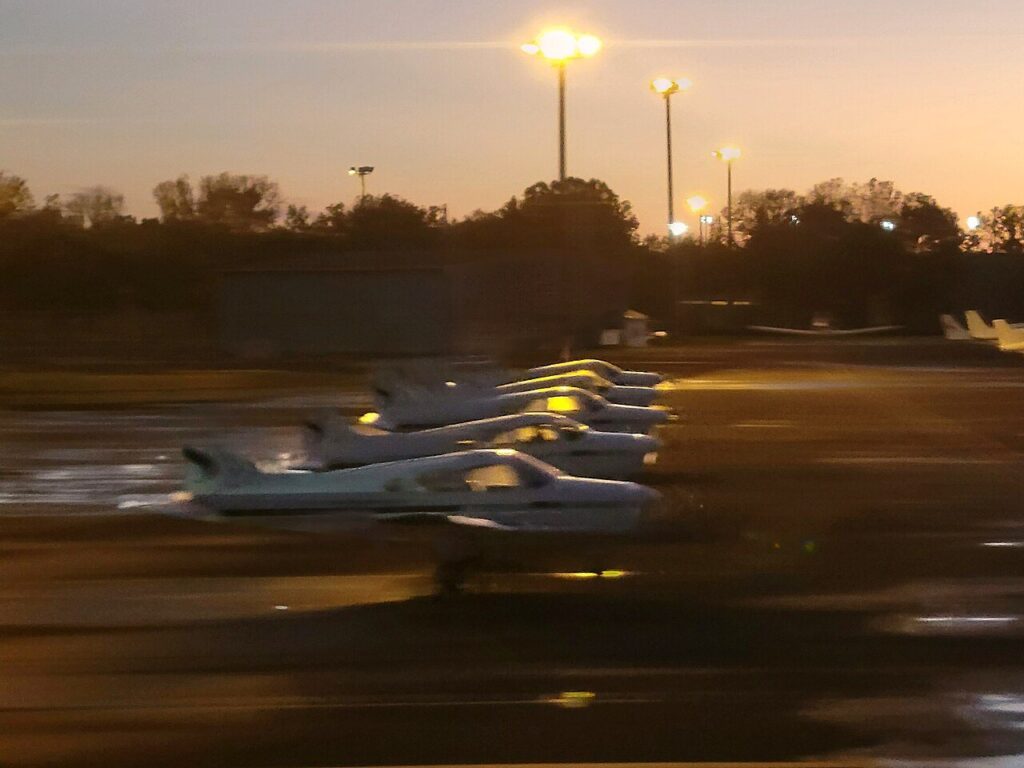
The Florida Memory catalog's wording gives readers a subject, a place and a medium: a small black-and-white photographic print of a Cherokee in flight over Vero Beach. That is already a substantial piece of information. It records how the airplane appeared from a particular vantage point and establishes how the archive identifies it. A family looking for an illustration of local aviation history can compare it with a more recent view of Piper aircraft on the ground. The historical print does not establish that every Piper visible at the local airport today is a Cherokee. The manufacturer produces multiple aircraft families. State Archives photograph
There are at least three histories a reader can pursue from that one image. The first is the history of a model, following design decisions and successive variations. The second is the history of the company and the transition from its earlier products. The third belongs to Vero Beach residents whose working days were spent designing, building, inspecting or supporting aircraft. A specification sheet can be excellent evidence for the first and say little about the third. A family snapshot, work badge or first-person account can add something about the people while leaving questions about a technical variation unresolved.
Piper’s own story collection includes a recollection of William T. Piper visiting the Vero Beach plant and stopping where workers were riveting a Cherokee tail section. Read as personal testimony, it offers a scale a corporate history rarely conveys. An airplane that appears in an advertisement as a single finished object existed in the plant as pieces undergoing separate operations. The worker who remembered a moment beside a tail section had a different view of the aircraft from the photographer viewing it in flight. Together those records give a community a fuller industrial history. Piper’s contributed stories
Seeing manufacturing in the present tense
Piper identifies Vero Beach as the location where its current aircraft are designed, engineered and built. The company also lists reserved factory tours on its website. A visit to an operating manufacturing site is a different undertaking from visiting a museum. Check the current arrangements directly with Piper, reserve before traveling and follow the instructions supplied for the tour. No one should need to enter an airfield or assume they can walk into a production building to see evidence of the company's presence. The public tour exists precisely so visitors can encounter that environment through an organized route. Piper company FAQ
For a school project, label images by what the source actually identifies. A model name established by an archive can be included in a caption. A modern photograph described only as showing Piper aircraft at Vero Beach should retain that broader description unless the individual airplanes can be identified from reliable records.
A useful question on such a visit is which features a worker sees long before the public sees an airplane. An observer on the ground may recognize a wing shape or manufacturer's marking. A worker may instead recognize the stage at which a structure is ready to pass to the next operation. A designer may see the compromises behind a shape that seems inevitable to someone looking only at the finished product. That is what makes the Vero Beach story a matter of local culture as much as aviation. A city familiar as a place to land was also a place where people worked out what could fly.