Under the Oaks Turns Riverside Park Into a Three-Day Art School for the Eye
The 76th Under the Oaks runs March 12–14 in Vero Beach. Learn how the juried show works and what to ask working artists about prints, pots and sculpture.
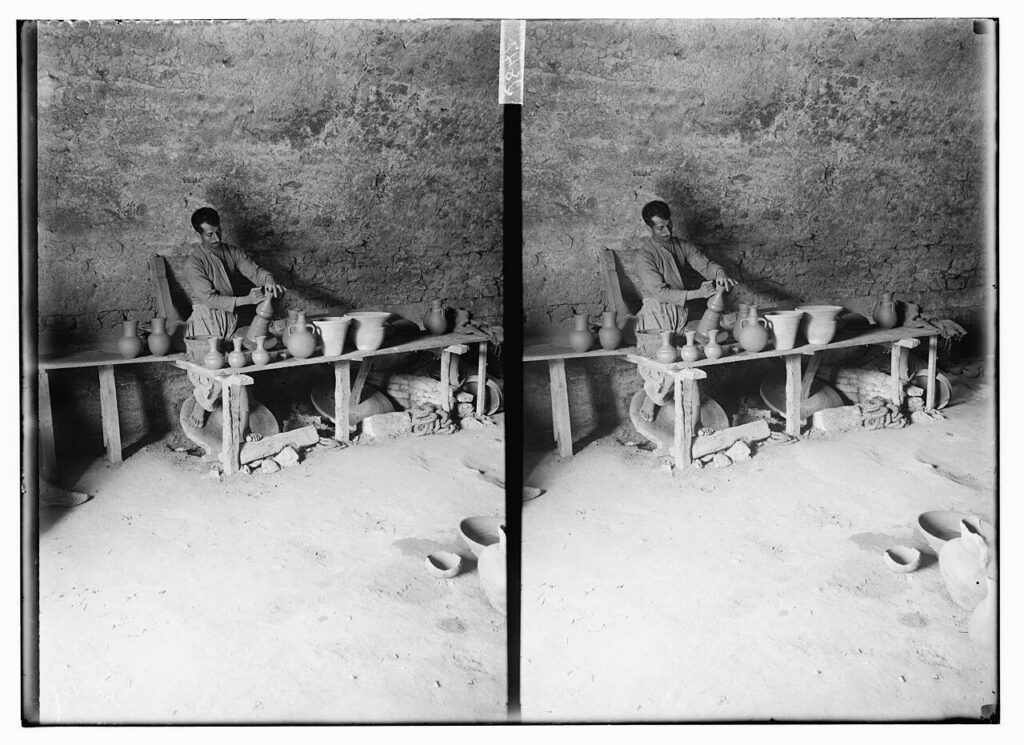
A good assignment for the first hour at Vero Beach’s Under the Oaks is to look for the same shape in three different materials. A curve in a ceramic vessel, a silver bracelet and the edge of a painted wave can do quite different jobs. One has to hold something, one must fit a wrist, and one exists entirely on a flat surface. By the time you find all three, you will have looked closely at pieces you might otherwise have passed while searching for a familiar subject. A festival of this size makes that kind of experiment possible.
The Vero Beach Art Club schedules the 76th edition of its juried fine arts show for March 12–14, 2027, at Riverside Park, 3280 Riverside Park Drive. Friday and Saturday run from 9 a.m. to 5 p.m.; Sunday runs from 10 a.m. to 4 p.m. The club describes a show that brings together more than 200 artists. With that much work in one place, making a second circuit with a particular question often reveals more than spending an entire visit trying to account for every booth. Under the Oaks schedule and visitor information
What the word “juried” tells a visitor
There are two kinds of recognition in the life of a juried show. An artist can be selected to exhibit and can subsequently receive an award for work in that show. Those are different decisions. The club publishes an artist application through ZAPP and a separate list of previous award recipients. A ribbon from a past edition tells you something about an earlier panel’s judgment. It cannot identify the winner of a show that has yet to open, or even establish who will be returning in March. Art club’s application listing for the 2027 show
The 75th edition provides a useful illustration of the range of approaches a visitor might encounter. The club identifies John Herbon as that year’s best in show and names award categories that span graphics and pastels, jewelry, oils, acrylics and watercolor, photography and digital work, pottery, ceramics and glass, and sculpture and wood. Think of those as invitations to ask different questions. “How was this printed?” makes sense at one booth. “How does this stand without tipping?” can open an entirely different conversation a few yards away.
If the idea of talking to the artist is intimidating, begin with a visible decision instead of a judgment about whether the piece is good. You might notice that a pot is wider at the shoulder than at the foot, or that a photographer left a large area of sky empty. Asking why the maker made that particular choice gives them something concrete to respond to. You can leave knowing more about the work even if neither of you discusses buying it. And if another visitor is ready to pay, it is easy to pause a conversation and come back.
Three things a picture on a phone cannot do
A phone screen conveniently makes a large framed photograph and a little drawing the same size. A booth restores the difference. Step far enough back to take in a whole piece before moving closer to examine the marks. A large photograph may ask you to choose where to look first. A drawing the width of a hand may require more time at close range to see how the maker organized its lines. If you describe a favorite to someone later, try describing its physical presence along with what it depicted.
A flat picture of a sculpture also fixes a single point of view. At a show you can look again from the side, where a figure may appear to lean in a way the front view concealed. For a piece a collector might place against a wall, ask which angles the maker imagined people would see. For something that someone might wish to put outside, ask about the intended setting, surface treatment and care. These are reasonable questions to put to the person who made it while you still have the object in front of you.
Finally, a photograph on a bright screen cannot show precisely how a print, glaze or metal surface reacts as you shift your position in real light. The park offers that experience without anyone having to change a gallery fixture. Move yourself before moving the piece, and ask permission before picking anything up. A piece of jewelry is a particularly good example. A clasp must work; a pendant has to hang. A photograph can record the face of a piece while leaving the maker’s most ingenious practical decision hidden on its back.
If a piece might come home
Write down the artist’s name and ask how to identify the work. For an editioned print, ask how the edition is described. For a framed work, ask whether the frame is included and what dimensions the framed object has. The size of the image alone will not tell you whether the car door opens wide enough or whether the piece fits between a bookcase and the window. For anything fragile, talk about packing and pickup. A vase that looked small on a deep display table can take up quite a lot of space when safely wrapped.
The club calls Under the Oaks its biggest fundraiser and publishes separate information for volunteers, sponsors, artists and vendors. A resident who wants to help the show can therefore take something away beyond a business card from a favorite maker. Visit the club’s own page to find the application that corresponds to the work you want to do. The March address is the park; the organization’s regular gallery is a separate destination. Keeping the two in mind gives a day at a crowded festival a life beyond its last tent.
If you return on Sunday, go directly to the piece you most wanted to see again. The last day begins an hour later and ends an hour earlier than the first two. What matters on a second look may surprise you. The curve of a handle, the shadow around a raised edge or a quiet patch in the middle of a busy composition can stay in memory more stubbornly than the biggest work at the show. A weekend spent finding out why is time well used.