One Vero Beach library, two catalogs and more than one way to find a book
At the Brackett Library, Indian River County readers and Indian River State College students share space, study rooms and librarians while using different catalogs.
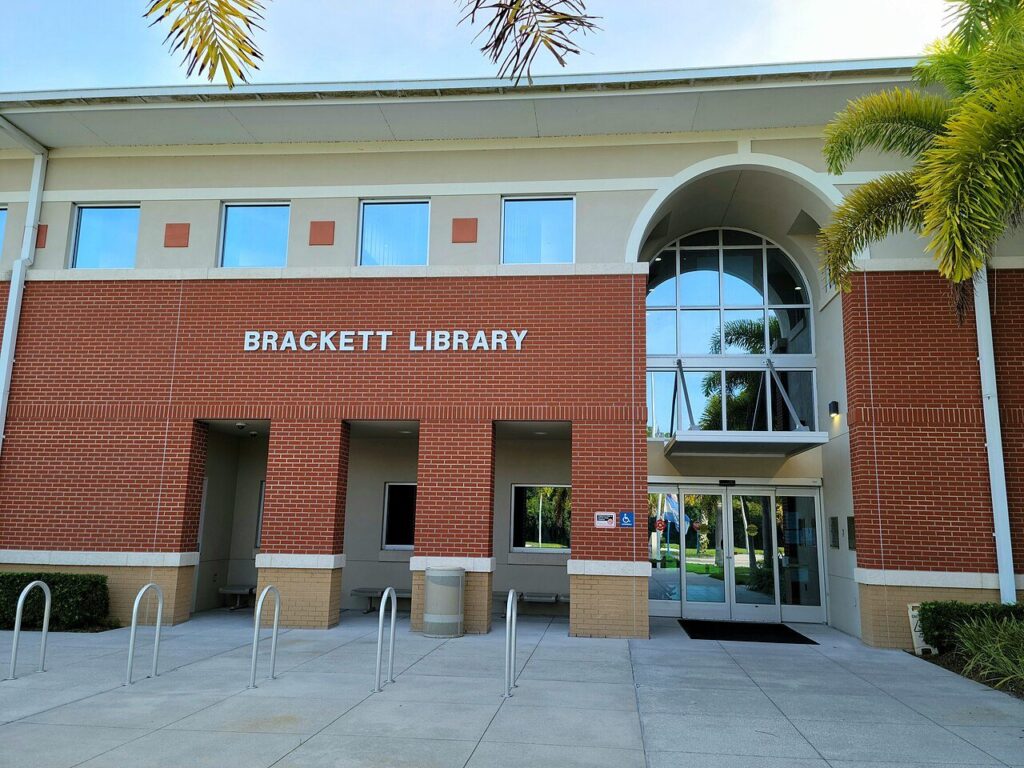
Suppose someone in Vero Beach wants to borrow a novel while the person giving them a lift needs scholarly sources for a college project. At the Brackett Library, both have come to the right building. The first person can use the county's public library system. The second can use research services associated with Indian River State College. Brackett, on the college's Mueller Campus, is a joint-use facility and an official county branch. Its two affiliations explain why the website offers multiple catalogs, why a college librarian can help with research and why a county library card matters at the checkout desk.
The college's building guide spells out the arrangement in practical terms. A county library card is required to check out materials. Computers are available with a card or a guest pass. There is guest wireless internet and there are single and group study rooms for students and patrons. A resident need not enroll in a class to have a reason to enter. A visiting student, meanwhile, should not assume that a login for a course platform is the same as the card needed to take a physical item home. The memberships and credentials answer different questions. Brackett Library guide
Which catalog knows about which book?
On Brackett's guide, one link searches the local library catalog for books and media at Brackett. Another, RiverSearch, covers holdings across the college libraries, including electronic material. The guide also supplies a separate route to research databases. Faced with all three, begin with what you hope to leave with. An individual looking for a paperback to take home today needs a location and availability result. A student who wants several peer-reviewed articles on one topic needs a database search. Someone who wants to know whether the college has an electronic book may reasonably start with RiverSearch.
It is easy to confuse a record with an item. Finding the title of a book proves that a catalog has information about it. It does not prove that a copy is on a shelf at the building you intend to visit. Look for the holding location, format and current status. A county system can have a copy at a different branch. A title may exist both as a physical volume and in an electronic edition. When you ask a librarian about a record, keep the title, author and edition together. That is far more useful than trying to describe the cover from memory.
For a student writing a paper, the first worthwhile distinction may be between subject and question. “Florida citrus” names a subject. “How did growers communicate variety and place to customers?” identifies something the reader wants to discover. A catalog search might turn up books with an overview of the industry. An article search can find narrower work on marketing or agricultural history. The Brackett guide identifies the college reference librarian as a research resource. Bring the assignment and a short account of what you have already tried. A librarian can help adjust a search that has produced many results but few that address the actual question.
Two institutions, one reading room
The county describes Brackett as a joint-use facility in its budget records as well as in the library system's public services. Those records explain why a county branch can be on a college campus without its public role being incidental. A student, a retired resident and a visitor looking up a local author are all legitimate users of the building. Their different needs also explain why borrowing, internet access and academic research appear as separate services. A visitor who only wants to read may have no need for the logins that matter to the student at the next table. County library system · County budget description
The study rooms offer another example. One reader might need quiet to review a manuscript. Several students may want to explain a problem to one another aloud. Both are reasonable library uses, but in the same open reading area they can interfere with each other. The college's guide identifies single and group rooms. Ask the staff about current availability and use conditions, especially for a group coming from different places. An invitation should identify the branch and the room arrangements. Telling someone to meet “at the college library” leaves a surprisingly large number of possibilities in a multicampus institution.
For people bringing a laptop, the guide identifies the guest wireless network and says no password is needed. A public workstation and wireless access on one's own device are different choices. Someone printing a document should check the current copying or printing charge and allow time to retrieve it. If the task concerns a class assignment submitted through an academic platform, bring the normal student authentication method. If it concerns a county library account, bring the county card. These modest distinctions often account for the difference between completing a task on one visit and making an unplanned second trip.
Looking past the services list
The college also maintains a separate guide for a preservation lab associated with Brackett. It describes equipment for digitizing analog media and paper memorabilia, but the guide displays a closure notice. That is a good illustration of why an equipment list alone is an unreliable basis for packing up a box of irreplaceable home movies. Check the current notice and confirm access before transporting originals. As a description of the work such a lab can support, the guide remains informative: a photograph, a negative, an audio cassette and a film reel each require a different way to create a digital copy. Preservation lab status and description
One useful habit before leaving is to write down the route that actually led to the material. Was it the county catalog, the college catalog, a subject database or advice at the desk? That note can help someone repeat a successful search months later, and it makes it easier to refer a friend to the right place. The two readers from the beginning of the visit might leave by the same door carrying entirely different results. One has a novel under an arm. The other has a list of articles and a sharper research question. The success of a joint-use library is that both outcomes make sense at one address.