Four local rules stand behind a single request to darken Indian River County’s turtle beaches
Indian River County’s turtle-lighting guide points to four ordinances. The responsible jurisdiction and the view from the beach both matter to a lighting complaint.
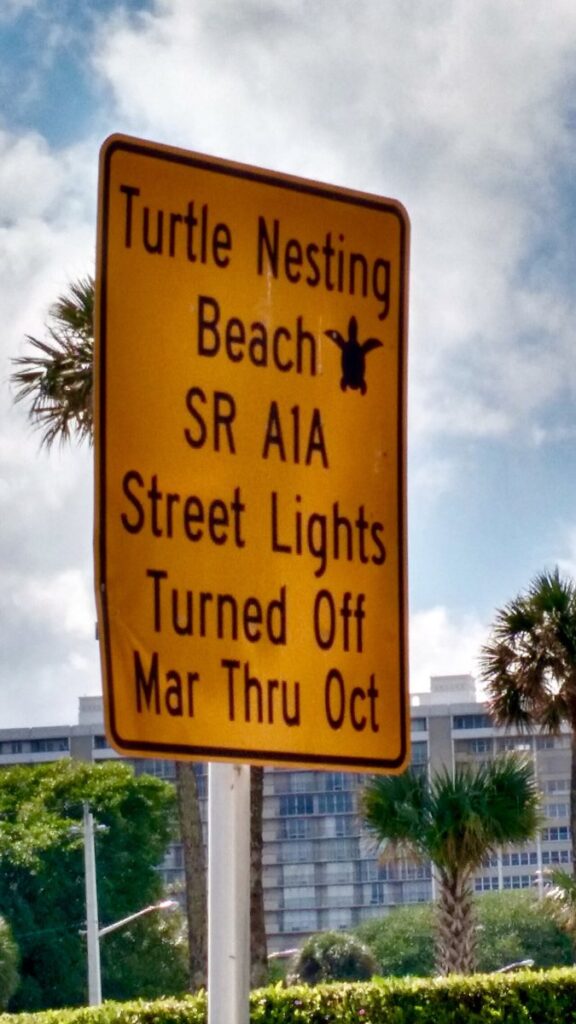
From the sand, a row of lights can look like a single problem. From a government office, the same row may cross the line between a town and unincorporated Indian River County. A light might belong to a private apartment, a common walkway or a public facility. Identifying who can inspect it and what standard applies takes more than identifying the nearest beach access by name. The county’s own sea turtle lighting information points property owners and beachgoers toward four different local ordinances.
The county lighting guide names Indian River County, Vero Beach, Indian River Shores and Orchid. It gives the local nesting season as March through October and explains why light visible at night can disturb nesting females or disorient hatchlings. For a resident concerned about an actual fixture, the list of jurisdictions on that guide is as important as its diagrams. It tells the resident to look for the rule at the property’s location before applying a rule remembered from a different section of the coast.
Where a particular light comes from
Think of a hypothetical condominium next to a public beach access. Viewed from one location, two bright sources might appear close together above the dune. One could come from a shared staircase while the other shines through the window of a private unit. A third light along the access might be publicly maintained. A description that identifies the access, the direction of the light and the time it was visible gives a reviewer something to locate. An accusation against everyone in the building may identify no particular fixture at all.
The county’s sea turtle information page connects readers to ordinance information and guidance on wildlife lighting. A practical inquiry names the exact stretch of beach and asks which local office handles it. A municipal mailing address and the nearby public park name can help with orientation, but the relevant question concerns where the light originates. A photo of the shoreline at one jurisdiction’s beach access can capture the surface of a building in another jurisdiction.
Be precise about what you observed and avoid introducing light of your own to document it. The county advises people to avoid flash photography and flashlights at the beach at night. Make a note from a lawful location of the nearest identifiable feature and whether the source appeared steady, intermittent, inside or outdoors. Do not approach nesting animals or enter the dunes, private grounds or buildings for a closer view. Staff can tell someone what information they need to identify the site without adding a new disturbance.
The fixture is only one part of what reaches the beach
The county guide describes three design ideas involving height, wavelength and shielding. Height and direction affect where a beam can travel. A shield can keep a light aimed on the surface where a person actually needs it. The color characteristics of the light also matter. Reading just the label on a box or noticing that a bulb looks amber from a parking area does not establish that the installation as a whole meets a particular jurisdiction’s requirements.
Consider a walkway used by residents after sunset. The goal for the person using it is to see the walking surface. A fixture positioned too high or aimed toward open sand could light a much larger area. A building manager discussing a change can ask for a drawing showing the mounting height, the direction of the emitted light and how the walkway would appear after installation. That supplies a better basis for discussion with local reviewers than declaring that higher brightness always means greater usefulness.
Indoor lighting can take a different route to the shore. Open curtains and large windows can make an interior source visible from outside even when the fixtures on the ocean-facing wall have been changed. The county’s diagrams explicitly include the position of curtains. That example helps explain why a daytime photograph of a newly installed exterior fixture cannot answer every nighttime question. It can document what was installed. A location-specific observation after dark can address a different issue about what reaches the beach.
State guidance and local enforcement
The Florida Fish and Wildlife Conservation Commission’s ordinance directory explains the role of local ordinances and provides resources for finding them. State advice about wildlife-friendly lighting, a certification for a product and local compliance at a property are related subjects. They involve different evidence. A certified fixture can be an appropriate starting choice. Its placement and use still matter, and a local official can identify the provisions applicable to the site and the work proposed.
An owner who has recently replaced equipment can help by keeping the manufacturer’s information and the details of the installation together. Identify which entrance or balcony it serves and when the work took place. If a complaint predates the replacement, make the order of events clear. If it comes afterward, ask whether investigators have identified the same fixture. A long building frontage can contain enough similar lights for an honest mix-up, and a dated photograph from the correct position can spare the neighbors and the owner considerable confusion.
What would make a meaningful measure of a community’s compliance work? Start with how many locations were reviewed, what prompted the review and how many received a follow-up. A tally of complaints is a count of reports. It can increase when residents become more attentive or when a new reporting channel becomes easier to use. A count of resolved cases needs a definition of resolution. A promised adjustment, inspection after installation and observation from the beach might occur on different dates and support different claims.
A nighttime lighting issue can be urgent for wildlife and still benefit from a disciplined account of who saw what, where and when. The public need not identify an animal, trespass for a photograph or guess the owner’s intent. The county’s four-jurisdiction guide is a useful starting point precisely because it connects a shared coastal concern to the local rules and officials who can examine a real installation. The outcome worth tracking is what light actually reaches that piece of beach after action is taken.
Where several properties share a beachfront approach, attach a simple description of which access and which side of it the observation concerns. That can be more informative to a reviewing official than sending a widely shared nighttime image whose date, viewpoint and exact stretch of coastline were lost when the picture was reposted.