The night Fort Pierce opened the doors of the Sunrise Theatre
A band, speeches and a movie opened the Sunrise in 1923. Its stage, downtown location and long fight to reopen explain how one theatre served several generations.
There were at least three ways to be entertained at the Sunrise Theatre on its opening night. The Fort Pierce Band played. Public figures, including the mayor, took their turns speaking. Finally, the audience watched a motion picture. The date was August 1, 1923, a summer evening well before sound movies became commonplace. That sequence survives in the theatre's National Register nomination, and it makes a revealing program to read today. The people who built the Sunrise had made a single room in which a town could listen to its musicians, hear itself described by its officials and look beyond Florida through a film.
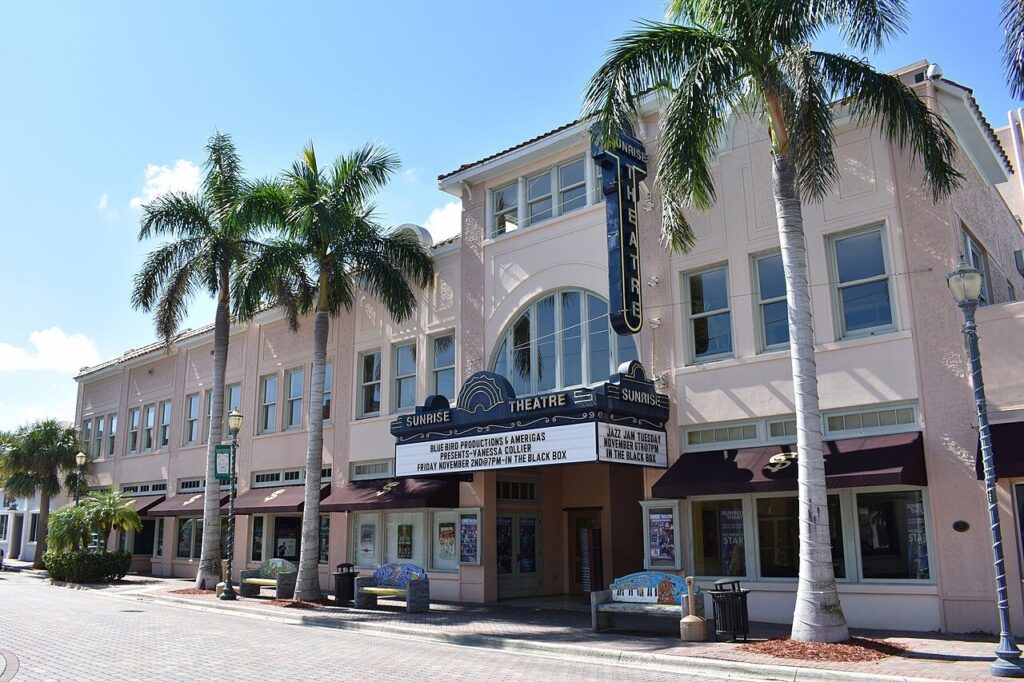
The street address is still 117 South Second Street. The Indian River lies close enough that the city describes the downtown theatre as within sight of the water. Its position mattered before a ticket holder ever sat down. A sizeable audience could arrive for one performance, leave together and step straight into the commercial life of Fort Pierce. A cinema on the edge of town reached only by car would arrange that same evening differently. Looking at the Sunrise from the street is a good way to begin understanding its value even on a day when the doors are closed. National Register documentation
What a vaudeville stage needed
The Sunrise was designed for the era of vaudeville, when one evening could bring different kinds of performance through the same space. A band and a speaker need very little scenery. A touring act with a set may need pieces raised out of view in a hurry. An audience wants to see the performer, while the crew needs somewhere to store the things the audience should never see. The nomination describes a stage some thirty-four feet deep and a fly loft reaching seventy feet high. The invisible space above the stage was about twice as tall as the performing area was deep.
A visitor can appreciate the significance of that height without seeing the machinery. Think of the painted background behind a scene. If it is to disappear overhead while staying upright, the building needs somewhere for its full height to travel. Add room for people to manage the change and a tall, unadorned part of a theatre's exterior begins to make sense. The historian documenting the Sunrise also noted the orchestra pit, a sloping stage floor of heart pine and angled walls in the auditorium. These are clues to three different jobs inside the building: making music, seeing the action and hearing it.
The stage could accommodate new forms without having to unlearn old ones. Silent films already had a following in Fort Pierce before the Sunrise opened. By the late 1920s, talking pictures were changing what a movie audience expected to hear. A theatre designed for performers sharing the room with spectators had to compete for attention with recorded voices. The opening program sits particularly well at that moment in hindsight. The Fort Pierce Band and the public speakers supplied their own sound. The film offered images. Later audiences could hear a screen actor's voice while sitting in the very same city.
When the theatre went quiet
Opening night is the easier half of a theatre's story to celebrate. Keeping the doors open through decades of changing audiences is another matter. Fort Pierce's redevelopment agency recorded that the Sunrise closed in 1983 and reopened on January 6, 2006, following a major renovation. The gap lasted more than twenty years. A child entering school as the theatre closed could reach adulthood without knowing it as a working performance venue. For that generation, the restoration did more than rescue a building remembered from childhood. It introduced a place that had long been present downtown but absent from ordinary cultural life. Fort Pierce redevelopment agency report
Restoration means more than finding a paint color or repairing a marquee. A company needs to be able to bring in equipment. Audiences have to get from the street to their seats. The box office and front-of-house staff need dependable systems whenever the doors open. The public investment that followed reopening also matters. The city's redevelopment agency documented a contribution toward operations in its 2013 report. That historical figure described a particular year, but its purpose is easy to understand. The conservation of an old theatre includes the distinctly unromantic business of paying to run a functioning public venue after the ribbon has been cut.
Two rooms for different kinds of attention
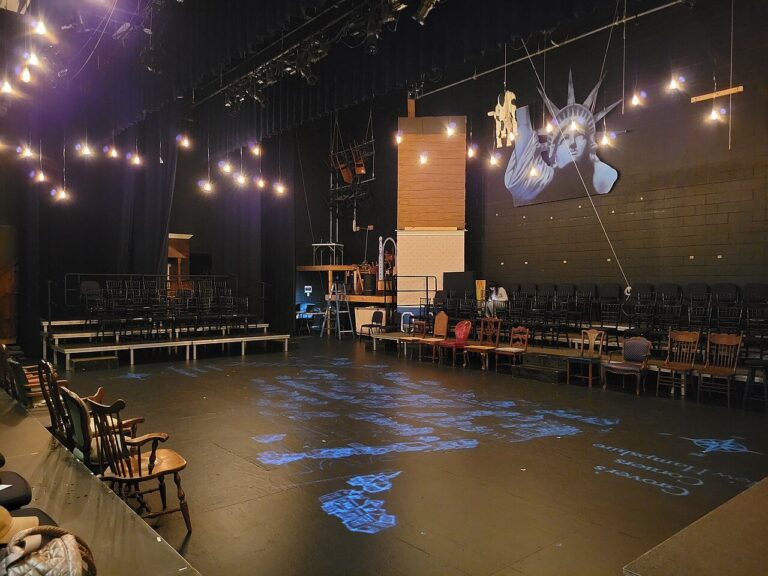
Fort Pierce now describes a Mainstage with roughly 1,200 seats and an accompanying Black Box with about 210. The difference in size affects the art itself. A small gesture that looks enormous from a nearby seat can disappear across a large auditorium. A full ensemble may need depth and separation that a smaller room cannot provide. A comedian waiting for a response from an intimate audience is managing different timing from a singer attempting to reach people near the back of the Mainstage. A presenter choosing between the two rooms is already making an artistic decision. City venue description
For someone choosing a first performance, start with the room as well as the performer. Look up which space is named on the individual event page. A ticket for a Mainstage touring production and admission to an intimate show at the Black Box can lead to different seating arrangements, arrival instructions and expectations about sightlines. For an audience member who wants help with access, tell the box office which event and room you have in mind. A familiar street address does not mean every event uses the entire building in the same way. Sunrise Theatre box office and listings
One pleasure of attending is to compare the occasion with that first evening. Ask what the audience came to do together that it could not do alone. A recording of a band can travel anywhere. Listening to the silence before the first note or hearing people on both sides of you react to the same surprise requires a room, people and a particular moment. In 1923 Fort Pierce built such a room for a band, a round of speeches and a motion picture. The performances changed. Enough people believed in the experience to bring the room back to life.