How a one-dollar purchase saved Vero’s railroad station
Vero’s 1903 railway station survived on a city parcel set aside decades earlier. Follow its journey from rural rail stop to a 14th Avenue exhibit center.
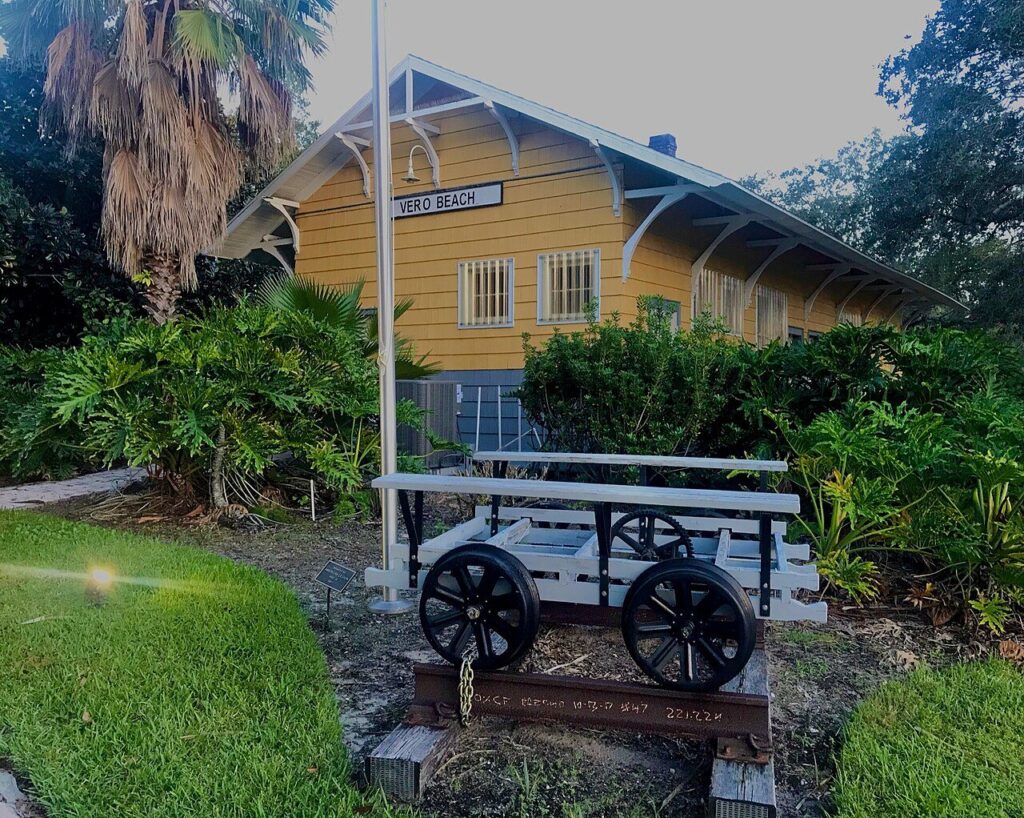
The most misleading fact about the rescue of Vero Beach’s old railroad station is also the most memorable. The purchase price was one dollar. A dollar secured an agreement with the Florida East Coast Railway in 1984. It did not secure a new site, move the station, restore it, open an exhibit center or keep it operating. The dollar makes a fine beginning to the story precisely because almost everything that mattered had to happen after money changed hands.
The Indian River County Historical Society tells the story from the perspective of the organization that bought the station. Abandoned by that time, the building had once connected this small agricultural community to a much larger network. The railway’s terms required it to be moved. The society used local support and a state grant to relocate it to city-owned land. That sequence helps explain why a railroad station now makes a good destination for a history outing to 2336 14th Avenue and a poor place to wait for a passenger train.
When the rails and the stop arrived
In public memory, the arrival of railroad tracks, the opening of a station and the growth of a town often blend into a single milestone. The Florida historical marker separates those stages. It describes the line reaching Sebastian in 1893 and Fort Pierce in 1894, and identifies the Vero station as a stop by 1903. Vero was small, and the account associates a stop of its own with agricultural growth. A route passing through a region and a timetable recognizing a particular place are two different kinds of connection.
The name on a timetable tells another part of the story. The marker dates the addition of “Beach” to the city and station names to 1925. That matters when looking through material from different decades. A document referring to Vero can belong in the history of the same building as a later photograph labeled Vero Beach. Searching older indexes only under the longer name risks hiding the earlier chapter. It can be equally misleading to add “Beach” to a transcription of an older document without indicating what the document actually said.
The freight platform was especially important to citrus growers. To understand its value, imagine the distance between a grower’s property and a distant buyer as a series of handoffs. Fruit had to leave the grove, enter a shipping system and arrive with its commercial identity intact. The station was one place where a local product could become somebody else’s incoming shipment. A passenger might remember waiting for a train. A grower might judge the station by whether a load could be moved onward. Both memories belong to the same building, even when their working days scarcely resembled each other.
The land had been waiting
The most remarkable detail in the rescue concerns the destination. City land acquired in 1924 had been set aside for a possible station relocation. Sixty years later it served that purpose. The history society identifies the move as one from Commerce Avenue to 14th Avenue, and the state marker locates the new parcel northwest of the original site in Pocahontas Park. The wood on view is evidence of an old station. The exact orientation of a visitor to its surroundings today is evidence of a later preservation decision. The difference becomes important when comparing old street photographs with the current scene.
Consider what the 1924 decision achieved even though the people making it could hardly have predicted the terms of a 1984 preservation purchase. It left a practical possibility available. A building offered for a nominal sum can still be lost if nobody can identify a suitable place for it to go. Conversely, designated land alone cannot accomplish a move. The society names both community involvement and state grant support. The project needed a site, a willing steward and resources to turn a legal possibility into a physical undertaking. The dollar represented only one of those things.
What an exhibit center can preserve
The restored station opened as an exhibit center and society office in 1987. It was the county’s first building listed on the National Register of Historic Places, according to the society. The new use solved a problem faced by an old building whose original service has ended. A rail stop without trains has little reason to receive people regularly. A center with exhibits, tours and a steward can keep bringing visitors inside, where the scale of public rooms and their relationship to work areas are easier to grasp than from a street photograph.
One productive question on a tour is what an object tells you about movement. A paper timetable records promised sequence and connection. A photograph may record the physical relationship between a platform and its surroundings on one day. A label on a crate bears names intended to survive a journey. These are examples of source types to ask about rather than a promise that every example is on display. The society’s organizational history places the station at the start of its own preservation efforts. You can reasonably ask about the museums and projects that followed it as well as about railroading itself.
Visit with two maps in mind
For a first visit, use the society’s current address and check its opening arrangements; the building serves a small historical organization, and its public schedule differs from a daily railway service. For a return visit, bring an old photograph or a historic map reference if one is available. Ask whether it shows the original location, the public move or the restored exhibit center. A correct identification of the building is only half the work. Placing the camera in the right decade and on the right side of a move can completely change the meaning of an image.
Finally, think about the passengers the depot no longer receives. The marker places the end of passenger service there in the late 1960s. In one generation the station went from a place for getting elsewhere to a building the community had to decide whether to keep at all. Today the reason to go there is the station itself. A one-dollar receipt might have bought the right to take it away. The harder achievement was making somewhere for it to arrive.