The fish house was Sebastian’s link between the lagoon and a distant dinner
Why did a fishing town need a fish house? Sebastian’s museum and early railroad records explain the work between hauling in a catch and selling it far away.
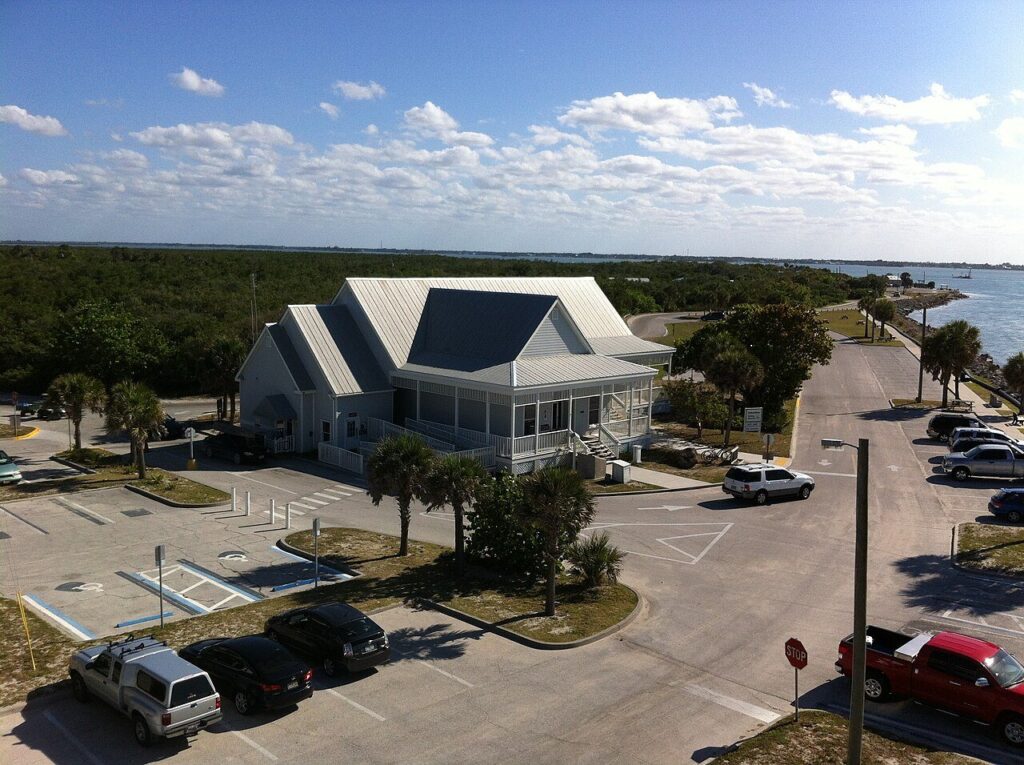
The most important building in a fishing village can be the one where nobody catches a fish. Between the lagoon and a distant table, a catch must reach land, be received by somebody, be prepared for transport and find a buyer while it still has value. The Sebastian Fishing Museum makes that middle part of the story visible. Its reconstructed fish house and dock put a working waterfront at the center of a history that could otherwise be reduced to a view of a boat and a pile of fish.
The Indian River Lagoon National Scenic Byway identifies three early families honored at the museum. Sembler, Smith and Judah operated fish houses in Sebastian. The exhibits include a locally made fishing boat, equipment and photographs. The museum is on the south side of Sebastian Inlet in the state park. The town where these businesses operated is another location. A reconstruction at the museum can explain how work was organized; it should not be mistaken for a claim that the original three businesses all occupied the ground beneath the present exhibit.
Start at the landward end of the dock
A recreational angler can bring home a catch and end the fishing day at the kitchen sink. For a commercial operator, a boat returning to shore begins another set of transactions. Someone has to know what has arrived, in what condition and where it can go next. Even a photograph that shows only the outline of a dock can tell a viewer something about that essential transition. Find the point on the water where a boat can come alongside and the route by which a load could move into a building. Then ask who appears in the picture and who might have worked outside the frame.
Sebastian’s access to rail transport changed what that transition could mean. A National Register historical account preserved by the National Park Service dates the railway’s arrival in Sebastian to 1893 and the first rail shipment of fish to 1895. It describes Sebastian as one of several fishing centers along the lagoon, supplying markets as distant as New York. An inland buyer and a lagoon fisher could have a commercial relationship without ever meeting. A fish house helped make that long-distance relationship possible by linking a local and sometimes unpredictable catch to the demands of a transport network.
A boat belongs to a particular job
The museum’s homemade boat deserves attention as a piece of design. Before trying to identify materials or a builder’s signature, ask an elementary question. What work would this form make easier? A boat intended to carry a crew and equipment has to provide useful space for both. The edge where a net or a load comes aboard matters as much to a working fisher as a profile that looks handsome in a photograph. If a label offers an explanation of how a boat was used, give that evidence priority over an assumption formed from modern recreational craft.
Two people can make quite different sketches of the same boat. One might draw its outline from end to end. Another might sketch only the space a person had to work in and the places where equipment could be set down. Put the drawings together and it becomes easier to see why the history of a trade needs more than a picture of the finished vessel. It needs some understanding of what happened in it and around it. A hardworking object can be familiar in appearance to modern visitors while its original tasks have become unfamiliar.
What a net and a family name can establish
Nets in a museum communicate technology through repetition. Many small, similar openings make one tool. Making, keeping and repairing such a tool take a different kind of skill from determining where or when to fish. The display can support useful questions even for someone who knows no fishing terminology. Where might the tool show wear? Which part of its use is explained in the caption and which remains puzzling? Ask these questions as matters of local occupational history. An old tool or photograph is evidence of former practice, not guidance about which methods are appropriate or permitted in present-day waters.
Family names supply another kind of continuity. The presence of Sembler, Smith and Judah in the museum’s interpretation identifies businesses and households worth tracing in local records. It does not identify every worker on a dock. A considerable number of tasks can sit under a single company or family name. The boat had to be handled, the load received and a buyer supplied. A historical photograph may preserve a worker whom a business directory never names. Conversely, a company record might identify a proprietor who happens to be absent from a photograph taken on a busy morning.
Read the background of the pictures
Try choosing a museum photograph in which the catch occupies less space than its surroundings. Take in the relationship of boats to dock, dock to building and building to the rest of the shoreline. The arrangement is a local solution to moving material; it can be more informative about a village’s economy than a close view of a single remarkable fish. Check the date before comparing it with another photograph. Equipment, ownership and the shoreline itself can change, while a familiar name continues to appear in captions across different decades.
Florida State Parks interprets two distinct museum stories at Sebastian Inlet. The fishing museum follows the local fishing industry. The McLarty Treasure Museum concerns the 1715 fleet and its survivors. A family interested primarily in boats can enjoy both, yet each rewards a different question. Ask at McLarty how people moved materials from a wreck to a camp. Ask at the fishing museum how an ordinary working village repeatedly moved perishable food from water to land and onward. Check the park’s operating information before planning to combine the stops.
The fish house is an especially good subject for residents traveling to the inlet from Vero because its story continues beyond the museum walls without requiring a search for a surviving private building. Observe how many different links a modern meal depends on and which of them remain largely invisible to the person who eats it. Sebastian’s historic waterfront made one such chain work with boats, shore businesses, rail service and people who knew what to do when the catch came in. The museum restores the missing middle to the view.