The part of the 1715 shipwreck story that happened on land
South of Sebastian Inlet, the site of the McLarty Treasure Museum reveals the shore-based work of surviving a fleet disaster and recovering its cargo.
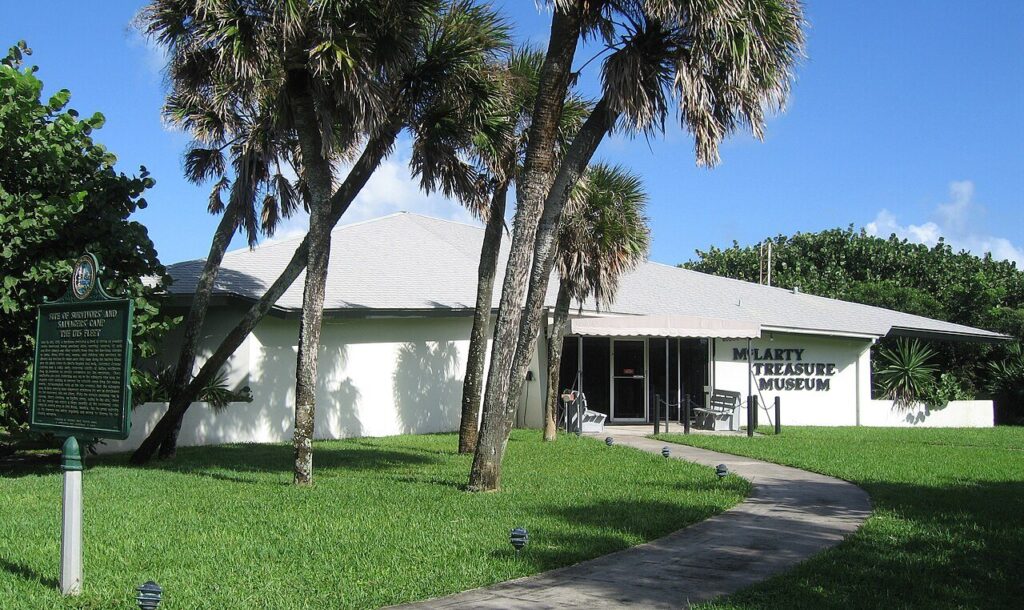
There is an ocean to look at from the McLarty Treasure Museum, but the most important historical fact about the place lies underfoot. Part of a camp used by survivors and salvagers after the Spanish fleet disaster of 1715 occupied this stretch of barrier island. A museum elsewhere could put recovered material in cases and tell the story of a hurricane. This museum can do that and ask a harder question. Once people reached shore, how did a group of shipwreck survivors become a community with food, shelter, work and valuable cargo to protect?
Start by dividing the story into three parts. A fleet left Havana for Spain, a hurricane destroyed ships along Florida’s coast, and people who survived or arrived to help established a base on land. The Florida State Parks historical account identifies Captain-General Don Juan Esteban de Ubilla and his flagship and describes the salvage operation and the difficult conditions at the camp. Modern pictures of coins scattered in the sea generally collapse the three parts into a single exciting image. The historical site preserves the practical work that followed the catastrophe.
Two different kinds of archaeological site
The state park’s management plan records the survivors’ camp and an offshore wreck separately in its archaeological inventory. This distinction matters even to someone who never intends to study archaeology. A plate or piece of metal recovered from a vessel may have been equipment, personal property or cargo. A comparable object on shore might have been used in a meal, lost while handling recovered goods or brought in later. Knowing where a find came from shapes which of those possibilities deserves attention.
The Florida historical marker for the camp uses a careful qualification about buildings. Its account says archaeological work suggests temporary storehouses were erected for recovered gold and silver. That is evidence-based interpretation rather than a description from someone watching a particular building go up. It is quite a strong finding. People responsible for salvage had to make some provision for material once it came off the water. A temporary structure could leave evidence behind even when no complete walls were available to move into a museum.
What an object in a case can tell you
A 1715 Fleet Society account of an earlier exhibit records two very different kinds of object in material displayed from the collection of Vero Beach diver Mike Blanchard. One was Chinese porcelain. Another was a Charles II reliquary medallion. The society published images supplied by the collector. The porcelain opens a question about where goods were made and how far they traveled before the fleet left Havana. The medallion invites questions about what an object meant to its owner. Neither question can be answered by estimating how much the object might fetch at auction. The historical exhibit gives a reader a way to study those distinctions even if the displays on a present-day visit have changed.
A coin is easier to recognize and can be more difficult to interpret than it looks. Its design can help identify the authority that issued it. Its date may put a boundary on when it could have been lost. Neither detail supplies the name of the person who last held it or the circumstances of its arrival at a particular spot. Museum captions vary in how much is known. Giving the words about recovery the same attention as the words about the object makes a stronger account of the past, even when that account includes an honest gap.
Consider another puzzle. The old marker says Spanish salvagers recovered much of the treasure and took it back to Havana. That motion runs in the opposite direction from the journey the fleet set out to make. A map can therefore tell two stories without changing a single coastline. In the first, ships carry goods outward from a colonial port. In the second, people organize their return after a disaster. On the shore, the work of collecting, storing, accounting for and moving cargo connected the two. Each verb represents labor that a simple map of sinking ships tends to leave out.
A park with a much longer memory
It is easy to let the year 1715 become the start of local time. Florida State Parks puts the wreck within a much longer history, describing Indigenous communities that lived in coastal villages and drew on the sea long before the fleet sailed. The park inventory records evidence of an earlier shell midden at the camp locality. Archaeologists use the term for a deposit that includes the remains of human activity, often discarded food shells. A shell deposit and a Spanish camp can occupy overlapping ground while belonging to very different periods. One event did not create an empty stage for the next.
That longer history offers a family a better assignment than counting the most expensive things in a display. Ask each person to find one piece of evidence for a voyage and another for people spending time on land. Make a note of which facts appear on a label and which are guesses proposed by the group. A younger visitor may notice a practical puzzle, such as how people expected to carry something heavy across sand, that a conversation devoted entirely to precious metal would miss. The museum’s distinctive subject is the connection between a find and a place.
Which museum on the inlet trip?
Sebastian Inlet State Park includes a fishing museum as well as McLarty. The official park map shows both and identifies the McLarty observation deck. Select the McLarty destination if the 1715 story is the purpose of the trip. Check with the park for current operating information before traveling, particularly when combining two museum stops. The view can be part of the visit, but the account of the camp is meaningful even for someone who spends the available time indoors.
Try identifying two different kinds of evidence while reading an exhibit. A surviving object can tell you something about its manufacture or use. Its position and the records of its discovery may help explain how it came to be on this particular stretch of coast. Together they support a fuller account than an isolated object in a display case.
The state management plan records that the museum was built in 1969 on land Robert McLarty donated. That act gave the public something different from a share of recovered treasure. It preserved a place from which to ask what happened after the ships went down. The lasting object here is the relationship between the land, the offshore catastrophe and the people who had to move back and forth between them. You can stand on dry ground for the entire visit and still be at the heart of a maritime story.