A church, a classroom and the people who kept Gifford’s history
Explore Gifford’s Black history through the Macedonia Church, Gifford High School’s legacy, community photographs and the work of local preservationists.
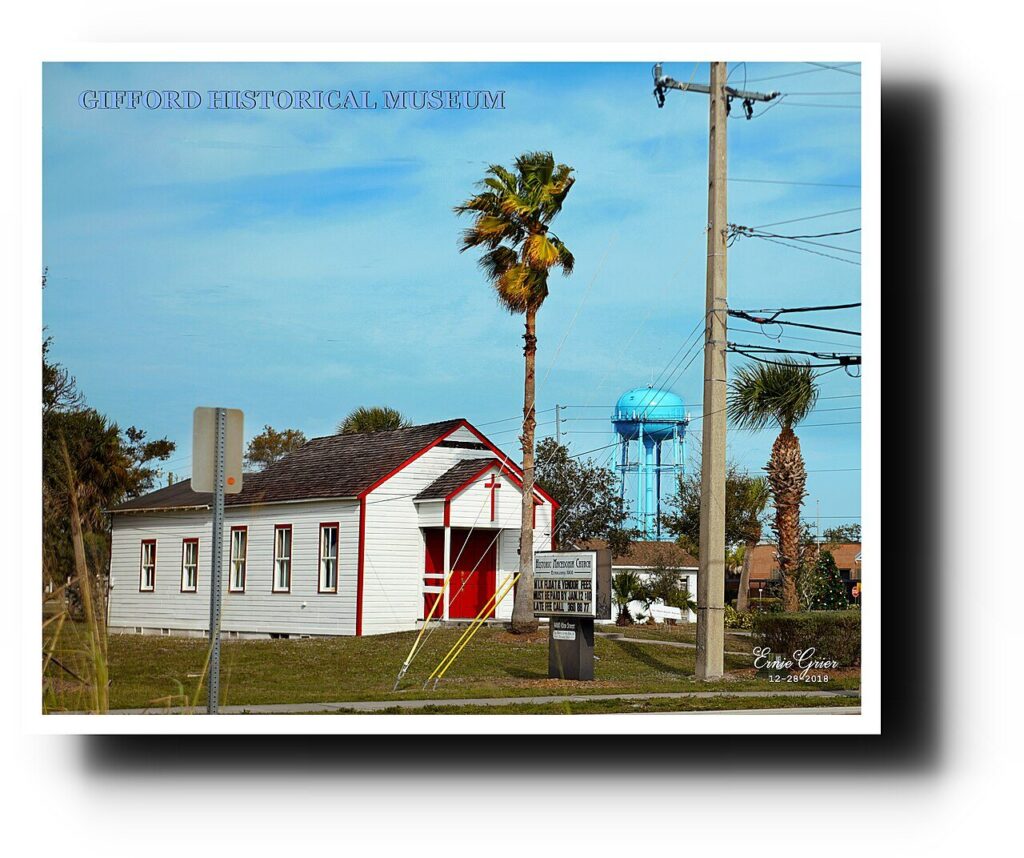
The Gifford Historical Museum and Cultural Center has an unusual starting point for a collection. The building was itself an act of community building. Black railroad workers erected the Macedonia Church in 1908. Long afterward, a coalition kept the building, restored it and found another public purpose for it. A person setting out for the museum at 2880 45th Street is tracing both the railroad era and a much more recent history of people deciding which parts of Gifford’s past their children should be able to see.
The museum’s account identifies the Gifford Progressive Civic League and the M.L.K. Birthday Committee among the organizations behind that work. It dates the museum dedication to February 24, 2018, exactly twenty years after the church restoration dedication. There is an important stretch of time between those events. Saving a building from loss and developing a collection, purpose and audience for it are different accomplishments. Giving both dates their due helps explain why the old church has become a cultural center as well as an artifact.
The church traveled
The railroad workers associated with the church built it in Sebastian. A local historical account of the move places its relocation to Gifford in 1994. Its presence today therefore connects two Indian River County communities. A brick or board may survive a move, but its new surroundings bring different meanings. In Gifford the building joins the history of a neighborhood that chose to preserve evidence of Black life in the county and make it accessible to a new audience.
The two locations also change how to ask a question about a family photograph. If someone says a wedding or gathering took place at Macedonia, the name alone is only the beginning. Ask when, which community, and whether the picture shows the old surroundings or the present site. The background may matter as much as a face or inscription. Even when nobody can answer all three questions, recording uncertainty makes a family photograph more useful to the next person researching it. A possible identification written as a certainty can follow a picture for generations.
The school left a different sort of monument
A second Gifford site gives the story a different center of gravity. The Florida marker for Gifford High School connects the school to William Edward Geoffrey. He came to work on the railroad in 1892 and later purchased land, part of which he donated for a park and a school for Black children. In the state account, the material remnants of the original high school include its façade and a sundial. The last high school class graduated in 1969 as county schools integrated, and the school became a middle school.
A school’s name can outlive its grade levels, and a façade can outlive many of its rooms. Neither preserves the sound of a particular teacher calling roll or the memory of a class preparing for graduation. To get at that part of school history, a visitor needs records and people’s accounts. The museum oversees a Gifford High School Legacy Room at Gifford Middle School. The room and the church are distinct locations, and visiting a school-based collection requires arrangements through the institution. An address on a historical marker is a starting point for research, not an invitation to walk into an active school.
Look closely at who is named
On its website, the museum identifies Anna R. Lane in a photograph captioned in October 2020, describing her at that time as a hundred-year-old pioneer and the oldest living graduate of Gifford High School. It also identifies Leonora Williams as a centenarian pioneer. Those names carry more information than a general label about early residents. The date attached to Lane’s caption is essential. It records what the museum could say about a person at a particular moment. A family historian copying the description should copy the date with it.
For a classroom discussion, try writing two captions for an old class picture, one based only on what is visible and one incorporating information supplied by an identified former pupil. The first may describe a group, clothes, a doorway or a sign. The second may identify a teacher, a class year or the event that brought everyone together. Keep track of who supplied each detail. The exercise illustrates why the work of local families can matter as much as the physical survival of school buildings. Without someone willing to name the people, a striking photograph can lose its most valuable information.
A community collection can hold more than one kind of art
The museum describes holdings in Black history and children’s books alongside photographs, documents, African artifacts and works associated with original and second-generation Florida Highwaymen. Treat these as different ways of keeping knowledge. A painting may represent the artist’s chosen view of a landscape. A dated record might establish that an organization acted on a particular day. A children’s book can reveal whom a community wants to reach next. Calling all three items memorabilia overlooks the specific jobs they do and the specific questions that ought to be asked of them.
For someone visiting from Vero Beach, begin with the church connection or the school, then give the other parts of the collection a chance to complicate the first impression. A story about railroad work opens into worship and social life. A story about a school opens into land ownership, education and the choices families faced as institutions changed. If you have material that may interest the museum, contact it before bringing originals. A short description, approximate date, known names and how the material came into your hands give the caretakers a useful first conversation.
A photograph with an incomplete caption can have value precisely because someone in the neighborhood still knows the missing names. If two relatives remember the same occasion differently, record both identifications and who supplied them. An honest disagreement gives a future researcher more to work with than a confident caption stripped of its history.
The most revealing word in the museum’s name may be “center.” Preserving a structure is often imagined as a finished task with a ceremony at the end. Here, a dedication in one decade became a point of departure for another dedication in another decade. People continued to identify neighbors in photographs, teach children, display art and keep the school’s story available. Those are contemporary acts in Gifford. Their effect is that a visitor can encounter identifiable people and their choices where a less fortunate community might have been left with only a date on a sign.