In Fellsmere, the document that changed who could vote was a town charter
Read the story behind Zena Dreier’s June 1915 municipal ballot in Fellsmere and see how a local charter fits into the wider history of women’s suffrage.
Fellsmere’s place in the history of women’s suffrage turns on one word that is easy to omit when retelling the story. The word is “municipal.” In June 1915 Zena M. Dreier cast a ballot in a city election under a newly approved charter that extended equal voting privileges to women in Fellsmere’s municipal elections. The change was remarkable, and its limits matter. A town west of Vero Beach made its own electorate different. It had not changed who could vote in every Florida or federal election.
The Florida historical marker on Broadway gives visitors a sequence more interesting than a single famous date. Local citizens met and considered articles of incorporation. A charter with a suffrage provision went through the state legislature and reached the governor. An election followed. The city’s act of formation and the decision about who could take part in its government traveled in the same document. Seen in this light, an apparently ordinary town charter is a considerable cultural artifact. It records what at least some people in a particular place thought a new town could be.
A meeting, a signature, a ballot
In February 1915, citizens met at the Dixie Theater and unanimously accepted the proposed articles, according to the state marker. The local walking tour’s historical account of Fellsmere identifies Patrick Vans Agnew in the drafting of the charter. The marker says the provision concerning women drew little attention as the local measure moved through the legislature. Governor Park Trammell signed the act creating the town. What had started as a local proposal could now be put into practice in a Fellsmere election.
On June 19, Dreier cast the ballot commemorated by the marker. Notice the three distinct actions. A roomful of people agreed on proposed language. State institutions gave the charter effect. An individual exercised the resulting local right. If you are explaining the story to a child, these are more useful verbs than the general statement that somebody “gave women the vote.” Removing any one of them leaves a gap. A meeting alone does not prove that an election took place, and a ballot alone cannot explain how the voter came to be eligible for it.
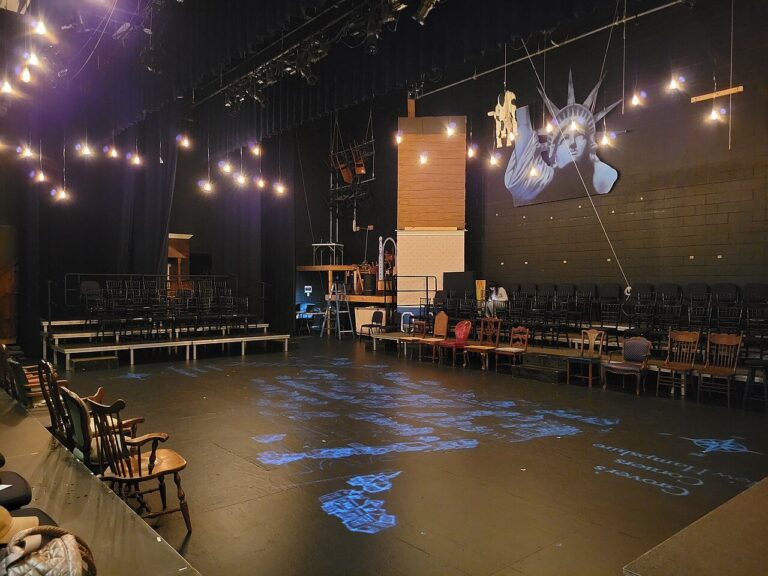
The theater is a fitting setting for the beginning of the story. A developing town needs a room where enough people can assemble to hear, object, agree or keep a public record. The name of the room need not announce that function. A theater can serve as a political meeting place when the town requires one. Think of contemporary buildings that serve as more than one kind of gathering space. An early Florida community’s political life becomes easier to picture when one imagines the practical business of getting neighbors into a room together instead of beginning with a finished plaque.
Public memory also has a date
The marker identifies its own year as 2004. Embedded in its text is another layer, an account from the Fellsmere Tribune in March 1916 expressing pride in the town’s action. Those three dates do different jobs. The 1915 date belongs to the charter and election. The 1916 article records how a local paper chose to represent the town afterward. The 2004 marker reflects a later decision about what visitors ought to remember. All are useful sources, provided nobody mistakes a line on the modern marker for the words Dreier spoke while voting.
This is also the place to handle claims of firsts with care. The state marker applies expansive first-voter language to Dreier’s ballot. The strongest claim to carry away from a visit is the concrete one that the documentation supports in detail: under its new charter Fellsmere extended voting to women in municipal elections and Dreier cast its commemorated first ballot in June 1915. Different histories of voting can involve school elections, limited franchises, local referendums or offices in different jurisdictions. Giving the level of government and the kind of election makes the achievement understandable on its own terms.
What happened nationally afterward
A visit is an excellent occasion to put the local date next to the federal dates exactly. The National Archives’ text and account of the Nineteenth Amendment records congressional passage on June 4, 1919, and ratification on August 18, 1920. Congressional passage proposed an amendment to the states. Ratification made it part of the Constitution. Collapsing those two steps into a single year would lose a distinction very much like the one between the February meeting at the Dixie Theater and the June election in Fellsmere.
The national account also makes room for the limits of a formal voting guarantee. Other barriers continued to exclude voters after ratification. A local marker celebrating women’s municipal suffrage establishes a serious change in Fellsmere. It does not tell us that every resident was equally able to register, reach a polling place or vote in practice. To investigate that different question, a historian needs additional evidence about actual residents and how elections operated. Respect for a milestone includes describing precisely what the available local evidence can and cannot establish.
Read the town around the marker
Nearby civic history adds another dimension. The local historical walking tour places construction of the Marian Fell Library in the same early months of 1915. A library and a charter are very different enterprises, but both ask which institutions a new community will support. One gives people a place to read and exchange ideas. The other supplies rules through which the town can act. The county visitor bureau’s Fellsmere history guide treats the library and suffrage history among the town’s other surviving stories. Check visitor arrangements separately from the locations of exterior markers when planning an outing.
The scale of the election is part of its interest for a modern visitor. A municipality could make a decision affecting its own citizens, and another town just down the road could have a different rule. Following the boundaries of a decision is one way to see how changes in political participation reached different Floridians at different times.
For a family or a reading group, start the trip with three small pieces of paper labeled “proposal,” “approval” and “use.” Let each person assign a local event to a label and then explain which federal event would fit the same category a few years later. The exercise makes the town’s cultural achievement unusually concrete. It also leaves space for the most important final detail. A charter may set out a possibility in language, but one June day in Fellsmere a particular resident went to vote. Her name, the date and the limited but consequential jurisdiction of that ballot all deserve to travel together.