The First-Time Spectator’s Guide to Vero Beach’s Nine Polo Sundays
Find Vero Beach Polo Club’s nine advertised 2027 dates, learn why teams change direction after a goal and get more out of your first afternoon beside the field.
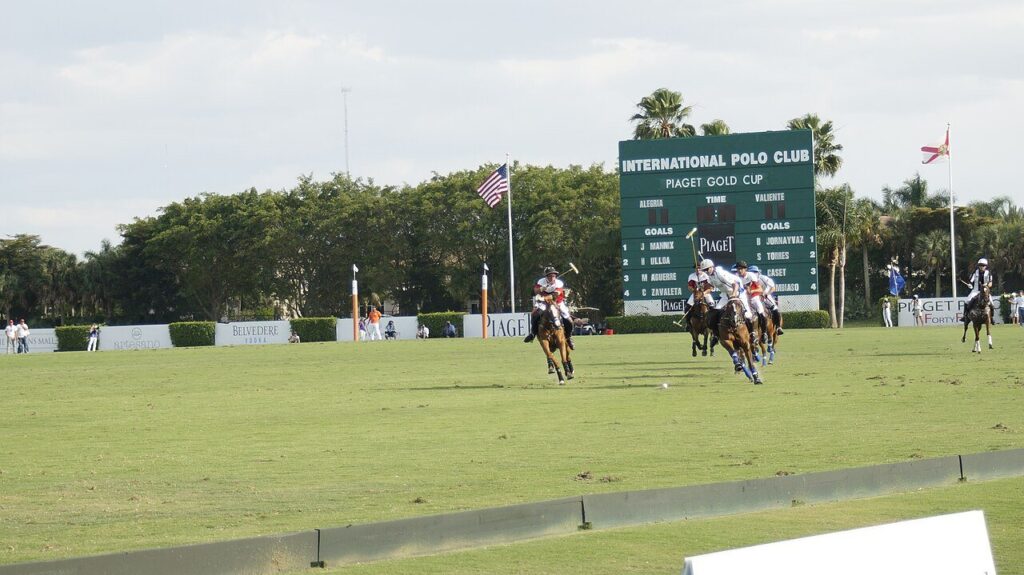
A newcomer at a polo match can follow a team all the way to one end of the field, see it score, and be thoroughly puzzled a few minutes later when the same colors charge in the opposite direction. The players have not lost their bearings. Outdoor polo teams change ends after a goal. Learn that one feature and a Vero Beach Sunday spent beside the field can become far more interesting, even before the mysterious matters of mallets, mounts and the line of the ball begin to make sense.
Vero Beach Polo Club’s advertised 2027 season consists of nine Sundays. January 17 and 24 are followed by February 7 and 21, March 7, 14 and 21, and April 4 and 11. The list matters because the matches are not weekly throughout that span. A family promising visitors polo on a Sunday in February should check the number on the calendar before promising a particular afternoon. The club’s site has moved, so use its current visitor information or confirm with the club before setting out, especially for gate arrangements or weather changes. Vero Beach Polo Club
The grounds are off 12th Street between 74th and 82nd avenues in the Vero Beach area. The club’s earlier account of match days describes spectators gathering beside the field with chairs, food and vehicles, an arrangement which helps explain the familiar term polo tailgate. Check the arrangements for the specific date, including admission, arrival time and where your ticket allows you to set up. Details copied from a previous season are of limited help when people are arriving in separate cars. Club’s original season announcement and site redirect
Start with the players who haven’t got the ball
Polo played outdoors starts with four riders per team, so a first-time spectator has eight sets of decisions to choose from. Following all of them is a difficult assignment on a big field. Pick the team you can identify most easily and watch one player away from the central action. A teammate may get in front of the play to offer an attacking option. Someone farther behind may remain there precisely because a misplaced pass would otherwise give the opposition an open route back. A rider who appears to be doing very little may be the person whose position explains the next few seconds.
When the direction of play changes suddenly, look at the horses before you look for the ball. The turn of several bodies often shows where to search. A long hit that sends horses running in parallel is quite a different sight from a tight passage where a rider needs a short touch to keep the ball in reach. If watching with a child, give them a job small enough to enjoy. Can they spot which color is headed toward which goal, or which horse moves into an empty space first? A right answer does not require knowing what the umpire has just called.
Polo America’s guide for spectators describes the line of the ball, the imaginary path established by a moving ball, as central to understanding how riders can approach play. The game includes rules about the right of way along that line. A player close enough to see a tempting shot cannot simply ride across another horse’s path to take it. For a spectator, the key observation is the path the ball has just traveled. It explains why somebody farther away may be in the stronger position and why a whistle can interrupt what looked from the sideline like a clear opportunity. Polo America’s guide to following play
Notice the partnership under the number
A player’s jersey makes a convenient anchor for the eye. A horse’s stride can tell a different story about the same run. Watch the approach to the ball and then the exit. The adjustment that allows the rider to strike at the right moment may be much more revealing than the actual swing. With a fast field sport it is easy to remember only the spectacular part. Paying attention to the adjustment beforehand lets a newcomer appreciate why a comparatively gentle touch can be a smart play.
Periods in polo are called chukkers. A break in play gives spectators a chance to compare notes, stretch or find a member of the party who has wandered toward the refreshments. It also provides a good time to ask a knowledgeable neighbor the kind of question that is hard to formulate while eight horses are moving away from you. Did the team change direction because a goal was scored? Did the play stop because the ball left the field? A single clear answer can transform what the next period looks like.
For households bringing someone who knows horses but has never followed polo, try trading observations. One spectator can notice when a horse shortens its stride or responds to a change in direction. Another can notice where the other players position themselves in response to a delivery. The person who has learned a score and the person who has learned how to watch a horse are not competing authorities. They are seeing different pieces of a sport that needs both. The best seats in the field matter less than agreeing which team each person is talking about.
Decide what the invitation includes
There is a social afternoon alongside the game, and it helps to be explicit about which part you are inviting friends to join. Someone arriving chiefly for conversation may be happy to share a chair between periods. A first-time visitor who wants to see the beginning and learn which side is which needs an accurate arrival plan and an unobstructed view. Give guests the selected Sunday and a map reference for the field. Follow the club’s designated spectator areas and match-day instructions once there.
The local calendar even lends itself to a second experiment. Choose one of the early Sundays to get a feel for the field. Come back on a later advertised date with a particular question, perhaps how a team builds an attack away from the ball or how quickly riders reorganize after a goal. The field will already look different before a horse has moved. This time, when familiar colors set off toward what used to be the other team’s end, you can explain the change to the person beside you.